Canada Concludes Philippines Free-Trade Talks and Nears Agreement With ASEAN
Canada has finished free-trade negotiations with the Philippines and reached a substantial conclusion with ASEAN, with both agreements targeted for signing in 2027.
Our editorial standards
MarketReview publishes clear, independently produced financial information using reliable sources and transparent editorial standards.
Read our Editorial Policy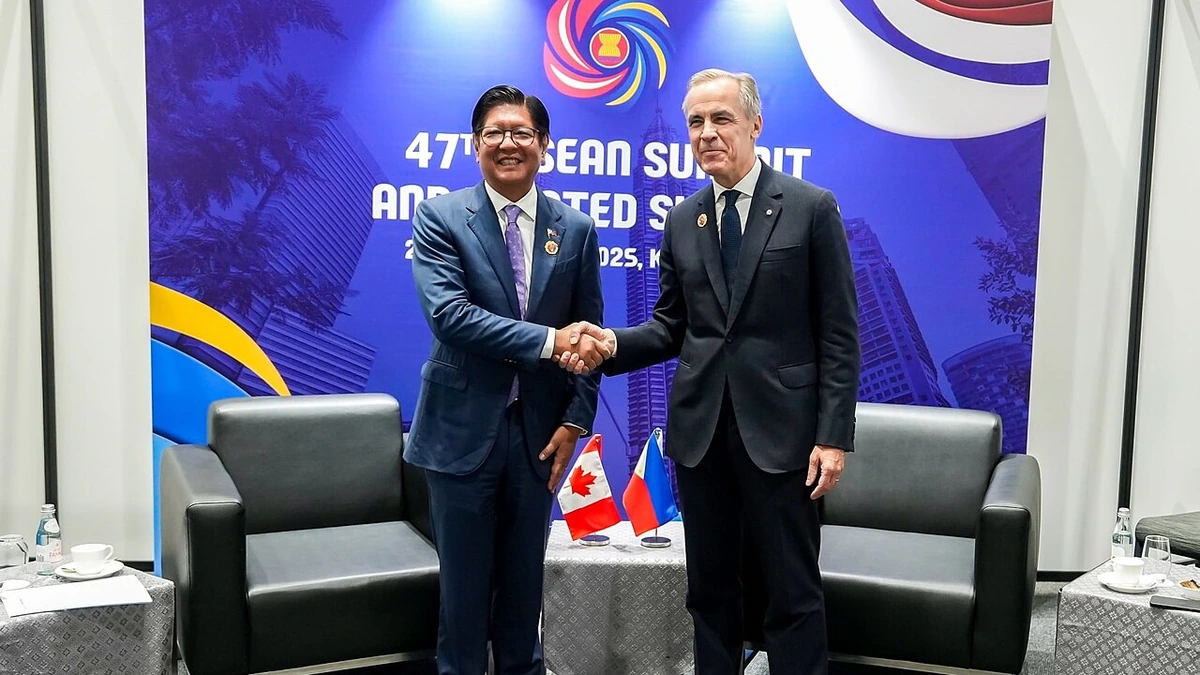
Canada has concluded negotiations on a free-trade agreement with the Philippines and says it has substantially concluded a separate agreement with the Association of Southeast Asian Nations (ASEAN), advancing two efforts to expand Canadian trade in the region. Prime Minister Mark Carney announced the developments during a visit to Manila on November 14, with Ottawa aiming to sign both agreements in 2027.
The distinction between the two milestones is important. Negotiators have finished work on the bilateral Philippines agreement, but the ASEAN talks still have remaining steps. Neither pact has been signed or entered into force, so the announcement does not immediately reduce tariffs or change market-access rules for exporters.
In its announcement of the trade developments, the Canadian government set out economic forecasts for each agreement, including an estimated gain of nearly $2 billion in Canadian GDP from the ASEAN pact once in force. Those figures describe possible future benefits, not gains already delivered to businesses or workers.
Philippines negotiations end with a joint statement
Carney and Philippine President Ferdinand Marcos Jr. welcomed the conclusion of the bilateral negotiations at the ASEAN summit. Philippine Trade and Industry Secretary Maria Cristina Roque and Canadian International Trade Minister Maninder Sidhu exchanged a signed joint statement marking that milestone in the leaders’ presence, according to the Philippine government’s account. The document was a statement concluding negotiations, not the final free-trade agreement.
The two governments began this latest push after exploratory discussions and a decision to pursue a bilateral pact. They elevated their relationship to a strategic partnership during Marcos’s visit to Canada in July, when both leaders pledged to finish negotiations before the end of 2026. Their latest announcement meets that negotiating goal, although the agreement still awaits a planned signature next year.
Merchandise trade between Canada and the Philippines reached $3.4 billion in 2025, an increase of 7.4% from the preceding year, according to figures released by Ottawa. Canadian direct investment in the Philippines stood at about $1.7 billion that year. These figures show an existing commercial relationship that the governments want to deepen, rather than a new market opening from zero.
Agriculture and forest products are among the Canadian sectors Ottawa expects to benefit from better access to the Philippine market. The government says the agreement could lift Canadian exports to the Philippines to as much as three times their current level by 2035, once the pact takes effect. That is a forecast, not a guaranteed outcome or a statement that bilateral trade has already tripled. The November announcement did not provide a product-by-product tariff schedule or the detailed assumptions behind the projection.
The Philippine government has emphasized potential opportunities going in the other direction. Its account says the proposed pact addresses access for goods and services, investment and smaller businesses. Separate Philippine government material also points to digital trade and services, which could matter for local professionals selling work to Canadian customers. The precise commitments and eligibility rules for these areas have not yet been published in the accounts reviewed, leaving individual firms without the final provisions needed to assess their own benefits.
ASEAN agreement carries a broader economic forecast
Canada’s regional negotiations with ASEAN began in 2021. Substantial conclusion means the parties have reached an advanced stage of agreement, but Ottawa says the remaining work must still be completed before signing. The Canadian government is targeting 2027 for that step as well, with no firm implementation date announced.
The regional pact is larger in scope than the Philippines agreement. ASEAN represents nearly 700 million people and an economy of close to $6 trillion, according to Canada’s latest statement. The bloc was Canada’s fifth-largest merchandise trading partner in 2025, with two-way goods trade of $52.5 billion. The Philippines is itself part of ASEAN, so the two initiatives are overlapping routes to better access in Southeast Asia rather than two entirely separate pools of potential customers.
Ottawa estimates that an ASEAN-Canada free-trade agreement could add nearly $2 billion to Canadian GDP and support nearly 14,000 jobs after it enters into force, particularly in agriculture and manufacturing. These are projected effects of a future agreement, not an employment count from the announcement. Their eventual size will depend on the final terms, the timing of implementation and how businesses respond to new opportunities.
The government also announced $5 million over three years for technical assistance to eligible ASEAN members. A Canadian government backgrounder identifies Cowater International as the delivery partner and describes policy advice, training and institutional support intended to help countries finish the process, prepare for ratification and make use of the pact. The funding acknowledges that reaching an advanced negotiating stage is only part of the work required before a regional agreement can function.
A broader trade pact may give exporters more predictable conditions and reduce some border obstacles, but those practical effects cannot yet be measured against a final published set of commitments. Businesses will need the actual tariff provisions, rules of origin, services commitments and implementation schedules before determining whether a shipment or contract qualifies for preferential treatment.
Diversification push extends beyond tariff negotiations
The announcements form part of Canada’s effort to broaden commercial relationships beyond its biggest trading partner, the United States. Ottawa has described Southeast Asia as an important part of that strategy, both because of the region’s consumer market and its role in manufacturing supply chains. More trade agreements could diversify export destinations over time, but a completed negotiating round does not itself shift sales or reduce dependence on an existing customer.
The Manila visit also produced measures outside the two proposed free-trade agreements. Canada announced $26 million in investments connected to areas such as nuclear safety, climate-resilient agriculture, community resilience and infrastructure, including work related to the Luzon Economic Corridor. These initiatives sit alongside the trade agenda rather than forming provisions of either free-trade pact.
Carney also welcomed commercial memoranda involving Canadian and Philippine organizations. They include a proposed collaboration on ocean technology, an arrangement involving Canadian drone company Draganfly and the Razon Group, and a renewable-energy investment effort involving JCM Power and the Aurora Pacific Economic Zone Authority. The government presented them as examples of expanding commercial ties, without saying the memoranda were completed investments or benefits created by a trade agreement already in force.
Security cooperation was another part of the visit, including steps on customs cooperation and a cyber security dialogue. Canada said it would extend its Dark Vessel Detection program through 2033 to support efforts against illegal fishing. Although this work may strengthen the wider bilateral relationship, the trade agreements retain separate legal and negotiating processes.
The next identifiable milestones are completion of the remaining ASEAN negotiations and the planned signatures of both agreements in 2027. Publication of the final texts, followed by the required domestic approval and implementation steps, will determine when companies can actually use any new preferences. Until then, the economic gains cited by Ottawa remain expectations tied to agreements that have not taken effect.
More News



Latest News
View all news- Nasdaq Expands Public Disclosure of Disciplinary Cases as $10,000 Threshold Is Removed
- Carney Says Canada–U.S. Trade Talks Are Progressing, but Auto Tariffs Remain a Sticking Point
- Switzerland’s New Payment Standards and QR-Bill Rules Take Effect
- Singapore Issues First International Carbon-Credit Project Authorization Under Rwanda Agreement
- U.S. Producer Prices Rise 6.5% Annually in October, Fastest Pace Since November 2022