Singapore Issues First International Carbon-Credit Project Authorization Under Rwanda Agreement
The Rwanda initiative plans to distribute 300,000 ceramic water filters and is projected to avoid about 780,000 tonnes of emissions through 2030.
Our editorial standards
MarketReview publishes clear, independently produced financial information using reliable sources and transparent editorial standards.
Read our Editorial Policy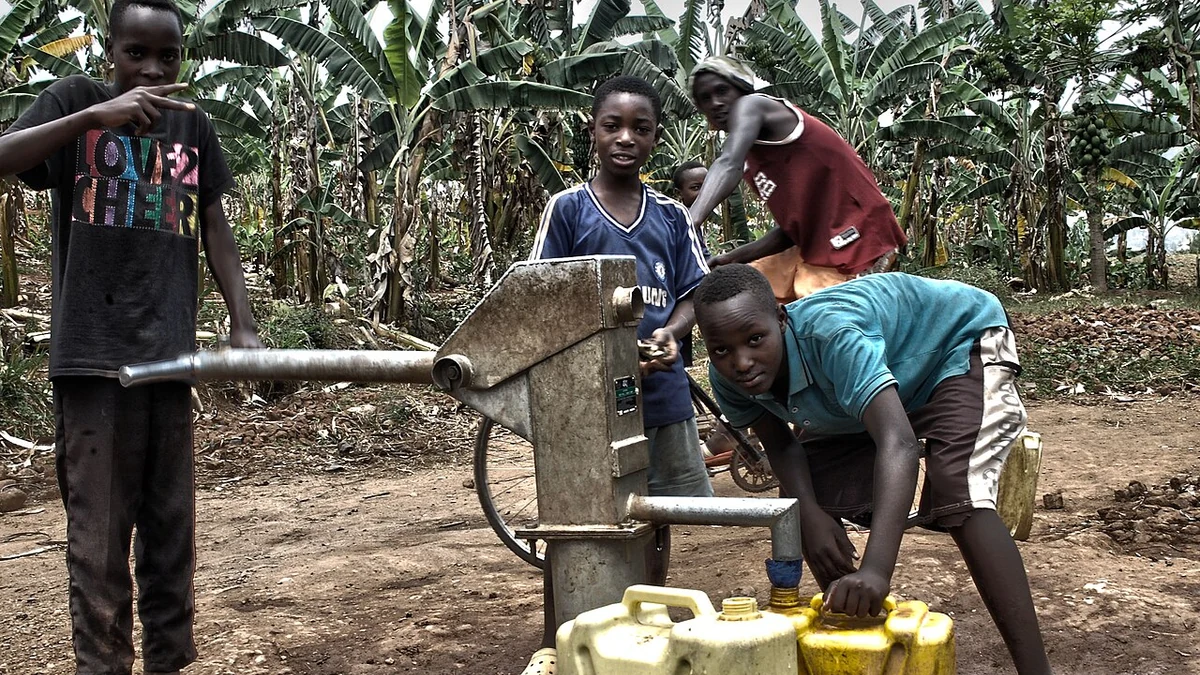
Singapore has issued its first authorization for an international carbon-credit project under its agreement with Rwanda, moving one of its bilateral climate partnerships from project applications to a formal approval. The National Environment Agency (NEA) announced the decision on November 14, saying it was also the first such authorization across Singapore’s six operationalized carbon-market agreements.
The authorization covers a safe-water project in Rwanda, with the planned emissions savings coming from changes in household water treatment. Developed by Climate Bridge International Pte. Ltd., it plans to distribute 300,000 ceramic water filters to households and early childhood development centers, primarily in Rwanda’s Western Province. Singapore estimates that approximately 1.8 million people could benefit and that the project could avoid around 780,000 tonnes of carbon dioxide equivalent over 2026 through 2030.
Those figures describe the planned scale, not completed results. In its November 14 announcement, NEA said distribution of an initial 10,000 filters began in June 2026, with the balance scheduled for progressive deployment during 2027. No verified total of emissions reductions or volume of issued credits was announced.
Water filtration aims to replace fuel used for boiling
The emissions case rests on how households make water safe to drink. Where families boil drinking water with firewood or charcoal, a working ceramic filter could reduce the need to burn those fuels for treatment. The project is designed to bring that alternative to households as well as early childhood development centers, where access to treated water could serve groups of children rather than a single family.
NEA expects lower fuel consumption to reduce greenhouse-gas emissions and smoke inside homes. Its announcement also points to a possible reduction in the time residents spend collecting firewood, leaving more time for school, paid work or community activities. These are anticipated benefits of the deployment, not measured health or household-income outcomes reported alongside the authorization.
The timetable matters because most of the proposed filters have yet to be distributed. The initial rollout began months before this authorization, but the main installation phase is scheduled for next year. The agency did not provide a breakdown of how many of the 300,000 devices will go to homes versus childcare facilities, or how many beneficiaries have already received them.
Nor does the 780,000-tonne estimate establish how much carbon will ultimately be credited. Any resulting calculation must account for reductions actually achieved against the applicable project baseline. In practical terms, the emissions benefit depends on filters being used and on the extent to which they displace firewood or charcoal that otherwise would have been burned. That distinction between expected performance and verified results is central to the carbon-credit process.
Approval is separate from the issuance of carbon credits
Singapore and Rwanda signed their Article 6 implementation agreement on May 6, 2025. The arrangement establishes procedures for approving emissions-reduction activities and potentially transferring the resulting credits internationally. Rwanda’s official cooperation portal sets out the bilateral framework, which was followed by a joint invitation for project applications in January 2026.
The November 14 authorization is part of the second stage of a three-stage system. The first stage reviews a proposed activity, while the second requires a more developed project design and third-party validation under the intended carbon-crediting methodology. At this stage, Singapore and Rwanda issue their respective letters of authorization. NEA has confirmed Singapore’s letter for the water project and described the two-country authorization procedure; its announcement did not report a separate amount of credits already issued or transferred.
A later stage covers issuance and international accounting. Under Singapore’s published application procedures, a project must provide evidence that credits were issued by a carbon-crediting program along with an independent verification report. The government then considers the issuance authorization and the corresponding accounting adjustments required under Article 6 of the Paris Agreement.
Those corresponding adjustments are designed to prevent the same emissions reduction from being counted toward both Rwanda’s and Singapore’s national climate targets when a mitigation outcome is transferred. Approval of a proposed activity therefore establishes a pathway to future carbon finance. It does not by itself establish the number of credits available, their sale price, who will buy them or the date on which they can be used.
The Rwanda arrangement also includes provisions intended to share some of the benefits. An official Singapore government annex says the country has committed to cancel 2% of correspondingly adjusted credits authorized under the agreement at first issuance, rather than allow those units to be traded or counted toward a national target. It also commits to direct 5% of the value of those credits toward adaptation measures in Rwanda. The announcement did not provide a monetary estimate for either provision for this particular project.
Singapore’s carbon-tax rules give credits a potential market
For Singapore, bilateral authorizations are part of a wider effort to increase the supply of international carbon credits that meet its domestic eligibility rules. Taxable industrial facilities may use qualifying international carbon credits to offset up to 5% of their taxable greenhouse-gas emissions. That limit creates a potential use for credits from approved overseas activities, subject to the remaining checks rather than immediately upon project authorization.
The financial context has grown more important as Singapore’s carbon tax has increased. NEA lists a rate of S$45 per tonne of emissions for 2026 and 2027, up from S$25 in 2024 and 2025. The ability to use a limited amount of eligible international credits gives covered facilities an additional compliance option, although a project approval is not the same as a supply of credits ready for surrender against the tax.
The distinction between signed agreements and operationalized ones is also important. Singapore’s climate authorities said 11 countries had signed implementation agreements as of June 2026. The newly authorized Rwanda project is described as the first across six agreements for which Singapore had operationalized project cooperation: Ghana, Bhutan, Peru, Rwanda, Thailand and Mongolia. The announcement does not mean there are only six bilateral agreements in total.
There may be further applications behind the first approval. NEA says more than 20 projects are under assessment through the Rwanda partnership, without identifying them as authorized or assigning them projected credit volumes. Singapore plans to publish information about approved projects through its government carbon-markets portal. For the water initiative, the next concrete milestones are the wider filter rollout in 2027 and the later verification work needed before any emissions reductions become issued credits.
More News


Latest News
View all news- Nasdaq Expands Public Disclosure of Disciplinary Cases as $10,000 Threshold Is Removed
- Carney Says Canada–U.S. Trade Talks Are Progressing, but Auto Tariffs Remain a Sticking Point
- Switzerland’s New Payment Standards and QR-Bill Rules Take Effect
- Canada Concludes Philippines Free-Trade Talks and Nears Agreement With ASEAN
- U.S. Producer Prices Rise 6.5% Annually in October, Fastest Pace Since November 2022