Canadian Retail Sales Increase 0.8% to C$75.3 Billion in September
Fuel stations led September’s gain, but inflation-adjusted retail volume barely rose and an early October estimate points to a decline.
Our editorial standards
MarketReview publishes clear, independently produced financial information using reliable sources and transparent editorial standards.
Read our Editorial Policy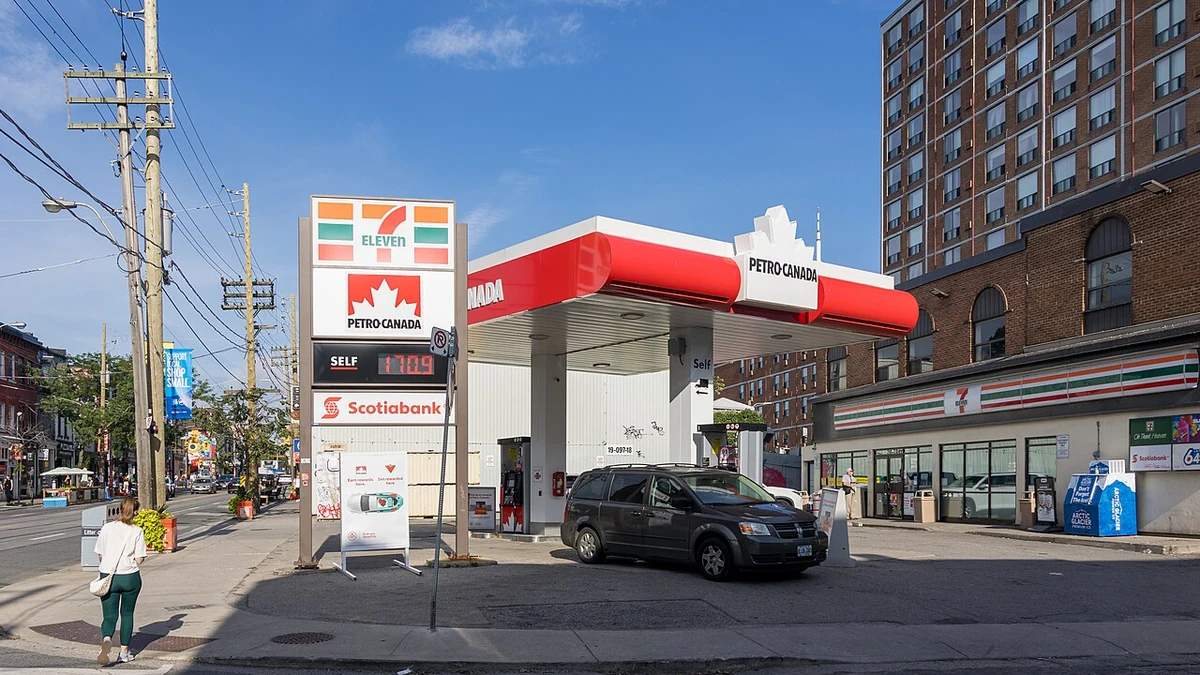
Canadian retail sales rose 0.8% in September to C$75.3 billion, driven by a sharp increase in receipts at gasoline stations and fuel vendors. Results across the rest of the sector were mixed, indicating that the headline gain overstated the strength of underlying sales activity.
Sales increased in five of the nine retail subsectors, according to Statistics Canada’s September retail trade report, released Friday. Core retail sales, which strip out fuel outlets and motor vehicle and parts dealers, rose just 0.1%. After adjusting for price changes, overall retail sales volume also increased 0.1%.
September’s result added to a positive third quarter for the sector. Retail sales rose 1.2% across the quarter in current dollars and 1.0% in volume terms. Yet an early estimate for October suggests that sales may have fallen, raising questions about whether September’s increase carried into the final quarter of the year.
Fuel outlets recorded the largest increase
Receipts at gasoline stations and fuel vendors increased 6.9% in September, the largest gain among retail subsectors and the second consecutive monthly increase. That was a much bigger move than the 0.8% rise in retail sales overall, making fuel the main distinguishing feature of the month’s report.
In volume terms, sales at fuel outlets rose only 1.6%. The difference is important: the dollar value of sales can climb when prices increase, even if customers buy comparatively little more fuel. The volume series adjusts for price movements and therefore provides a different view of retail activity from the headline current-dollar figures.
Fuel-price pressure was also visible in Canada’s inflation figures. Statistics Canada reported in October that gasoline prices had risen 27.8% from a year earlier in September, compared with a 22.8% annual increase in August. The retail and consumer-price measures are not identical, but together they help explain why a large increase in fuel receipts should not automatically be interpreted as an equally large increase in fuel consumption.
Vehicle-related retailers contributed a smaller gain. Sales at motor vehicle and parts dealers increased 0.2% for a second straight month, including a 0.2% rise at new car dealers. Used car dealers reported a 0.6% increase, while other motor vehicle dealers posted a 2.2% gain. The modest overall advance in this category contrasts with the much sharper rise at fuel outlets.
Most core retailers saw only modest growth
Once gasoline stations and motor vehicle dealers are removed, retail sales barely increased. Core sales rose 0.1%, with gains at general merchandise stores providing the main support. Sales in that category increased 1.5%, their second consecutive monthly rise.
Other gains were narrower. Retailers selling clothing, accessories, shoes, jewelry, luggage and leather goods recorded a 0.8% increase. Health and personal care retailers posted a 0.3% rise. These movements show that September was not uniformly weak away from fuel, but the increases were not large enough to produce much growth in the core measure.
Food and beverage retailers moved in the opposite direction, with sales down 0.4%. Supermarkets and other grocery retailers, excluding convenience stores, recorded a 0.5% decline after a 1.0% increase in August. Because grocery purchases are a regular household expense, that reversal is a useful counterpoint to the stronger numbers at gas stations and general merchandise stores.
The distinction between current-dollar sales and volumes matters for reading the data. Statistics Canada adjusts the headline series for seasonal patterns, but it generally reports sales in the dollars paid at the register. To estimate volume growth, it removes price effects using consumer price indexes. September’s 0.1% rise in total sales volume was therefore much smaller than the 0.8% gain in receipts.
The quarterly figures offer a somewhat broader perspective. A 1.0% increase in retail sales volume during the third quarter indicates that activity expanded over the three-month period even though the September result on its own was subdued after adjusting for prices. It does not, however, establish the pace of consumer spending across the entire economy, since the retail survey measures sales by retailers rather than every category of household expenditure.
Retail sales grew in nine provinces
The national increase extended across most of the country. Retail sales rose in nine provinces, with Ontario recording the largest increase in dollar terms. Sales in the province were up 0.7%, led by gasoline stations and fuel vendors, while the Toronto census metropolitan area posted a 1.0% increase.
Alberta reported a 1.7% gain, also led by fuel outlets. Manitoba was the only province to record a decline, with retail sales falling 1.6% as motor vehicle and parts dealers weighed on its result. The contrast highlights how the mix of retail businesses in each province affected September’s outcome; a nationwide increase did not mean every local market advanced.
Online sales slipped even as retail receipts overall increased. Seasonally adjusted retail e-commerce sales slipped 0.2% to C$5.7 billion. E-commerce accounted for 7.5% of total retail trade, down from 7.6% in August. The measure covers online sales by retailers within the survey’s scope, rather than all consumer purchases made over the internet.
October estimate points to a reversal
Statistics Canada’s advance indicator suggests that retail sales declined 1.5% in October, a marked change from September’s increase. The agency explicitly describes the figure as an unofficial early estimate, not a final monthly result. It will be revised as more survey information becomes available.
The estimate was calculated using responses from 58.1% of surveyed companies. By comparison, the average final response rate over the previous 12 months was 86.6%. That gap is a reason to treat the October indication cautiously: the preliminary sample is less complete than the information used for the final estimates, and subsequent revisions can change the reported direction or size of a monthly move.
A weaker October figure, if confirmed, would suggest that September’s improvement did not mark an uninterrupted acceleration in retail demand. The particularly large contribution from fuel in September and the small increase in sales volume already point to a narrower gain than the headline percentage alone conveys. Neither the September figures nor the October estimate identifies a single cause for the change in overall spending.
The next full release, covering October retail trade, is scheduled for December 18. It will provide a firmer basis for assessing whether September’s improvement was followed by a sustained pullback or a more limited monthly decline.
More News


Latest News
View all news- Spain’s Sánchez Proposes Bank Tax Extension to Raise €1.4 Billion for Housing
- Canada Announces C$248,063 Investment to Restore Nova Scotia Lighthouse and Support Tourism
- New York’s New CPA Licensing Law Takes Effect, Adding 120-Credit Pathway
- Nasdaq Rule Removing CORE FIX Order-Entry References Becomes Operative
- Monte dei Paschi Calls Intesa Takeover Offer Financially Fair but Says It Undervalues Future Potential