
CFTC Rule Excluding Traditional Sportsbook Wagers From ‘Swaps’ Takes Effect
The rule draws a boundary around qualifying state- and tribal-regulated gambling, while a separate proposal seeks to bring exchange-traded event contracts expressly within the swap definition.
Our editorial standards
MarketReview publishes clear, independently produced financial information using reliable sources and transparent editorial standards.
Read our Editorial Policy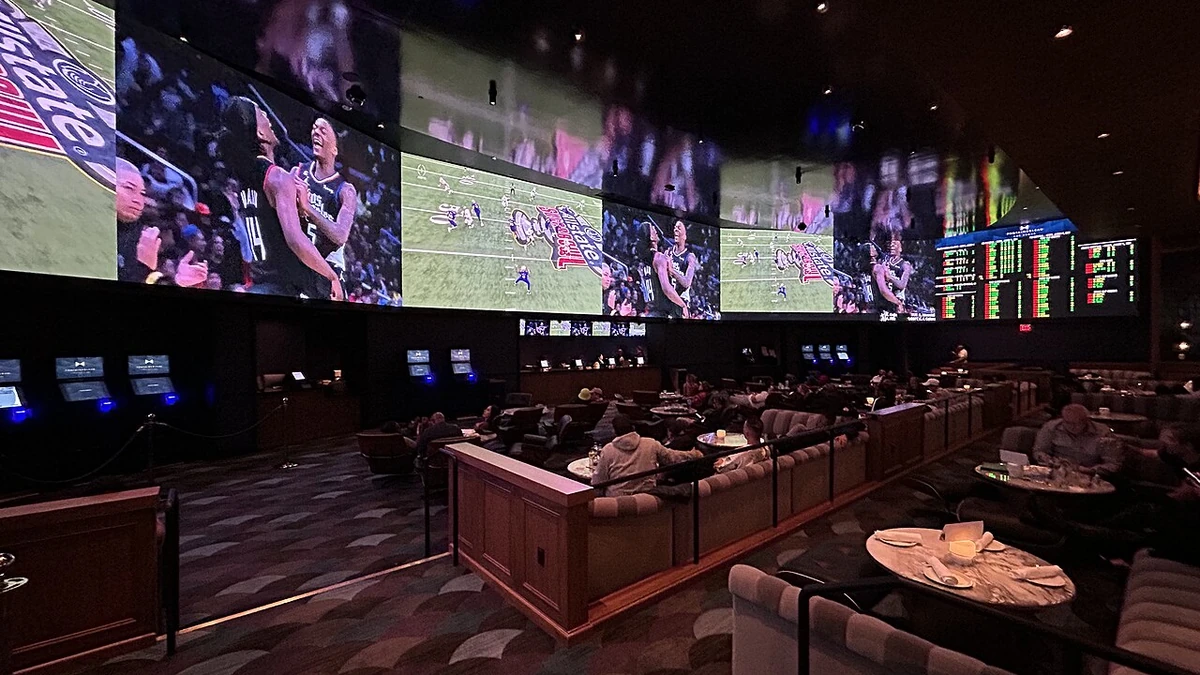
A Commodity Futures Trading Commission rule excluding qualifying traditional sportsbook wagers and casino games from the federal definition of a swap took effect Monday, October 19, 2026. The interim final rule draws an explicit regulatory boundary between licensed gambling products and derivatives contracts traded in financial markets.
The change does not give every sports-related financial product the same exemption. A wager placed with a state-authorized sportsbook can fall outside the swap definition under the new rule, but a sports event contract traded through a federally regulated exchange is a different case. The CFTC is pursuing a separate proposal to clarify its authority over those contracts.
Announced by the agency on October 9, the exclusion became effective when its text appeared in the Federal Register. The amendment adds a new provision to the definition of swap in 17 CFR Section 1.3. The published rule spells out conditions covering both the gambling operator and the way a wager is offered or traded; a sports-related label alone does not determine the legal treatment.
The exclusion depends on the operator and the product
First, the operator must be licensed or otherwise authorized under applicable state law or the law of a federally recognized tribe to conduct gambling or accept wagers. It must act within that authorization, and the activity itself must be regulated as gambling or gaming under the relevant state or tribal rules. The exclusion is therefore tied to an existing legal framework, not simply to an operator calling a product a bet.
Second, the wager must not be traded on a board of trade, organized exchange, swap execution facility or another market where trading takes place among multiple participants or through individual negotiation. This is the rule’s product test. A conventional sportsbook generally sets odds and accepts a customer’s wager under its own house terms, rather than matching bids and offers on an exchange.
Both tests matter. A gambling license does not automatically exempt every financial instrument a licensed business might offer, and a product offered away from an exchange does not qualify merely because it relates to the outcome of a game. The CFTC designed the language to reflect the structure of traditional gambling without giving licensed firms a blanket exception for unrelated derivatives activity.
Sports wagers accepted by licensed operators are specifically identified in the rule. The same framework covers qualifying bets on casino table games, slot machines and other electronic gaming devices, as well as licensed games of chance such as bingo, lotteries and raffles. These are examples within the exclusion, rather than a separate list of products that escape the licensing and trading requirements.
Importantly, the new provision does not authorize sports betting in jurisdictions that prohibit it or displace state and tribal oversight. Nor does a failure to satisfy the exclusion automatically make an activity a swap. The Commission says products outside the defined exception still require an assessment of their form and substance; some other gambling arrangements may also fall outside federal derivatives law.
The legal approach builds on earlier federal treatment of products that can resemble derivatives without functioning as financial-market instruments. In 2012, the CFTC and Securities and Exchange Commission distinguished traditional insurance and ordinary commercial arrangements from swaps despite broad statutory wording. The CFTC now applies comparable reasoning to gambling products that have long been regulated under separate laws.
Sports prediction contracts face a separate proposal
The distinction has become consequential as prediction markets offer contracts tied to sporting results. Some contracts can deliver a payout dependent on the same event as a sportsbook bet, but the CFTC argues that comparable outcomes do not make their structures legally identical. The commission’s newly effective exclusion is directed at qualifying conventional gambling, not at removing exchange-listed event contracts from its jurisdiction.
On October 9, alongside the sportsbook measure, the CFTC announced a separate proposed rule that would expressly include event contracts based on sports, politics, cultural events and weather within the definition of swap. That measure is still a proposal and is not part of the exclusion now in effect. It states the agency’s proposed interpretation rather than establishing a final classification for every contract available on a prediction market.
The CFTC’s explanation focuses on how the two kinds of products operate. On an exchange, competing buyers and sellers submit orders that establish prices, and contracts may be centrally cleared under derivatives-market safeguards. At a traditional sportsbook, the operator typically offers the odds, serves as the bettor’s counterparty and settles the wager according to its rules. Those structural differences help explain why the agency is drawing separate regulatory lines even when both products depend on the score of a game.
The boundary is disputed. In its rulemaking, the CFTC describes arguments from states and litigation over whether sports-related event contracts should instead be treated like gambling subject to local authority. Some courts have questioned the agency’s distinction, while the Commission maintains that exchanges and sportsbooks operate under materially different legal and market arrangements. The interim rule supplies the agency’s regulatory position but does not itself resolve those court disputes.
Nor should the agency’s swap proposal be read as declaring all wagers to be derivatives. Traditional betting that meets the new exception is carved out, while exchange-traded event contracts are considered under their own statutory provisions and proposed rulemaking. That separation is central to understanding the action: the Commission is narrowing one category at the same time it is seeking to clarify its authority over another.
Immediate effect leaves an open comment period
Although the measure is already in force, the CFTC adopted it as an interim final rule and is accepting comments after publication. The Federal Register sets November 18, 2026, as the deadline for submissions. Interested parties can comment on the scope of the exclusion, including how the licensing requirement and the distinction between house wagers and market-traded contracts should be applied.
The agency invoked an exception to the usual advance notice-and-comment process, arguing that regulatory uncertainty and ongoing court proceedings required prompt clarification. Its reasoning is set out in the rule rather than resting on a completed public consultation. Immediate effectiveness does not mean the language is immune from later revision or that pending legal disagreements have been conclusively decided.
For existing licensed sportsbooks, the rule formalizes the CFTC’s position that qualifying wagers are not swaps under the Commodity Exchange Act. For exchanges and prediction-market operators, it reinforces that offering contracts through a trading venue is not the same as taking bets as a licensed gambling house. The Commission also says the exclusion imposes no new federal reporting or recordkeeping requirements on its registrants.
The November 18 comment deadline is the next formal step for the exclusion. Responses will address an operative rule, while the separately proposed treatment of event contracts remains subject to its own rulemaking process. The two proceedings concern related sports outcomes, but different legal tests and different markets.
More News

Latest News
View all news- Fifth Third Reports $1.13 Adjusted Third-Quarter EPS Following Comerica Conversion
- DOJ Reports $849 Million in Approved Claims Under Expanded Radiation Compensation Program
- Cleveland-Cliffs Returns to Profit With $165 Million in Third-Quarter Net Income
- U.S. Sets Final Antidumping and Subsidy Rates on Canadian Softwood Lumber
- Commerce Sets Final Subsidy Rates for Chinese Truck Bed Cover Imports
