Commerce Sets Final Subsidy Rates for Chinese Truck Bed Cover Imports
The U.S. set Chinese truck bed cover subsidy rates from 11.60% to 142.11%, but a final duty order still requires an affirmative injury ruling.
Our editorial standards
MarketReview publishes clear, independently produced financial information using reliable sources and transparent editorial standards.
Read our Editorial Policy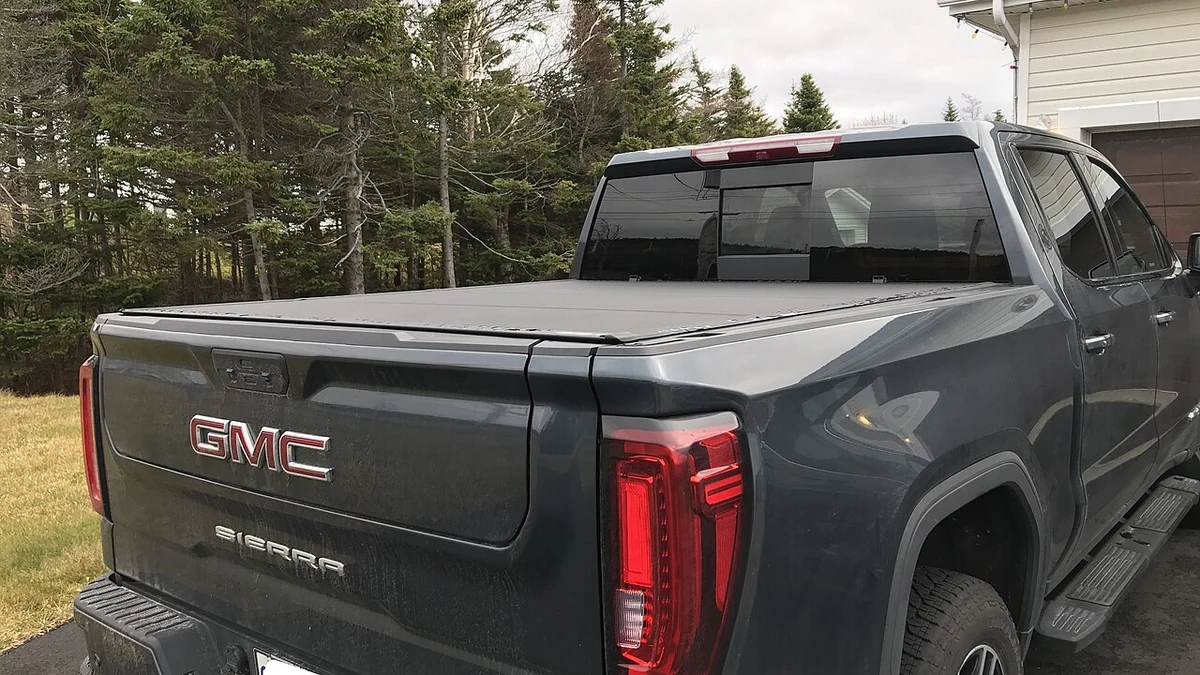
The U.S. Commerce Department has set final countervailing subsidy rates ranging from 11.60% to 142.11% for truck bed covers from China, raising the potential duty burden on several suppliers of pickup-truck accessories. The agency announced its findings on October 14, with the final determination published in the Federal Register on October 19. The decision is an important step toward possible duties, but a countervailing duty order still depends on a separate U.S. trade agency’s finding of injury to domestic manufacturers.
Hangzhou Golden Sun Auto Parts received an 11.60% rate, while Changzhou Sunwood International Trading was assigned 77.17%. Six other named companies face a 142.11% rate based on adverse inferences from available facts. For Chinese producers and exporters not assigned one of those company-specific rates, Commerce set an all-others rate of 43.43%. The figures are percentages of import value, not fixed dollar charges per cover.
In its final countervailing duty announcement, Commerce identified the companies and the applicable subsidy rates under case C-570-224. A countervailing determination addresses government subsidies found to benefit covered imports. It is distinct from the agency’s parallel inquiry into whether the same category of Chinese products is sold in the United States at unfairly low prices.
Rates climb from July’s preliminary findings
Every rate category increased from the preliminary findings announced in July. Sunwood’s rate rose from 30.38% to 77.17%, a rise of 46.79 percentage points. Golden Sun’s rate moved from 8.72% to 11.60%, an increase of 2.88 points. The gap between the two individually examined exporters became substantially wider in the final results, underscoring why the rates should not be treated as one charge covering every Chinese supplier.
The 142.11% rate for six companies was also higher than the 100.95% rate applied to the same category in the preliminary determination. The six are Century Distribution Systems (Shenzhen), Foshan Baitai Auto Accessories, Shenzhen Haishang Wanyun Supply Chain Management, Shenzhen Longhua Supply Chain, Shenzhen Maichuang International and Shenzhen Qianhai Yahee E-Commerce. Commerce explicitly identifies these rates as based on facts available with adverse inferences rather than presenting them as the same kind of individually calculated finding reached for Golden Sun and Sunwood.
For other exporters, the rate more than doubled from 20.25% in July to 43.43% in October. The all-others figure is not an average of the highest and lowest rates in the published table. Under the investigation’s methodology, Commerce based it on the weighted findings for the two individually examined companies, excluding rates derived entirely from adverse facts. That distinction matters to importers trying to identify which rate applies to the producer or exporter of a particular shipment.
The revised percentages can affect the cash that importers may need to deposit against estimated countervailing duties if the case results in an order. They do not establish the final retail price of a truck bed cover or show that every seller will pass the full amount to customers. An importer’s exposure depends on the merchandise, the applicable company rate and the customs procedures governing entries covered by the case.
The products covered by the investigation
The merchandise at issue is more specific than pickup-truck accessories as a whole. Commerce’s scope covers protective panels and shields designed to span an open truck bed, including folding, roll-up, one-piece and retractable tonneau covers. Products can be made from aluminum, steel, fiberglass, carbon fiber, plastic or water-resistant fabric. The scope describes assembled covers generally measuring 45 to 75 inches wide and 55 to 100 inches long.
Mounting hardware and related parts may also be covered when shipped and invoiced with the cover, and certain separately imported installation kits fall within the scope. Taller truck caps, sometimes called camper shells or toppers, are excluded. These distinctions are important because a photograph of a covered pickup bed illustrates the merchandise category but cannot establish the origin, classification or duty treatment of a particular imported item.
The investigation began after a petition by a U.S. manufacturer group identified by Commerce as RealTruck, based in Ann Arbor, Michigan, together with named operations and brands including BAK Industries, Undercover, Retrax, Truxedo, Extang, A.R.E. Accessories and Roll-N-Lock. Commerce announced the opening of the antidumping and countervailing inquiries on March 18. The petition sought trade remedies for alleged unfair pricing and subsidies, issues examined through different parts of the U.S. trade-remedy process.
In April, the U.S. International Trade Commission made an initial finding that there was a reasonable indication of material injury to a domestic industry from the imports under investigation. That allowed the investigations to continue; it did not resolve the question of injury for the final stage. The industry’s size is also easy to overstate from broad customs figures: Commerce warned when launching the case that the relevant tariff classification includes automotive products other than the bed covers involved here. The petitioner estimated 946,000 imported truck bed covers in 2025, a figure identified as its estimate rather than a count independently established by the broader import code.
An injury ruling is still required before a duty order
The next legal decision belongs to the International Trade Commission, not Commerce. Commerce determines whether countervailable subsidies exist and calculates the corresponding rates. The commission must decide whether the covered imports materially injure, or threaten material injury to, the U.S. industry. An affirmative final injury determination would allow Commerce to issue a countervailing duty order. A negative determination would end this proceeding without that order.
U.S. customs authorities have already been involved at the provisional stage. The July preliminary countervailing determination led Commerce to instruct Customs and Border Protection to suspend liquidation of relevant entries and collect estimated duty deposits beginning with covered merchandise entered on or after July 31. If the injury decision is affirmative, the final rates provide the basis for the countervailing order and associated deposit requirements. If it is negative, the proceeding ends and deposits collected because of the suspension are to be refunded or the related security canceled.
Importers must also distinguish the subsidy case from Commerce’s separate antidumping investigation. The agency announced preliminary antidumping results in September, addressing alleged below-fair-value sales rather than government financial support. Those preliminary dumping margins are a different set of calculations, and Commerce has indicated that the final antidumping determination is expected around February 2027. The October subsidy rates should not be mistaken for a final decision in that parallel case.
The commission scheduled a final-phase hearing for October 15 in the truck bed cover investigations. Its published schedule calls for posthearing submissions by October 22 and later opportunities for final comments. The injury decision is expected within the statutory period following Commerce’s final subsidy finding. That ruling will determine whether the rates announced this month become part of an enforceable countervailing duty order.
More News

Latest News
View all news- Fifth Third Reports $1.13 Adjusted Third-Quarter EPS Following Comerica Conversion
- DOJ Reports $849 Million in Approved Claims Under Expanded Radiation Compensation Program
- Cleveland-Cliffs Returns to Profit With $165 Million in Third-Quarter Net Income
- U.S. Sets Final Antidumping and Subsidy Rates on Canadian Softwood Lumber
- CFTC Rule Excluding Traditional Sportsbook Wagers From ‘Swaps’ Takes Effect