EU Plastic-Waste Export Ban Takes Effect, Restricting German Shipments to Non-OECD Countries
The new EU restriction blocks plastic-waste shipments to non-OECD markets while keeping trade with OECD destinations possible under stricter controls.
Our editorial standards
MarketReview publishes clear, independently produced financial information using reliable sources and transparent editorial standards.
Read our Editorial Policy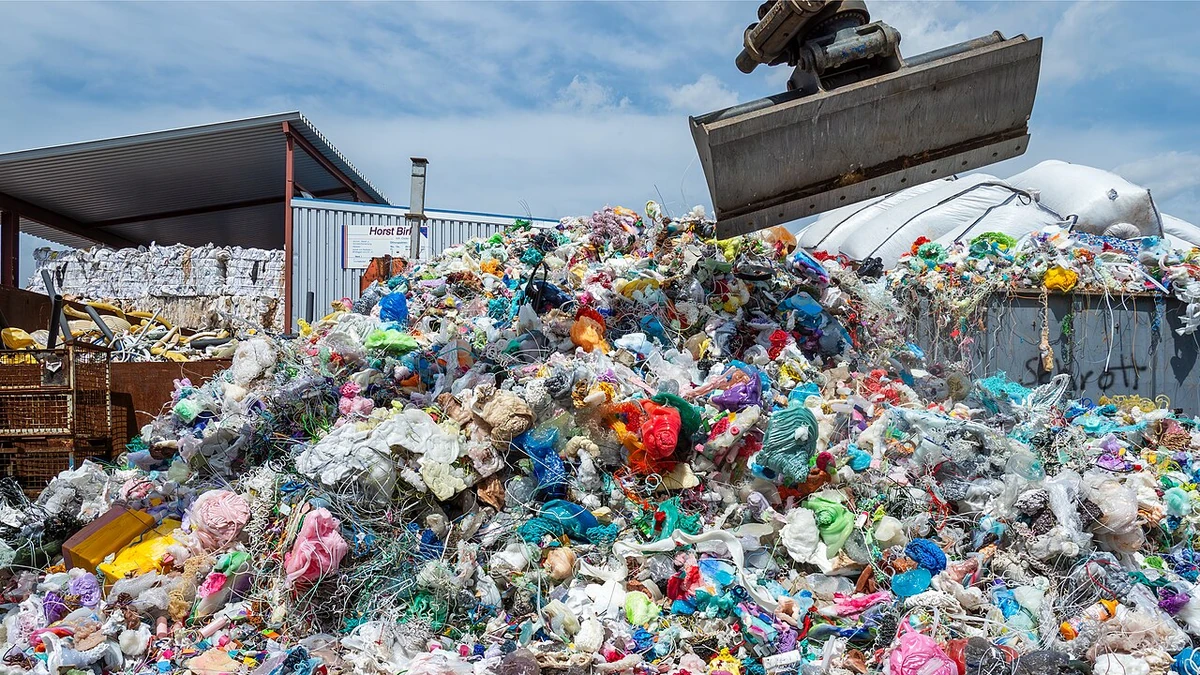
The European Union’s ban on plastic-waste exports to countries outside the Organisation for Economic Co-operation and Development (OECD) took effect Saturday, November 21, closing a group of overseas destinations to exporters in Germany and the rest of the bloc. The measure covers plastic waste sent for recycling as well as less readily recyclable material, making the destination of a shipment a central compliance question for the waste trade.
The restriction does not end all European plastic-waste exports. Shipments to OECD countries can continue under tighter supervision, and movements within the EU remain subject to separate rules. For collectors, brokers and recycling companies that previously sold qualifying scrap to buyers in non-OECD markets, the immediate change is that those export routes are no longer available.
The size of those routes helps explain the impact. According to the European Commission, the EU exported about 1.4 million tonnes of plastic waste in 2025, roughly half to OECD members and half to non-members. Malaysia received 276,000 tonnes, Indonesia 215,000 tonnes and Vietnam 137,000 tonnes. Those were EU-wide figures, not German shipment totals, and they do not show how much business any individual German exporter must replace.
What the new ban covers
The European Commission confirmed the start of the prohibition on Friday under Regulation (EU) 2024/1157, the bloc’s revised Waste Shipment Regulation. The law entered into force in May 2024, with many procedural provisions applying from May 21 this year. November 21 is the specific date on which the plastic-waste export ban begins, rather than the start of the entire regulatory framework.
A key feature is that even clean, non-hazardous plastic waste intended for recycling falls within the non-OECD prohibition. Previously, suitable sorted plastics could be exported under applicable controls. The change closes that route instead of merely imposing additional paperwork on it. Hazardous plastic waste and harder-to-recycle mixed material were already subject to more restrictive treatment under earlier international and European rules.
The geographic distinction is important. Türkiye, the largest single destination for EU plastic-waste exports in 2025 at 510,000 tonnes, is an OECD member and therefore is not covered by this particular destination-based ban. The United Kingdom, another OECD member, received 108,000 tonnes. Their status does not make every shipment automatically permissible: exporters must still comply with the notification, consent and environmental-management requirements governing the material concerned.
The non-OECD prohibition runs until at least May 21, 2029. After that date, an interested country may request permission to receive eligible non-hazardous plastic waste for recycling. Approval is conditional on demonstrating sound waste-management capacity and a Commission assessment. There is no automatic reopening of previously used export channels in May 2029.
What changes for German waste operators
Germany’s Federal Environment Ministry sets out the same dates and obligations in its guidance on the regulation. Companies handling export shipments must distinguish not only the type and condition of the waste, but whether the intended receiving country is an OECD member. A buyer’s ability or willingness to recycle the material does not override the prohibition for non-OECD destinations during the ban period.
For businesses with exposure to affected countries, alternatives could include selling more material to processors within the EU, finding qualifying outlets in OECD markets or increasing domestic treatment. Each involves commercial and operational considerations such as processing capacity, transport costs and the quality of the sorted feedstock. The available official data do not establish a single EU-wide or Germany-specific cost increase attributable to the ban, so a precise price or earnings impact would be premature.
Germany already handles a large volume of plastic waste at home. The Federal Environment Agency reports that the country generated about 5.91 million tonnes in 2023. Of that total, approximately 2.27 million tonnes, or 38.4%, underwent material or chemical recovery, while about 3.61 million tonnes, or 61.1%, was used for energy recovery. These are figures for how German waste was treated, not a measure of shipments now blocked by the export rule.
That distinction matters for assessing capacity. Material described as ‘recovered’ in official German statistics is not necessarily turned into new plastic: energy recovery includes using waste as fuel. Nor can all collected waste be redirected to a plastics recycler without additional sorting or treatment. A shipment formerly destined for an overseas facility therefore cannot be assumed to have an immediately available equivalent outlet inside Europe.
German exporters also face documentation requirements that predate Saturday’s ban. Waste-shipment procedures moved to the EU’s Digital Waste Shipment System, DIWASS, in May 2026. Under the revised framework, applicable exports of plastic waste outside the EU require prior notification and consent. From May 21, 2027, exporters will also have to provide evidence, supported by independent audits, that receiving facilities outside the EU manage waste in an environmentally sound way.
A trade shift meets pressure on European recyclers
Brussels wants the restrictions to reduce the risk that plastic pollution is transferred to countries whose waste systems may struggle to manage imported material. The Commission estimates that the EU generates around 40 million tonnes of plastic waste a year and typically exports between 1 million and 1.5 million tonnes. Exports are therefore a relatively small share of the overall waste stream, but they can matter to the firms and processors serving particular destinations.
Keeping more waste in Europe does not by itself guarantee that it will become recycled raw material. Recyclers need suitable input, customers for their output and enough operating capacity to compete with newly produced plastic. In a December 2025 policy communication, the Commission identified high energy costs, volatile prices for virgin plastics and weak demand for recycled materials as pressures on EU recycling businesses. It also described financial difficulties among some processors.
The EU has proposed measures to make recycled plastics easier to trade within the single market and to encourage investment. Those initiatives address a different problem from export enforcement: ensuring that material no longer shipped to certain destinations can be handled economically and put back into use. They should not be read as proof that all displaced export volumes will remain in the EU or that a shortage of processing capacity has already resulted from this ban.
The regulatory timetable is staggered. The plastic-waste prohibition starts now, but a broader system restricting exports of other waste types to non-OECD countries is due to apply from May 21, 2027, with limited exceptions for eligible non-hazardous waste and approved destinations. That same date brings independent audit requirements for applicable overseas waste-processing facilities. Exporters to OECD members remain subject to monitoring, including scrutiny of countries receiving substantial volumes.
For German and other EU operators, the near-term task is to ensure that existing and planned shipments have permitted destinations and meet the applicable consent procedures. The next major compliance milestone is May 21, 2027, when the wider export controls and facility-audit obligations take effect. The separate possibility of non-OECD countries applying to receive plastic waste does not arise until May 2029.
More News
Latest News
View all news- Spain’s Sánchez Proposes Bank Tax Extension to Raise €1.4 Billion for Housing
- Canada Announces C$248,063 Investment to Restore Nova Scotia Lighthouse and Support Tourism
- New York’s New CPA Licensing Law Takes Effect, Adding 120-Credit Pathway
- Nasdaq Rule Removing CORE FIX Order-Entry References Becomes Operative
- Monte dei Paschi Calls Intesa Takeover Offer Financially Fair but Says It Undervalues Future Potential