
FEMA Announces Federal Disaster Assistance for Guam as Typhoon Champi Disrupts Island
FEMA made federal disaster assistance available for Guam after Typhoon Champi disrupted power, left residents under shelter restrictions and highlighted the limits of the current emergency declaration.
Our editorial standards
MarketReview publishes clear, independently produced financial information using reliable sources and transparent editorial standards.
Read our Editorial Policy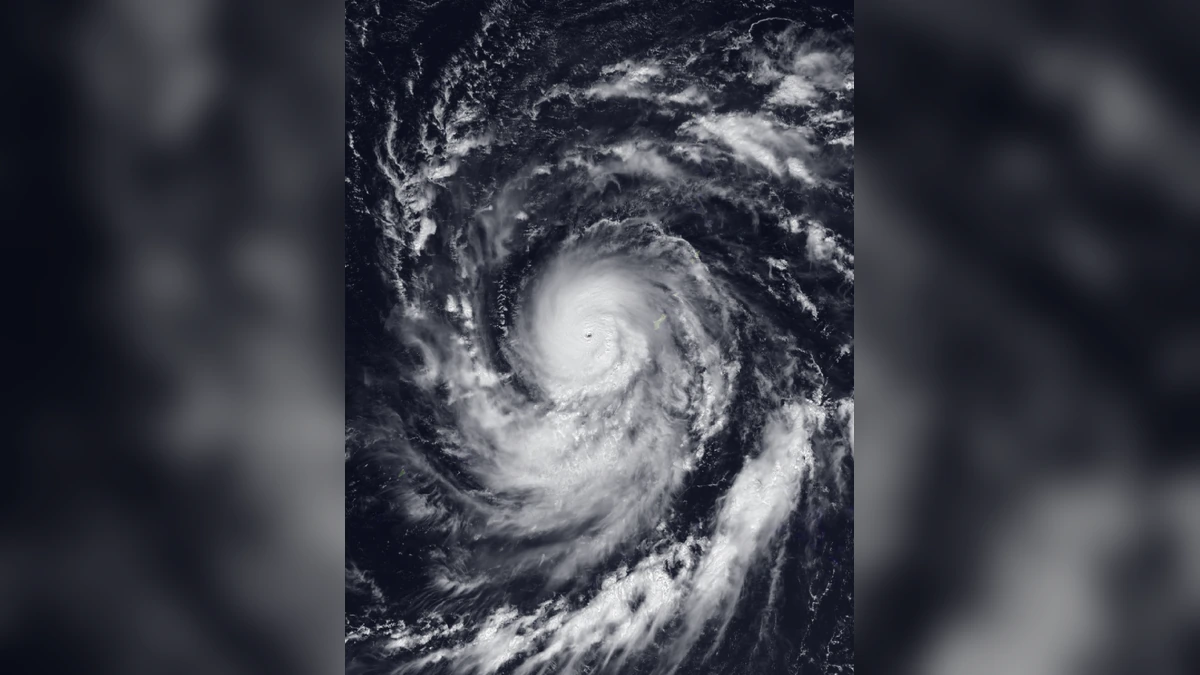
FEMA said federal disaster assistance is available for Guam after President Donald Trump approved an emergency declaration as Super Typhoon Champi swept past the island, disrupted utility service and left residents under strict shelter instructions through much of Sunday.
The federal action matters, but it is narrower than many readers may assume from the phrase “disaster assistance.” At this stage, the declaration authorizes FEMA to support emergency response efforts tied to life safety and property protection. It does not mean Guam residents automatically have access to the household grants that come with some major disaster declarations, and it does not yet amount to a broad promise of rebuilding aid for every category of damage.
Emergency declaration opens FEMA support for immediate response work
According to the Government of Guam’s Joint Information Center, the president approved Governor Lou Leon Guerrero’s request for a Presidential Emergency Declaration in response to Super Typhoon Champi. Guam said the action authorizes FEMA to coordinate emergency assistance intended to save lives, protect property and public health, and lessen or avert the threat of a catastrophe.
That is an important distinction for a storm still in its emergency phase. Under FEMA’s emergency declaration framework, the agency can identify, mobilize and provide equipment and other resources needed to support response operations. FEMA also said emergency protective measures, limited to direct federal assistance, will be provided at a 75% federal funding share. In practice, that points to support for urgent government-led response needs rather than immediate individual cash aid flowing directly to households.
FEMA named William F. Roy as the federal coordinating officer for the response. The agency also said additional designations could be made later if Guam requests them and if further damage assessments support broader aid. That leaves open the possibility of a larger federal role once officials have a clearer picture of structural damage, infrastructure disruption and community needs across the territory.
The distinction is especially relevant in Guam because residents saw a different form of federal action earlier this month after Super Typhoon Bavi. In that case, Guam later received a major disaster declaration that opened FEMA Individual Assistance for eligible homeowners and renters. Champi’s declaration, by contrast, is still framed around emergency conditions and direct federal assistance for protective measures. That means the current federal announcement should be read as a response tool for the immediate crisis, not as confirmation that personal recovery grants are already available.
For policy watchers, the declaration also signals how the federal government is treating the storm’s severity. Emergency declarations are not automatic. They follow a determination that local and territorial capabilities need federal supplementation. In Guam’s case, the approval came while damaging conditions were still unfolding, underscoring the seriousness of the threat facing the island’s southern communities and critical services.
Champi passed just south of Guam and knocked out part of the power grid
Local officials said Super Typhoon Champi made its closest point of approach to Guam at about 4:26 a.m. Sunday, passing roughly 10 miles south of Merizo. Southern Guam took the strongest winds and heavy rainfall, while dangerous conditions extended more broadly across the island as outer bands and shifting winds moved through.
Guam remained in Condition of Readiness 1 for much of the day, with officials telling residents to stay indoors in sturdy, concrete-reinforced structures and not to venture outside even if conditions briefly appeared calmer. Government of Guam updates said tropical-storm-force winds continued after the closest approach, with typhoon-force gusts still possible in parts of southwestern Guam. Authorities also warned about flash flooding, hazardous surf and coastal flooding.
Utility service was one of the clearest signs of disruption. Guam Power Authority said that shortly after Champi’s closest approach, about 75% of the island remained powered. As wind direction shifted, however, additional feeders in central and northern Guam tripped offline. By 7:50 a.m., about half of the island remained powered, according to the government update. Even so, several strategically important service areas, including Naval Base Guam, Tumon, Guam Memorial Hospital, Harmon Industrial Park, Andersen Air Force Base and Camp Blaz, remained online.
Those details matter because they show both the disruption caused by the storm and the effort to preserve essential services. A widespread outage affecting households is disruptive on its own, but the operational status of hospitals, military facilities, tourism infrastructure and industrial zones shapes the island’s broader response capacity. Keeping major facilities online can help reduce the secondary damage that often follows a severe typhoon, especially where communications, medical services, water systems and logistics networks are tightly interconnected.
Officials also kept stressing that the danger did not end once the storm’s center moved past Guam. Later Sunday, the Joint Information Center said rain bands would continue to bring periods of rain and localized flooding risk, while rough conditions along the shoreline made the water unsafe. Residents were told to remain sheltered and stay out of the water as the island waited for conditions to improve enough for broader damage checks and recovery work.
Warnings eased later Sunday, but recovery questions are only beginning
By Sunday evening, the National Weather Service in Guam said Champi was moving away from the Marianas and that all tropical-cyclone-related watches and warnings for the Marianas had been cancelled. Even then, the agency said hazardous conditions had not fully disappeared. Strong winds were expected to linger over Guam and Rota for a time, combined seas near Guam remained elevated, and hazardous surf and rip current risks were still in place. The National Weather Service forecast discussion said the storm’s compact wind field helped spare some areas from the worst forecast scenario, but the system was still strong enough to create damaging conditions and dangerous marine hazards.
That late-day improvement changes the operational picture for emergency managers. Once the life-safety phase begins to ease, officials can move more fully into assessment mode: checking roads, public facilities, utility networks, schools and neighborhoods for damage, deciding where cleanup resources need to go first, and documenting losses that could shape any later requests for broader federal support. Those assessments are often what determine whether an emergency declaration remains the final federal step or whether a jurisdiction seeks and receives a major disaster declaration later.
For residents, the practical question is what federal help actually means right now. At the moment, the answer is mostly indirect. FEMA support can strengthen the territory’s emergency response and protective operations, help mobilize resources and ease pressure on local authorities. What it does not yet do, based on the currently announced declaration, is open a FEMA registration process for Champi-affected households comparable to the one Guam recently publicized for Bavi survivors under a separate major disaster declaration.
That difference will be important in the next several days if residents begin looking for information on repair money, temporary housing support or reimbursement for personal losses. Those kinds of programs depend on the scope and type of declaration in effect and on later damage assessments. Guam officials have not said that such household assistance is currently available for Champi, and readers should be careful not to assume that every FEMA announcement carries the same benefits.
For now, the immediate milestones are more concrete. Guam needs weather conditions calm enough for thorough inspections, continued restoration of electricity and other basic services, and a clearer count of the damage left behind in the south and elsewhere on the island. From there, the next meaningful development will likely be either a fuller territorial damage picture or any updated federal designation that changes the type of aid available.
More News

Latest News
View all news- Japanese Investors Outline $1.2 Billion Tourism Investment Plan in Bangladesh
- Israel Revises Second-Quarter GDP Growth Up to 15.4% in New October Estimate
- French Retailers Estimate Hundreds of Millions of Euros in Damage After Nationwide Protests
- Australian Government Commits A$6 Million to Western Australia’s Telethon
- Anthropic Co-Founder Cites Scenario of $44 Trillion U.S. GDP by 2030 as AI Advances
