
French Retailers Estimate Hundreds of Millions of Euros in Damage After Nationwide Protests
An initial industry estimate puts roughly 1,500 French businesses directly affected by the October 17 unrest, with Carrefour among the chains reporting damaged and looted stores.
Our editorial standards
MarketReview publishes clear, independently produced financial information using reliable sources and transparent editorial standards.
Read our Editorial Policy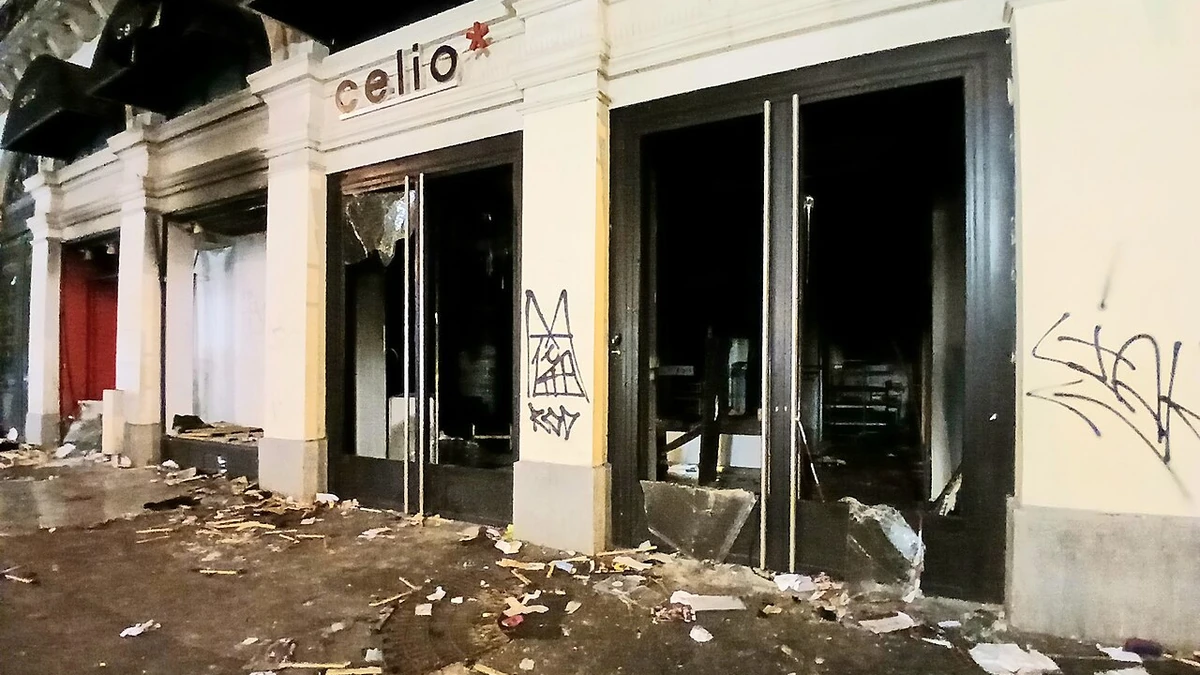
French retailers are facing a potential bill running into hundreds of millions of euros after shops were damaged and looted during unrest surrounding nationwide demonstrations on Saturday, October 17. Alexandre Bompard, president of the Fédération du commerce et de la distribution (FCD), estimated on Sunday that roughly 1,500 businesses had been directly affected across France.
Bompard told French broadcaster LCI that it was too early to calculate the damage precisely, but described the expected direct financial cost as several hundred million euros. His estimate is an initial industry assessment, not a verified total of repair bills, lost stock or insurance claims. The final figure will depend on the damage reported by individual businesses and the outcome of assessments.
The demonstrations brought large crowds onto French streets amid complaints about living costs and public services. Violence and looting took place in several cities, although the damage should not be conflated with the actions of the many people who demonstrated peacefully. For affected retailers, the immediate concern is how quickly damaged premises can be secured, repaired and reopened.
Carrefour reports damage at about 50 outlets
Carrefour is among the large chains tallying losses. Bompard, who is also the retailer’s chief executive, said about 50 of its stores were affected, spanning hypermarkets, supermarkets and smaller neighborhood outlets. Around 20 were looted, according to his account. He cited incidents in cities including Paris, Rennes, Lille and Bordeaux.
The distinction between a damaged store and a looted one is important. The wider count includes outlets affected in different ways and does not mean that every shop was emptied or destroyed. For Carrefour and its partners, Bompard indicated that the costs could run into the tens of millions of euros, while repairs to some premises could take longer than an ordinary cleanup.
Those chain-level figures and the FCD’s nationwide estimate are not separate amounts to add together. Carrefour’s losses form part of the retail industry’s exposure, and the preliminary estimates do not yet provide a consistent breakdown of damage to buildings, equipment, inventories and trading activity. Treating the early numbers as a final insured-loss figure would also be misleading.
Disruption extends beyond supermarkets and clothing chains. UMIH, which represents hospitality businesses in France, said hotels, cafés and restaurants had also faced damaged windows, threatened premises and interrupted operations. In an October 18 statement, the association asked affected operators to contact its local branches so it could compile a more detailed account of the harm and assist with compensation procedures.
Such interruptions can put particular pressure on smaller businesses. A smashed entrance or stolen stock creates an immediate replacement cost, but a closure can also leave a shop paying regular expenses without normal sales. The severity of that financial strain depends on how long trading is interrupted, the resources available to the operator and the insurance the business carries.
Paris mobilizes cleanup crews and support for merchants
In Paris, city officials moved to clear debris and reopen public spaces while merchants began examining their losses. The capital said on October 18 that nearly 1,000 municipal cleaning workers had been mobilized overnight and on Sunday morning. Teams were removing debris, cleaning streets and repairing damage to public areas in several affected neighborhoods.
The city said its assessment of damage to public property was still underway. It also announced an emergency support unit for shopkeepers whose premises were damaged. Mayor Emmanuel Grégoire met arrondissement mayors on Sunday morning to review local needs and coordinate the next round of municipal work.
That response addresses two different problems. Clearing streets may restore access to a shopping district, but it does not automatically make an individual store safe or ready to reopen. Business owners may still need replacement glazing, security repairs, new equipment or an inventory of what was taken before resuming normal trading.
Paris officials separately emphasized that the violent incidents should not be confused with the largely peaceful demonstrations. The distinction matters when describing the business fallout: Bompard’s damage estimate concerns violence associated with the events, not a claim that the people taking part in the protests generally attacked shops.
The city’s assessment of damage to public infrastructure is still underway and is separate from the retailers’ preliminary losses. Any broader cost estimate would need to define whether it includes municipal repairs, private property damage, stolen inventory or lost revenue before those amounts could be compared meaningfully.
Insurance terms will shape the eventual cost
How much of the burden ultimately stays with shop owners will depend in part on their policies. France Assureurs explains that many commercial property contracts include protection for riots and civil disturbances, with compensation determined by the particular coverage purchased for fire, theft, broken glass and other damage. Such coverage is not identical across businesses.
Losses arising from a temporary closure are a separate question. Business-interruption protection, which is optional, can compensate for lost gross margin when a covered incident causes physical damage that forces a store to close fully or partly. A damaged shop therefore cannot assume that missed sales will be reimbursed simply because its building insurance covers repairs.
The claims process also creates near-term obligations. France Assureurs advises businesses to make a police complaint before notifying their insurer, and to report the loss promptly. Contracts generally specify a period of five days from discovering the damage, although the applicable policy governs. Owners will need to establish what was damaged or stolen and work with insurers on the scope of repairs and any interruption claim.
France has faced large riot-related insurance claims before, but those figures should not be mistaken for a forecast of the latest losses. France Assureurs reported 15,600 claims totaling €730 million two months after unrest began in late June 2023. That number covered insured damage across business property, public property, vehicles and other categories, making it different in both scope and timing from the FCD’s initial 2026 retail-sector estimate.
For now, the several-hundred-million-euro estimate is a warning from retail representatives about the possible scale of the damage, rather than a settled sum that insurers or public authorities have accepted. UMIH is collecting reports from affected businesses, and Paris has started assisting shopkeepers while its own damage assessment continues. More reliable totals will require store-by-store documentation and insurers’ evaluations of the claims that follow.
More News

Latest News
View all news- UK Announces Nearly £140 Million for 14 Urgent-Care Projects Ahead of Winter
- Japanese Investors Outline $1.2 Billion Tourism Investment Plan in Bangladesh
- Israel Revises Second-Quarter GDP Growth Up to 15.4% in New October Estimate
- Australian Government Commits A$6 Million to Western Australia’s Telethon
- Anthropic Co-Founder Cites Scenario of $44 Trillion U.S. GDP by 2030 as AI Advances
