
UK Announces Nearly £140 Million for 14 Urgent-Care Projects Ahead of Winter
Queen’s Hospital in Romford will receive £42.1 million for an A&E overhaul, while other projects fund ambulances, same-day care and hospital upgrades across England.
Our editorial standards
MarketReview publishes clear, independently produced financial information using reliable sources and transparent editorial standards.
Read our Editorial Policy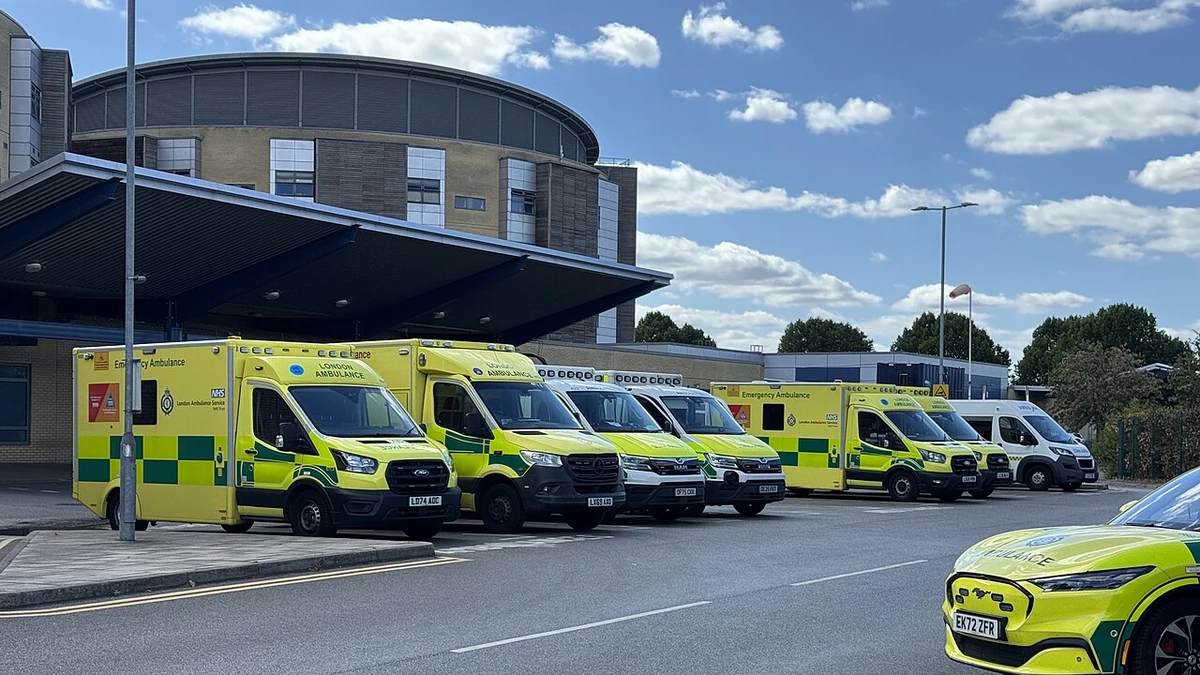
The UK government announced nearly £140 million for 14 urgent-care projects across England on Sunday, October 18, as the National Health Service prepares for higher demand during the winter. The funding covers emergency department refurbishments, new treatment facilities, ambulances and systems designed to help hospitals manage beds and admissions.
The largest single allocation is £42.1 million for Queen’s Hospital in Romford, east London. Its accident and emergency department was designed to handle about 325 patients a day but now regularly treats more than twice that number, according to the Department of Health and Social Care. The planned overhaul is intended to ease crowding and improve the way patients move through the department.
The money is spread across several kinds of projects rather than a single nationwide building programme. The government’s published breakdown of the 14 schemes includes commitments lasting two, three or four years, which means the announcement should not be read as a promise that every new facility will be finished before this winter.
Separately, ministers say 25 urgent-care sites from an earlier programme are opening or expanding for the winter period. Those sites are not an additional 25 projects funded by the newly announced £140 million. The distinction matters because the two announcements have different budgets and delivery schedules.
Queen’s Hospital leads the emergency department upgrades
At Queen’s Hospital, the £42.1 million plan calls for a major redesign of A&E, dedicated waiting areas, changes to improve staff visibility, a refurbished children’s emergency department and upgraded digital systems. The government says the work should help reduce waits and the use of corridors to care for patients. Those are intended benefits, not measured improvements from a project that has already been completed.
Another £18.4 million will support digital changes in emergency departments across London over three years. The proposed check-in and triage tools are meant to help staff identify patients’ needs earlier and direct them to the appropriate service. That allocation is separate from the physical redevelopment at Queen’s Hospital, even though both address how busy emergency departments process patients.
In Essex, Basildon Hospital is due to receive £6 million over two years for an emergency department refurbishment. Its rapid assessment, triage and treatment area is planned to expand from three bays to eight, giving clinical teams more places to examine patients at the same time. Norfolk and Norwich University Hospital has £4.86 million earmarked for emergency department improvements, while the University Hospital of North Tees is allocated £1 million over two years for its entrance, reception and waiting areas.
Not all the work involves additional treatment rooms. Addenbrooke’s Hospital in Cambridge is allocated £7.7 million over four years for a digital coordination centre intended to give staff a more timely picture of beds, discharges and urgent admissions. Lister Hospital in Stevenage will receive £2 million for extra escalation, general and acute beds. Together, those plans address a familiar problem in emergency care: patients who have been assessed in A&E may still face delays if the appropriate ward bed is unavailable.
Ambulance capacity and same-day care receive funding
The programme also targets ambulance operations outside London. A £12 million replacement hub in Shrewsbury will provide space for preparing and maintaining vehicles, as well as staff facilities. East Midlands Ambulance Service has been allocated £6.35 million for 40 additional double-crewed ambulances. The government expects the extra vehicles and staffing capacity to support responses to 999 calls, particularly when demand rises.
For people who need urgent assessment but may not require an overnight hospital stay, several hospitals are being funded to develop same-day emergency care. Queen’s Medical Centre in Nottingham is allocated £12.9 million for a new facility, and Airedale General Hospital will receive £6.76 million for a similar project. At the Royal Albert Edward Infirmary in Wigan, £4.7 million is intended to relocate and improve same-day care closer to A&E and diagnostic services.
Same-day emergency care allows suitable patients to be assessed, diagnosed and treated without automatically being admitted to a ward. It does not remove the need for conventional emergency departments, particularly for patients with serious or unstable conditions. Its value depends on appropriate clinical assessment and on the capacity of hospital teams to complete investigations and treatment promptly.
Two Norfolk hospitals are receiving funding for urgent treatment centres. James Paget University Hospital in Gorleston has £10 million for a new centre, while Queen Elizabeth Hospital in King’s Lynn is allocated £3.9 million to upgrade an existing one. Urgent treatment centres handle problems such as minor injuries and illnesses that need attention but are not life-threatening, helping reserve the main emergency department for more seriously ill patients.
Earlier winter openings follow a different timetable
The October funding follows a separate announcement in April, when the government identified 40 new or expanded urgent treatment and same-day emergency care services backed by £215.5 million. That earlier programme covered 10 new urgent treatment centres, four expansions of existing centres, five new same-day services and 21 expansions. The latest statement gives an opening-status update for 25 of those previously announced sites; it does not describe them as part of the new 14-project funding allocation.
Of the 25 entries in the October status list, 17 are marked open. The remaining eight have expected opening dates ranging from October 2026 to January 2027. Southampton General Hospital has both a new urgent treatment centre and a new same-day emergency care service listed for November, while planned openings at Salisbury District Hospital and North Middlesex Hospital are among those scheduled for December.
Two same-day emergency care expansions, at Mid Yorkshire Hospitals NHS Trust and Royal Devon, are listed for January 2027. Although the government describes the earlier sites as being available for the winter period, its own schedule therefore extends beyond the end of 2026. No common completion date is provided for the newly funded 14 projects, and several of their published allocations explicitly cover multiple years.
The investment follows a summer that the government describes as the busiest on record for NHS emergency services. Officials are concerned that influenza, norovirus and other seasonal illnesses could add to the load on hospitals. The department says more than 7.4 million flu vaccinations had been delivered in England by October 11 and is urging eligible people to be vaccinated. It is also highlighting extended GP access and the Pharmacy First service as ways of treating some conditions without an A&E visit.
The £140 million announcement sits within a wider capital programme rather than representing the entire urgent-care budget. Ministers say almost £2 billion is being invested in urgent-care capital projects through 2030. They also cite £1.5 billion of confirmed funding for urgent maintenance across NHS buildings, a distinct purpose from the new treatment and ambulance schemes.
For patients, the next concrete changes will depend on individual projects opening and becoming operational. The government’s timetable identifies further openings in November and December and two expansions expected in January 2027, while the larger new hospital upgrades have their own longer delivery periods.
More News


Latest News
View all news- Japanese Investors Outline $1.2 Billion Tourism Investment Plan in Bangladesh
- Israel Revises Second-Quarter GDP Growth Up to 15.4% in New October Estimate
- French Retailers Estimate Hundreds of Millions of Euros in Damage After Nationwide Protests
- Australian Government Commits A$6 Million to Western Australia’s Telethon
- Anthropic Co-Founder Cites Scenario of $44 Trillion U.S. GDP by 2030 as AI Advances
