hGears German Subsidiary Files for Insolvency Under Self-Administration
The filing is limited to hGears Schramberg GmbH, which generated about 26% of first-half group revenue, while the parent assesses possible financial effects.
Our editorial standards
MarketReview publishes clear, independently produced financial information using reliable sources and transparent editorial standards.
Read our Editorial Policy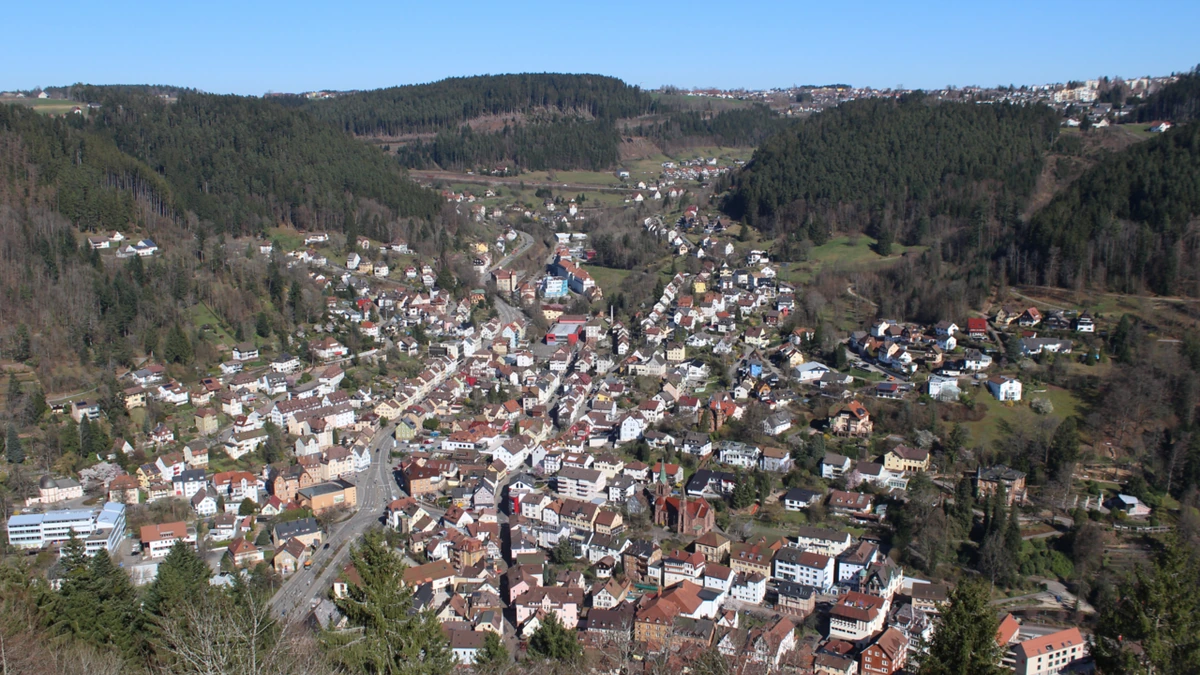
hGears AG’s German operating subsidiary, hGears Schramberg GmbH, filed an application with the Local Court of Rottweil on September 7 to open insolvency proceedings under self-administration after becoming unable to meet its payment obligations. hGears said the filing is intended to create a legal framework for restructuring the Schramberg site while keeping the business running.
The application is limited to the Schramberg subsidiary. hGears AG and the group’s operating companies in Padova, Italy, and Suzhou, China, are currently not affected, according to the company. Management of the German unit is expected to remain in office and direct the restructuring if self-administration is ordered.
In its September 7 corporate announcement, hGears tied the insolvency to persistently insufficient production volumes and a cost base that was too high for the current level of business. The company said earlier structural, efficiency and cost-reduction measures had not been enough to make the site economically viable under changed market conditions.
The Schramberg unit is material to the group even though the filing is confined to one subsidiary. It accounted for around 26% of hGears’ consolidated revenue in the first half of 2026. hGears also said a domination agreement between hGears Schramberg GmbH and hGears AG could create financial effects for the parent, with the nature and extent depending on how the proceedings develop.
Weak volumes made the Schramberg site unsustainable
Several months of company reporting had already shown pressure from lower volumes. In the first half of 2026, hGears reported group revenue of EUR 46.8 million, down 5.6% from a year earlier. Adjusted EBITDA fell to EUR 0.4 million from EUR 1.1 million, although free cash flow improved by EUR 3.4 million year over year to EUR 1.1 million. Cash and cash equivalents stood at EUR 7.2 million on June 30.
The weakest business area was e-Bike, which is especially important to the Schramberg operation. First-half e-Bike revenue dropped 31.2% to EUR 5.1 million as hGears cited persistently weak bicycle production, continuing inventory reductions along the value chain and a difficult comparison with production pulled forward in the prior year. By contrast, [e]-Mobility revenue rose 7.0% to EUR 25.5 million, while e-Tools revenue fell 11.8% to EUR 15.9 million.
The September 7 filing makes clear that the weakness at Schramberg went beyond a temporary earnings drag. hGears said low production volumes had led to significant underutilization of the site’s existing production structure, while the cost base remained too high for the amount of business being processed there. Management said the structural and efficiency measures already taken had not been sufficient to restore economic viability at the site without court-supervised restructuring.
The longer trend also points to sustained pressure in e-Bikes. For full-year 2025, hGears reported e-Bike revenue of EUR 9.8 million, down 46.7% from the prior year. Group revenue declined 4.1% to EUR 91.8 million, while adjusted EBITDA improved to EUR 1.6 million as cost reductions took effect. Cash and cash equivalents nevertheless fell to EUR 8.7 million at the end of 2025 from EUR 17.1 million a year earlier.
Only a few weeks before the insolvency filing, hGears had said it had secured the bridge financing contemplated in its 2025 annual report based on its planning for the second half of 2026. It also confirmed full-year guidance for revenue of EUR 80 million to EUR 90 million, adjusted EBITDA between minus EUR 3 million and break-even, and free cash flow between minus EUR 5 million and minus EUR 2 million. The September 7 announcement did not provide revised group guidance. Instead, hGears said it was assessing the effect of the subsidiary’s insolvency on the parent’s assets, financial position and results of operations.
Self-administration keeps management in place under court oversight
Self-administration under German insolvency law is designed to let a debtor continue managing its business and insolvency estate rather than automatically handing control to a conventional insolvency administrator. Under Section 270 of the German Insolvency Code, that arrangement applies when the insolvency court orders self-administration in the decision opening the proceedings, with the debtor operating under the supervision of a court-appointed monitor.
That distinction matters in hGears’ case because the September 7 step is an application for the opening of proceedings under self-administration, not the final court order itself. hGears said the Schramberg management is expected to remain in office and steer the restructuring process, and that operations are planned to continue after the filing. The company’s announcement did not disclose a final restructuring plan, the identity of any court-appointed monitor, or a timetable for a court decision.
Continuation of production is therefore the company’s stated objective, but the filing itself does not determine the eventual scope of the restructuring. The court process will establish the legal framework under which management, creditors and the supervisory functions of the insolvency regime address the site’s cost structure, capacity and financing needs. hGears has not yet quantified what changes will be required at Schramberg.
The parent company still faces financial uncertainty
For investors in hGears AG, the most important unresolved issue is how far the subsidiary’s insolvency reaches into the parent company’s finances. The group emphasized that hGears AG itself and the operating subsidiaries in Italy and China are currently not affected and are continuing business as usual. That limits the immediate legal scope of the filing, but it does not eliminate potential financial consequences for the listed parent.
The domination agreement between hGears AG and hGears Schramberg GmbH is the specific link highlighted by the company. hGears said the agreement may result in financial effects for the parent in connection with the insolvency proceedings, but it did not estimate a charge, cash outflow or balance-sheet impact. Any such effect will depend on the further course of the case, according to the September 7 disclosure.
The Schramberg site also remains a meaningful part of hGears’ manufacturing footprint. The group produces high-precision gears, shafts and other components used in e-bikes, electric and hybrid vehicles, and electric tools, with production sites in Germany, Italy and China. Because the German subsidiary generated around a quarter of group revenue in the first half, the eventual restructuring outcome could affect how much production remains in Schramberg and how the group allocates work across its plants.
The next concrete developments will come from the Local Court of Rottweil and from hGears as the financial consequences become clearer. The company said it will update the capital market on material developments during the proceedings. For now, hGears has identified an inability to meet payment obligations at the Schramberg subsidiary and sought a self-administered insolvency process, while the final restructuring terms and the financial burden on hGears AG remain unquantified.
More News


Latest News
View all news- U.S. Crude Inventories Fall 3.1 Million Barrels in Latest EIA Report
- Thermo Fisher Scientific Reports 9% Revenue Growth to $12.14 Billion
- OCC Issues Final Rule to Implement GENIUS Act Stablecoin Regulations
- Ohio Auto Parts Manufacturer Agrees to Pay $3 Million Over PPP Loan Allegations
- CFTC Announces $9.2 Million Penalty in Louisiana Forex Fraud Case