ITOCHU Starts Market Buybacks of Up to ¥150 Billion After Tender Offer
The Japanese trading house bought 82.7 million shares in an oversubscribed tender offer and will use the remaining authorization for Tokyo Stock Exchange purchases.
Our editorial standards
MarketReview publishes clear, independently produced financial information using reliable sources and transparent editorial standards.
Read our Editorial Policy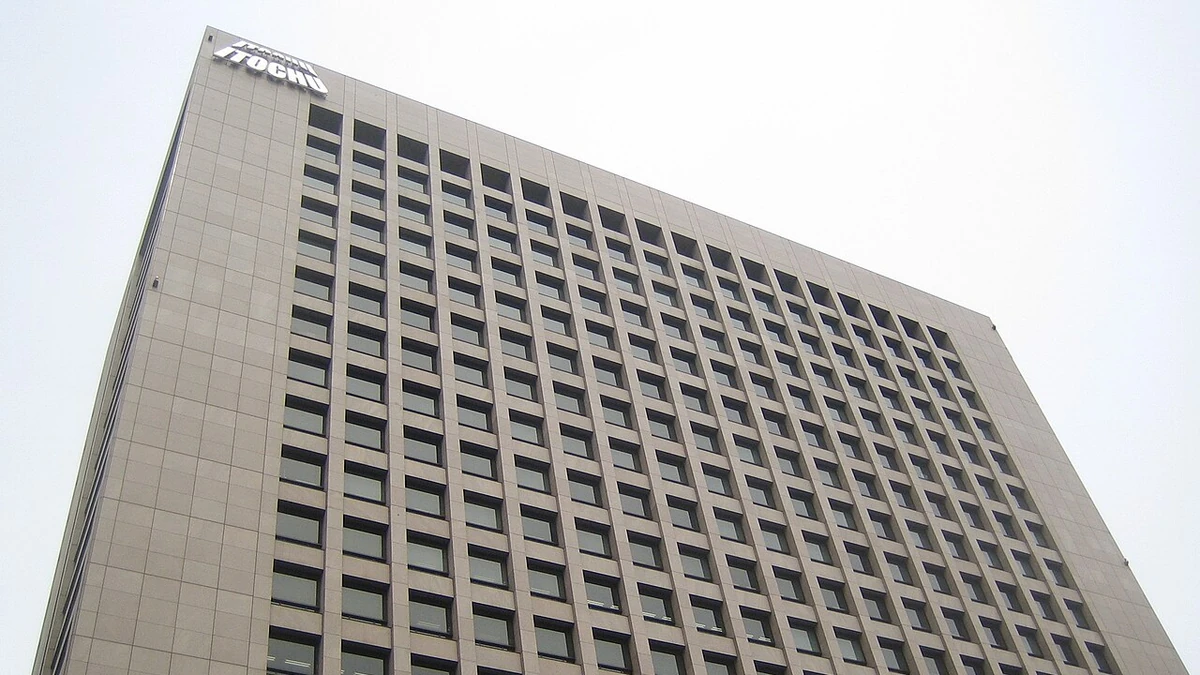
ITOCHU Corporation said it would begin buying back its own shares in the market on September 2 after completing a month-long tender offer, shifting the second phase of a ¥300 billion repurchase authorization onto the Tokyo Stock Exchange. The company said the market-purchase amount is capped at approximately ¥150 billion, representing the portion of the board authorization left after the tender offer.
Shareholders submitted 83,403,785 shares before the tender offer closed on September 1. ITOCHU ultimately bought 82,735,750 shares at ¥1,813 each, using just under ¥150 billion of the authorization. The combined repurchase program, approved by the board on August 3, is capped at 190 million shares and ¥300 billion through January 29, 2027.
Market purchases take over from the tender offer
In its September 2 disclosure, ITOCHU said it planned to start purchases on the Tokyo Stock Exchange that day. The company described the remaining monetary limit as approximately ¥150 billion because it is calculated by subtracting the tender offer’s acquisition price from the ¥300 billion maximum authorized by the board.
The authorization covers the period from August 4, 2026 through January 29, 2027. It also sets a maximum of 190 million shares, equal to about 2.7% of issued shares excluding treasury stock at the time of the resolution. The market phase does not create a new ¥300 billion program; it uses the unused portion of the same board-approved ceiling after the tender offer was completed.
ITOCHU has also cautioned that the full authorization may not be used. Its August 3 announcement said some repurchases might not be carried out because of market conditions and other factors. That distinction matters because the ¥150 billion figure is a maximum available for market purchases, not a commitment that exactly that amount will be spent.
Settlement for the tender offer is still ahead. ITOCHU set September 28 as the commencement date for settlement, with Daiwa Securities acting as tender offer agent. Market buying can proceed separately during the remaining repurchase window.
Discounted tender drew more shares than ITOCHU planned to buy
At launch, the tender price was set at ¥1,813 per share, a 10% discount to its ¥2,014 closing price on the Tokyo Stock Exchange on July 31, the business day before the board approved the repurchase. The company said it favored a discounted tender price to limit the outflow of corporate assets and protect the interests of shareholders who chose to remain invested.
The final offer was modestly oversubscribed. ITOCHU had stated that it would purchase 82,735,700 shares, while shareholders tendered 83,403,785. Because the submitted amount exceeded the planned purchase quantity, the company applied a pro rata allocation process under Japanese tender-offer rules. After the allocation and rounding procedure described in the filing, the final number purchased was 82,735,750 shares, 50 shares above the stated purchase quantity.
ITOCHU designed the offer partly around the planned reduction of cross-shareholdings by four non-life insurers that held its stock. During negotiations, ITOCHU approached Mitsui Sumitomo Insurance, Aioi Nissay Dowa Insurance, Sompo Japan Insurance and Tokio Marine & Nichido Fire Insurance. The company initially considered a 15% discount, but several of the prospective tendering shareholders indicated that a 10% discount was the level they could accept. ITOCHU then adopted 10%, noting that it was also the most common discount among the comparable issuer tender offers it had reviewed.
Before launch, those four insurers had indicated plans to tender an aggregate 82,735,700 shares, equal to about 1.18% of ITOCHU’s issued shares excluding treasury stock based on the company’s June 30 share count. The final September 2 disclosure reports only the aggregate tender result rather than identifying the shareholders whose shares were ultimately purchased, so the completed allocation should not be treated as a confirmed seller-by-seller breakdown.
Funding for the tender offer was to come from ITOCHU’s own cash. As of June 30, the group reported ¥673.419 billion of cash and cash equivalents. It also pointed to existing commitment lines and operating cash flow of ¥1.132 trillion for the fiscal year ended March 2026 as support for its view that the repurchase could be funded without undermining business operations or financial stability.
The buyback sits inside a record shareholder-return plan
The current repurchase is part of a broader FY2026 capital-return policy. ITOCHU’s management plan calls for share buybacks of ¥300 billion or more for the fiscal year ending March 2027, alongside a full-year dividend of at least ¥44 per share. The company forecasts a total payout ratio of 64%, which would be above the 40% minimum set in its management policy, and it is targeting an approximately 15% return on equity.
The return plan sits alongside an aggressive investment budget rather than replacing growth spending. Its FY2026 plan calls for roughly ¥1.5 trillion of investment, including about ¥1.2 trillion in new investments excluding capital expenditure. By the first-quarter update in August, the company said approximately ¥670 billion had already been executed or committed against that ¥1.2 trillion new-investment plan.
The size of the present authorization is also large compared with several recent repurchase programs. ITOCHU spent about ¥150 billion on market purchases between August 2024 and January 2025, another ¥150 billion between May and December 2025, and about ¥20 billion between February and March 2026. Its shareholder-return materials describe the ¥300 billion FY2026 buyback as a record level for the company.
For investors, the September 2 announcement marks a change in execution method rather than a change in the overall capital-return ceiling. The tender offer absorbed roughly half of the authorized amount at a fixed discounted price, and the remaining capacity can now be deployed through market purchases at prices formed on the exchange. That gives ITOCHU more flexibility over timing and price, while leaving the total board authorization unchanged.
The next fixed date is September 28, when settlement of the tender offer is scheduled to begin. The market-purchase program can continue through January 29, 2027, subject to the ¥300 billion combined cap, the 190 million-share ceiling and market conditions.
More from Investing

Latest News
View all news- U.S. Median Weekly Pay Rises 1.5%, Trailing 3.5% Consumer Inflation
- U.S. Mortgage Applications Drop 5.3% Even as 30-Year Rate Falls to 7.41%
- U.S. Energy Department Offers Up to 315,000 Barrels From Heating Oil Reserve
- U.S. Crude Inventories Fall 3.1 Million Barrels in Latest EIA Report
- OCC Issues Final Rule to Implement GENIUS Act Stablecoin Regulations