
Kansas City Fed Releases October Manufacturing Survey as Factories Face Cost Pressures
Factory activity continued to expand at a slower pace, while more than half of surveyed manufacturers said customers had grown more sensitive to price increases.
Our editorial standards
MarketReview publishes clear, independently produced financial information using reliable sources and transparent editorial standards.
Read our Editorial Policy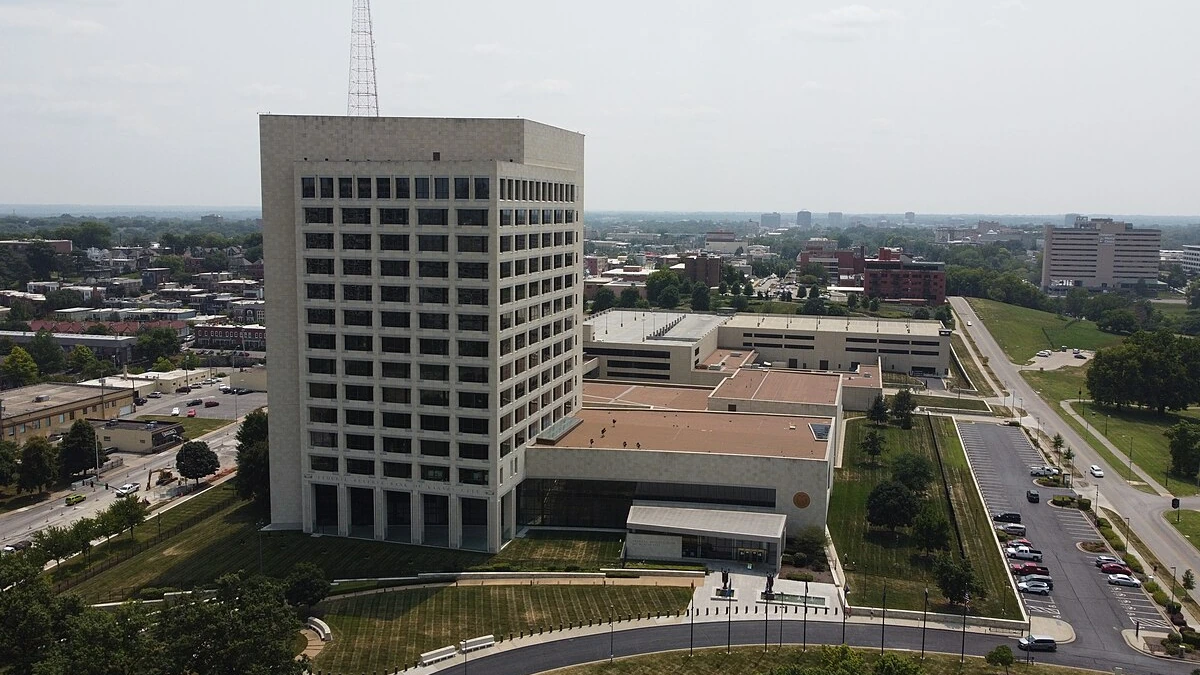
Manufacturing activity across the Federal Reserve’s Tenth District kept expanding in October, but growth cooled as factories faced rising raw-material costs and customers became more resistant to price increases. The Federal Reserve Bank of Kansas City’s composite manufacturing index slipped to 11 from 14 in September, its latest survey showed Thursday.
The price squeeze emerged clearly in questions about what manufacturers can charge their customers. More than half of respondents said buyers had become more sensitive to price changes over the previous six months, and about one in six firms said they could not pass any of their higher costs along. Despite those pressures, the district’s six-month outlook improved.
The October 22 manufacturing survey covers factories in a region stretching from western Missouri to the Rocky Mountain states. Its composite index averages diffusion readings for production, new orders, employment, supplier delivery times and raw-material inventories. It describes the balance of respondents reporting increases versus decreases, not the percentage change in factory output.
Growth moderates, with some weakness in orders
October’s reading of 11 remained above August’s 10, extending a run of positive monthly activity readings. Yet the drop from September’s 14 shows that the expansion lost some breadth. The Kansas City Fed reported slightly slower growth among both durable-goods and nondurable-goods producers, with printing activity a notable source of strength.
The soft spots were concentrated in demand indicators. Backlogs of orders and new export orders were the only two month-over-month indexes below zero, even though the other measures remained positive. Most of the monthly indexes also fell from September. That combination suggests manufacturers were still busy but were not seeing the same breadth of improvement in incoming business.
There were exceptions to the slower readings. The employment, supplier-delivery-time and raw-material-inventory indexes increased from the prior month. Employment remained a mixed signal across time frames: the monthly measure was positive, but the year-over-year employment index was negative. The district’s broader year-over-year composite eased to 11 from 15 in September.
Because the indexes report the balance of responding factories rather than tonnage or payroll totals, they cannot say how much regional output or employment changed. A lower but positive composite points to a slower diffusion of growth, not an outright manufacturing contraction.
Factories have less room to raise selling prices
The October report showed a more difficult balance between costs and pricing. Raw-material price growth strengthened, while the pace of finished-goods price increases eased. Both developments can occur together: a factory may be paying more for materials even as competition and customer caution limit how quickly it can adjust its own prices.
In the survey’s special questions, 35% of manufacturers said they were able to pass through only 1% to 20% of their higher costs. Another 16% said they could not pass along any increase. Together, those categories accounted for 51% of respondents, although the answers describe firms’ assessments of pricing ability rather than a direct calculation of profit margins.
At the other end, 13% reported passing through 81% to 100% of their higher costs, and 1% said they could pass through more than the full increase. Results therefore varied considerably among firms. The survey does not establish that every factory was experiencing the same cost shock or had the same leverage with customers.
Price sensitivity was widespread in the responses. Some 22% said customers were much more sensitive to price changes than six months earlier, while 31% said buyers were somewhat more sensitive. Another 41% saw little change. The percentages reflect manufacturers’ views of their customers, not a separate survey of households or business purchasers.
Selected comments illustrated how uneven the pressure had become. One manufacturer said, “Fuel surcharges are being implemented as we can no longer absorb increased fuel cost.” Other respondents described pressure from freight, health insurance and competition, while a different firm said its customers continued to accept higher prices. Those individual accounts add context, but the survey does not present them as representative of every plant.
The cost picture is consistent with observations in the Federal Reserve’s October 14 Beige Book report for the Kansas City district. Manufacturing contacts described higher aluminum, copper and fuel costs, along with more expensive shipping and inventory delays. The Beige Book also reported that many manufacturers had been able to pass costs on, showing why the ability to raise prices remains an important dividing line across businesses.
Outlook improves despite a cautious customer base
For the coming six months, manufacturers reported brighter expectations than in September. The composite index for expected activity rose to 22 from 19, reaching its highest reading since July 2022. Firms also reported an increase in the index for expected employment. Those figures measure the balance of expectations, however, not an assured increase in production or hiring.
The October Beige Book described durable-goods demand tied to military contracts and data-center construction. It also reported that some of this work was crowding out other production and putting pressure on available labor. With hiring difficult, certain firms were extending shifts and offering overtime to meet orders.
On demand, one respondent described shipments being supported by previously booked orders even as customers placed fewer advance orders. That account fits the concern raised by October’s negative readings for order backlogs and export orders, but it cannot establish a districtwide slump by itself. Stronger six-month expectations therefore coexist with questions about how quickly fresh orders will arrive.
The latest survey was conducted October 14 through October 19 and received responses from 95 manufacturing plants across the seven-state district. That makes it a timely regional snapshot, not a national manufacturing census or a direct reading of consumer inflation. Its mix of positive activity, elevated input costs and selective pricing power comes ahead of the Federal Reserve’s scheduled October 27-28 policy meeting, where officials will have a broader set of economic data to consider.
The Kansas City Fed’s next manufacturing survey is scheduled for November 19. Its orders and pricing responses will help show whether October’s softer demand indicators persist and whether factories gain any more room to recover higher costs through selling prices.
More News


Latest News
View all news- Union Pacific Third-Quarter Profit Rises 16% to $2.1 Billion as Freight Volumes Grow
- Nasdaq Q3 Revenue Jumps 13% as Annual Recurring Revenue Reaches $3.4 Billion
- Blackstone Reports Third-Quarter Earnings With Assets Under Management Near $1.4 Trillion
- BEA Expands State-Level R&D Economic Statistics With New 2024 Estimates
- Sweden’s Economy Grows 3.8% as Greenhouse Gas Emissions Decline, New Data Show
