Marvell to Acquire Lumentum in $115 Billion All-Stock Deal to Expand AI Connectivity Business
Lumentum investors would receive 4.5 Marvell shares for each share they own, with the $115 billion figure representing the target’s implied enterprise value.
Our editorial standards
MarketReview publishes clear, independently produced financial information using reliable sources and transparent editorial standards.
Read our Editorial Policy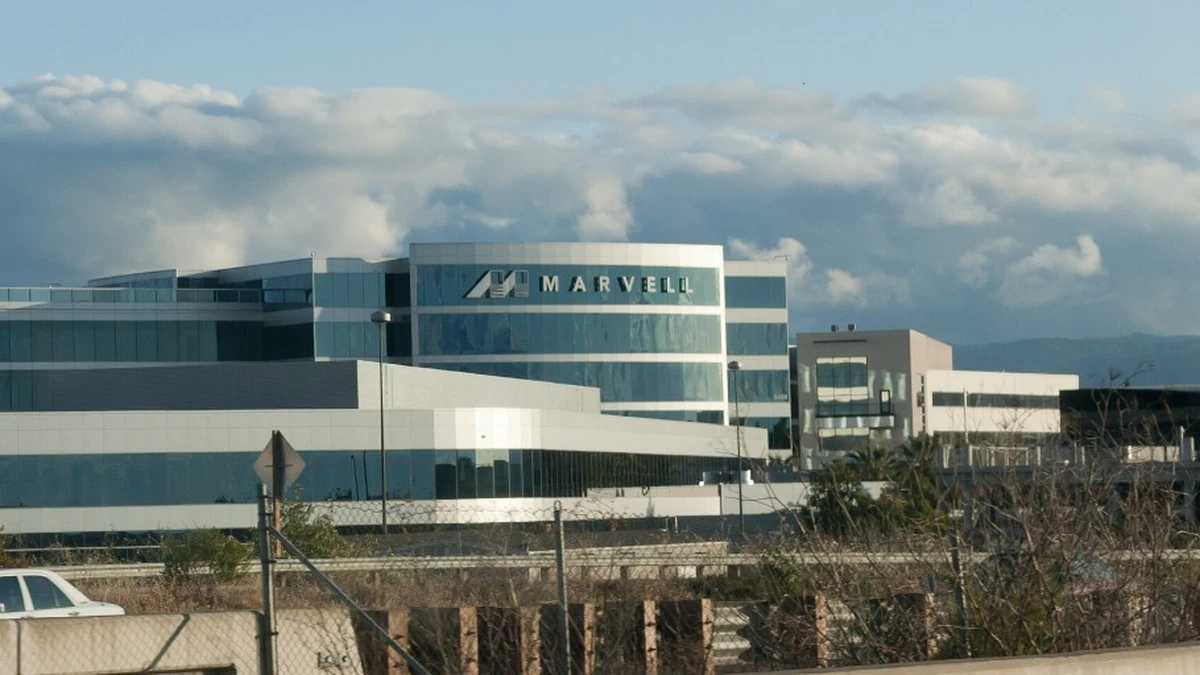
Marvell Technology agreed to acquire optical-components maker Lumentum in an all-stock deal carrying an implied enterprise value of $115 billion, a major expansion of its business supplying the connections used inside and between artificial intelligence data centers.
The companies announced the agreement on November 2, offering Lumentum shareholders 4.5 Marvell shares for each Lumentum share. Existing Marvell investors would own about 67% of the enlarged company after closing, with Lumentum investors holding about 33% on a fully diluted basis. The boards of both companies have approved the acquisition, which is expected to close in the first half of 2028 if shareholders and regulators give their approval.
Marvell makes semiconductors that process and move data across computing networks. Lumentum brings lasers, optical transceivers and optical switching technology, giving the buyer a larger role in the hardware that links the expanding clusters of processors used to train and run AI systems. The companies set out the financial terms and technology rationale in their joint announcement.
Stock-based terms leave the deal value tied to Marvell shares
The $115 billion headline figure is Lumentum’s implied enterprise value, rather than a cash payment to its shareholders or a fixed equity purchase price. The announced exchange ratio implies approximately $1,132 for each Lumentum common share, based on the share prices used to value the offer. That represented a 23.9% premium to the companies’ unaffected closing prices on October 28, the last trading day before speculation about a possible acquisition began.
Because the consideration consists of a fixed number of Marvell shares, the market value received by Lumentum investors will change as Marvell’s share price moves. The 4.5-for-one ratio is fixed, but the dollar figure is not locked in through a cash component. It is an important distinction for shareholders assessing a deal with a planned closing more than a year away.
Marvell’s November 2 securities filing describes a two-step legal merger involving its subsidiaries, with Marvell remaining the parent company. The economic result would be an acquisition of Lumentum, not two independently traded companies operating under a new parent. Lumentum investors would become significant Marvell shareholders rather than receiving a cash exit.
Matt Murphy is expected to remain chairman and chief executive, and three Lumentum directors, including its chief executive Michael Hurlston, would join Marvell’s board. Both boards unanimously approved the agreement, but shareholders of each company still have to vote.
Why lasers and optical switching matter to Marvell’s AI plans
AI data centers depend on networks that carry enormous amounts of data among processors, servers and facilities. Faster computing chips bring limited benefit if the connections feeding them cannot keep pace. As clusters expand, the power needed to transmit information and the practical limits of copper links become more pressing engineering constraints.
Marvell already supplies networking switches, optical signal-processing chips and custom silicon for data infrastructure. Lumentum adds capabilities further along the optical signal path, particularly high-performance lasers, transceivers and optical circuit switches. Its specialized compound-semiconductor manufacturing includes indium phosphide, a material used for high-speed optical components. Having more of those technologies within the same organization could allow engineers to design parts around one another rather than treat each as a separate component.
The companies want to serve several kinds of AI connections. Some carry data between geographically separated data centers; others link equipment inside a facility. The emerging requirements involve increasingly short, dense connections within tightly coupled computing systems and, potentially, advanced chip packages. Each distance places different demands on bandwidth, power consumption and how electrical signals are converted to light and back.
The companies have already tested parts of their hardware together. In March, Marvell and Lumentum announced a demonstration of Marvell optical connectivity products working with Lumentum’s R300 optical circuit-switching platform for AI infrastructure. That collaboration offers a practical example of the technologies they now intend to develop more closely. It does not, by itself, establish that all the expected products or performance improvements from an acquisition will be delivered.
Optical circuit switching is one part of the opportunity. It can direct light-based paths between endpoints rather than requiring traffic to pass through as many intermediate electronic switching stages. For customers operating large computing clusters, the potential benefits include lower network power use and shorter delays, although actual savings depend on the system design and workload. Marvell’s broader ambition is to offer customers more of the connecting hardware as a coordinated product portfolio.
The $550 billion market opportunity and $1 billion savings target
Marvell and Lumentum estimate that the acquisition would expand the business’s total addressable market to $550 billion. That is the companies’ estimate of the market they could potentially serve, not a projection of their annual sales or a committed customer spending total. Capturing any portion of that opportunity would depend on product execution, competition and how much AI infrastructure customers actually build.
Marvell expects more than $1 billion in annual run-rate cost savings and says the acquisition should add to its non-GAAP earnings per share in the first year after closing. Those are prospective benefits, not savings already achieved or earnings guaranteed by the agreement. The companies have not reported those targets as realized results.
Cost savings could depend on bringing research, manufacturing and operating activities under a common plan without weakening the capabilities customers rely on. The optical business requires specialized production processes, and that can limit how easily facilities or engineering functions can be consolidated. The companies also face the challenge of maintaining customer relationships while the acquisition is pending and afterward.
A broader product portfolio could help Marvell compete for larger roles in AI networking designs. Customers must still be convinced that the products meet demanding performance, reliability and delivery schedules. Supplying more component types does not automatically mean winning a larger share of each customer’s spending.
Shareholder votes and regulatory review remain ahead
The acquisition is scheduled for completion in the first half of calendar 2028, subject to both shareholder approvals, regulatory clearances and other closing conditions. Marvell must obtain approval for the shares it plans to issue and an amendment increasing its authorized common stock. Lumentum shareholders must approve the merger agreement.
The securities filing outlines antitrust review under the Hart-Scott-Rodino Act and other required regulatory processes. Because the companies sell technologies used in advanced data-center networks, competition and supply-chain questions may form part of that review. The filing does not establish in advance what regulators will decide or whether they will require changes to the agreement.
The merger agreement also has material termination provisions. Under specified circumstances, Marvell would owe Lumentum $5.8 billion if Marvell abandons the agreement in favor of another proposal or its board withdraws support. Corresponding provisions set a $2.9 billion fee for Lumentum. A separate $3.2 billion fee could apply to Marvell in certain regulatory-failure scenarios. These amounts are conditional; they are not costs that automatically become payable simply because the companies signed the agreement.
Before shareholders vote, the companies expect to prepare an SEC registration statement on Form S-4 containing a joint proxy statement and prospectus. That document will provide further information on the share issuance, voting proposals and risks. Until those steps are completed and the required clearances are obtained, Marvell and Lumentum remain separate businesses and the acquisition is proposed rather than completed.
More from Investing



Latest News
View all news- U.S. Trade Commission Opens Five-Year Review of Tariffs on Chinese Mobile Access Equipment
- Westpac Reports A$6.8 Billion Annual Profit, Declares 77-Cent Final Dividend
- U.S. Manufacturing Activity Strengthens in October as ISM Index Rises to 55.5
- U.S. Construction Spending Falls 1.9% in September as Residential Building Outlays Slide
- UK Launches £700 Million Investment Programme to Unlock Up to 10 Strategic Industrial Sites