U.S. Trade Commission Opens Five-Year Review of Tariffs on Chinese Mobile Access Equipment
The U.S. International Trade Commission has opened required five-year reviews of antidumping and countervailing duty orders on Chinese mobile access equipment, with initial responses due Dec. 2.
Our editorial standards
MarketReview publishes clear, independently produced financial information using reliable sources and transparent editorial standards.
Read our Editorial Policy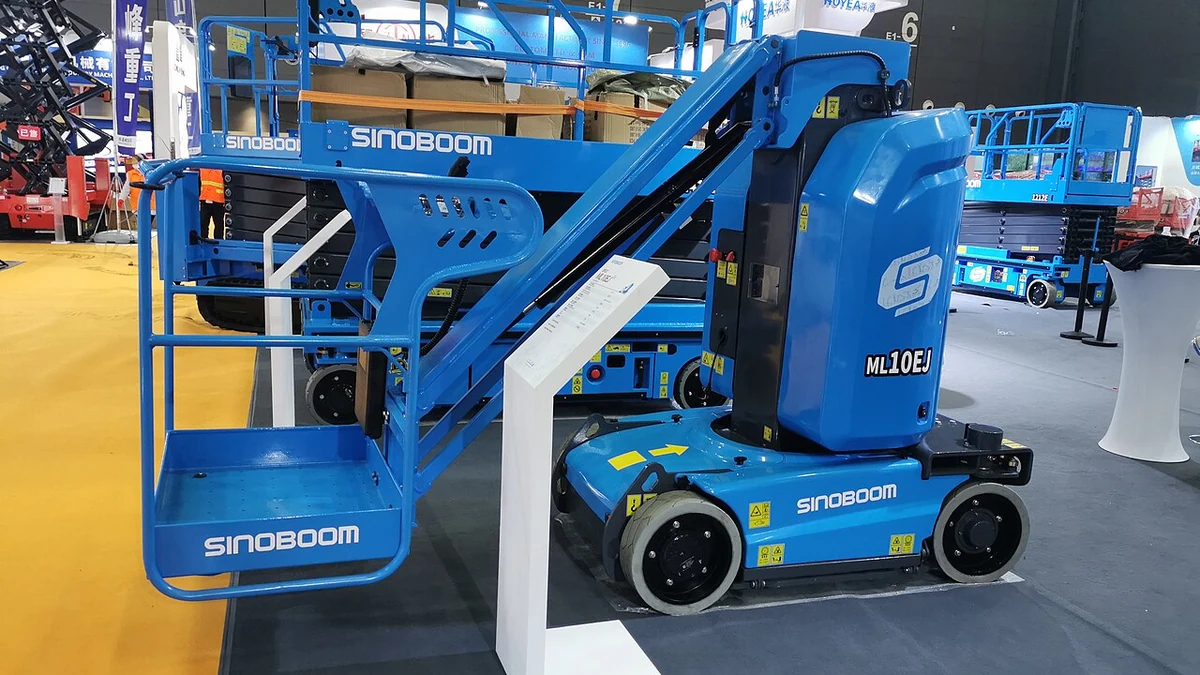
The U.S. International Trade Commission on Monday opened five-year reviews of existing tariffs on certain mobile access equipment and subassemblies from China, beginning the process that will determine whether those trade remedies should stay in place for another term.
The action does not impose a new round of duties. Instead, it starts what trade lawyers and manufacturers often call a sunset review, a periodic check required under U.S. law to decide whether revoking the current antidumping and countervailing duty orders would be likely to lead to the continuation or recurrence of material injury to a domestic industry within a reasonably foreseeable time.
In its Federal Register notice, the commission said the reviews were instituted on Nov. 2, 2026. Parties seeking to participate must meet a first important deadline quickly: responses to the notice are due by Dec. 2, 2026, and comments on the adequacy of those responses are due by Jan. 12, 2027.
That timetable matters because the commission will use those submissions to decide whether to conduct full reviews or move ahead on an expedited basis. Either way, the immediate question is not whether Chinese equipment is entering the U.S. market today, but whether removing the current orders would likely revive injury pressures that the duties were designed to address.
Review centers on existing antidumping and countervailing duty orders
The current proceeding covers two different but related trade remedies. According to the commission’s notice, the countervailing duty order on imports of mobile access equipment from China took effect on Dec. 10, 2021, while the antidumping duty order took effect on Apr. 14, 2022. The reviews now underway examine whether revoking those orders would be likely to lead to continued or renewed harm for U.S. producers.
That distinction is important for readers because “tariffs” is often used as a catchall term in headlines, but these cases are more specific. Antidumping duties address imports sold in the United States at less than fair value, while countervailing duties are aimed at imported goods that benefit from countervailable government subsidies. The commission’s role in a five-year review is not to recalculate a new duty rate. Its task is to evaluate likely injury to the domestic industry if the orders disappear.
The trade commission is only one part of the broader sunset-review framework. Under the process described by the USITC in its background material on five-year reviews, the U.S. Department of Commerce separately examines whether ending an order would likely lead to the continuation or recurrence of dumping or subsidization, while the commission examines the likely effect on U.S. producers. Orders generally remain in place unless both agencies reach negative conclusions in their respective reviews.
For manufacturers, importers, rental-equipment companies and distributors, the opening of the review is the formal signal that the next phase has begun. Firms that want their views considered typically need to decide quickly whether they will appear in the case and submit information on market conditions, production, imports and likely competitive effects.
Covered products include boom lifts, scissor lifts and telehandlers
The product scope is narrower than a broad phrase like industrial machinery might suggest. In a 2022 USITC factual highlights summary from the original case, the commission described mobile access equipment, or MAE, as equipment consisting primarily of boom lifts, scissor lifts and telehandlers, along with related subassemblies.
These are the kinds of machines used to lift workers, tools or materials to elevated work areas. The commission has described MAE as combining a mobile chassis with a lifting device, such as scissor arms or boom assemblies, capable of reaching a working height of ten feet or more. The covered merchandise can include finished equipment as well as important unfinished or unassembled subassemblies used to build that equipment.
That definition helps explain why the case matters beyond trade-law specialists. Mobile access equipment is used across construction, industrial maintenance, warehousing, utilities and equipment-rental fleets. A change in the trade-treatment of the equipment, or of major subassemblies, can affect sourcing decisions, pricing and competition in a market where buyers may compare imported products with machines assembled or produced in the United States.
The commission’s notice says that, in the original determinations, it treated finished MAE and MAE subassemblies as a single domestic like product for purposes of the investigation. It also said the domestic industry included U.S. producers of finished equipment and subassemblies, as well as firms engaged in assembly activities involving those subassemblies. That framing will shape whose interests are represented in the review and what kind of injury evidence the commission considers most relevant.
Next step is an adequacy test that can shape the rest of the case
The procedural next step is straightforward but important. After receiving responses, the commission will assess whether the participation from domestic and respondent interested parties is adequate. If the responses are adequate, or if other circumstances justify it, the agency can proceed with full reviews. If not, it can conduct expedited reviews based on the facts available.
The commission’s general background on five-year reviews says full reviews can include additional questionnaires, a public hearing and a more developed evidentiary record. Expedited reviews are narrower. In those cases, commissioners may base their determinations on the facts already on the record, prior findings, the responses to the institution notice and information collected by staff.
The notice also spells out the types of parties that may participate. Those include U.S. producers, unions or worker groups, U.S. importers, and foreign producers or exporters. Respondents are asked to address issues such as likely volume, price effects and likely impact on the domestic industry if the orders were revoked, as well as changes in supply, demand and competition since the orders took effect.
For companies that operate in the market, those requests are not just procedural boxes to check. They are the foundation for how the commission will build the record on current industry conditions and on whether lifting the orders could shift pricing, import volumes or market share in a way that harms domestic producers.
The public record for the proceeding is available through the commission’s EDIS docket system. Still, the most immediate dates to watch are Dec. 2 for responses to the institution notice and Jan. 12 for comments on the adequacy of those responses. Those filings will help determine whether this review develops into a fuller contested proceeding or moves ahead on a faster timetable.
More News


Latest News
View all news- Westpac Reports A$6.8 Billion Annual Profit, Declares 77-Cent Final Dividend
- SEC Opens Consultation on $100 Billion Alternative Compliance Cap for Security-Based Swap Dealers
- OCC and FDIC’s Revised Standards for Unsafe Banking Practices Take Effect
- Marvell to Acquire Lumentum in $115 Billion All-Stock Deal to Expand AI Connectivity Business
- U.S. Proposes Zero Dumping Margins for Two South Korean Power Transformer Manufacturers