SEC Opens Consultation on $100 Billion Alternative Compliance Cap for Security-Based Swap Dealers
The SEC is reviewing a request from Mizuho to double an eligibility cap for a regulatory compliance mechanism, while leaving the separate 10% activity test in place.
Our editorial standards
MarketReview publishes clear, independently produced financial information using reliable sources and transparent editorial standards.
Read our Editorial Policy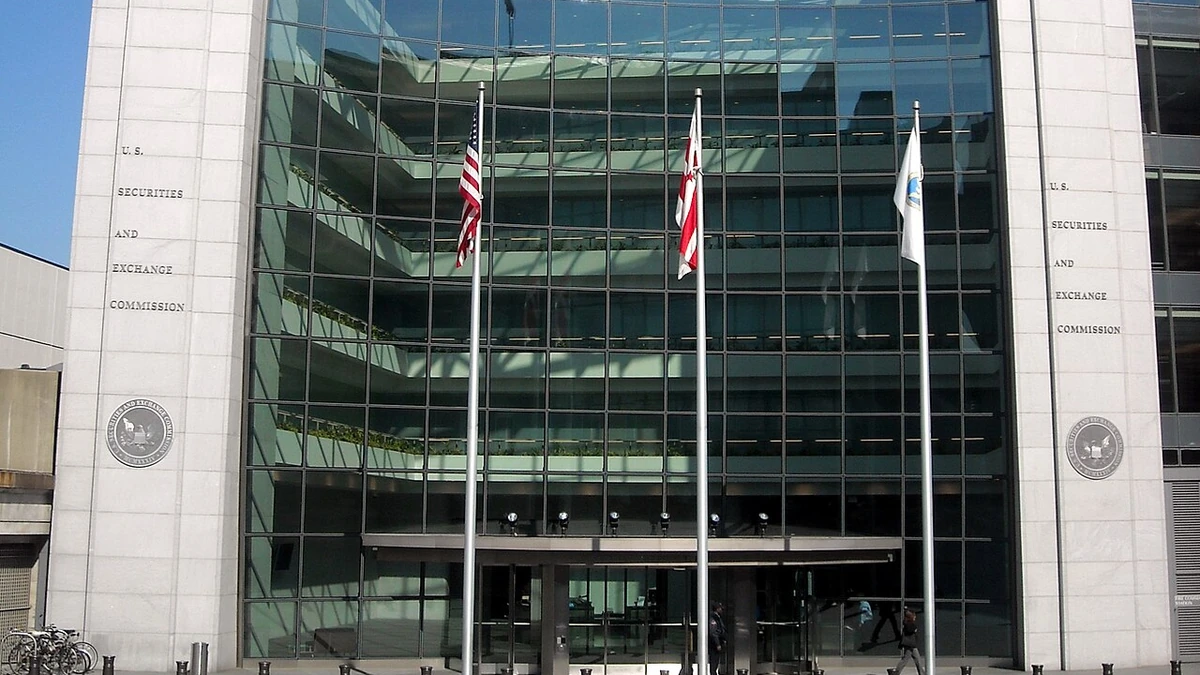
The Securities and Exchange Commission is seeking public comment on whether to double a $50 billion limit that determines which security-based swap dealers can use a special route for complying with financial rules. The possible increase to $100 billion follows a request from Mizuho Capital Markets LLC and would apply to qualifying dealers, not the wider market indiscriminately.
The change under consideration is not an increase in the threshold for registering as a security-based swap dealer. It concerns eligibility for Rule 18a-10, which lets certain nonbank firms follow Commodity Futures Trading Commission requirements instead of specified SEC financial rules. The SEC has not adopted the higher figure, and the current fixed-dollar ceiling remains $50 billion.
The SEC dated its notice of potential change on October 28, with Federal Register publication on November 2. The agency said a higher limit may be appropriate after considering the activity of dealers operating under the mechanism. Its consultation will examine whether easing one eligibility restriction would remain consistent with the safeguards built into the rule.
How the alternative compliance limit works
Rule 18a-10 was designed for stand-alone security-based swap dealers that are also registered with the CFTC as swap dealers and conduct most of their derivatives business in swaps. These firms are not banks and are not registered as broker-dealers. For those meeting the rule’s conditions, the alternative compliance mechanism permits reliance on CFTC capital, margin, segregation, recordkeeping and reporting requirements in place of specified SEC rules covering those subjects.
Eligibility depends on more than the dollar figure. A firm’s outstanding security-based swap positions, measured by aggregate gross notional amount, must not exceed the lesser of the fixed-dollar limit or 10% of the combined gross notional amount of its swaps and security-based swaps. The percentage test would still apply even if the SEC raised the dollar cap to $100 billion. Dealers must also satisfy the remaining registration and segregation-related conditions.
This is an exception to overlapping compliance obligations, not a blanket exemption from securities regulation. An eligible firm remains registered with the SEC as a security-based swap dealer, and the CFTC rules that replace particular SEC financial requirements continue to apply. The proposed change would not, by itself, authorize an unregistered firm to conduct security-based swap dealing.
The SEC established a temporary $250 billion ceiling when it adopted the framework in 2019, allowing affected dealers more room to develop their businesses and adjust to the new requirements. That transitional ceiling was scheduled to fall to $50 billion after the first three years of compliance unless the Commission acted to preserve or revise it. The lower ceiling is now in force, and the latest notice starts the process for considering a different limit.
Gross notional amount is a measure of the reference value of outstanding derivatives positions. It is not the same as a dealer’s expected losses or the amount of capital it must hold. That difference is relevant to the consultation: the SEC must consider how large participating dealers would be within the security-based swaps market, not simply whether their reported positions fall under a numerical cutoff.
Mizuho argues the cap could restrict its business
Mizuho Capital Markets asked for the increase on October 26. In its submission, the firm said it currently operates below the $50 billion limit but could exceed that level as its security-based swap business grows. Mizuho is registered with both the SEC and the CFTC and describes itself as one of two stand-alone security-based swap dealers using the alternative compliance mechanism.
To support its case, Mizuho supplied figures showing that security-based swaps accounted for less than 0.25% of its combined swaps and security-based swaps gross notional amount from 2022 through 2024. They represented 1.47% of its active trade count over the same period, according to the company. Mizuho said most of its derivatives business is in interest-rate and foreign-exchange swaps. These figures are the firm’s representations, not an independent SEC finding about its risk profile.
The company also reported that about $400 million of its $2 billion in Tier 1 capital is allocated to support security-based swap activity. It says retaining access to the CFTC-based mechanism would avoid maintaining duplicative calculations as the business develops. Mizuho argues that the existing limit could otherwise force it to turn away new business or reorganize where some positions are held.
One alternative described in the request would be to move activity to affiliated dealer Mizuho Markets Americas LLC. Mizuho estimated that subjecting that affiliate to the relevant SEC capital treatment would require approximately $1.5 billion in additional capital. That is a company projection tied to its proposed restructuring scenario, not a cost estimate endorsed by the SEC.
Customer relationships are another part of Mizuho’s argument. The firm says it handles security-based swap activity for about 230 clients, roughly three-quarters of whom also use its other derivatives services. Separating those activities between entities could make hedging arrangements more cumbersome and expensive, it contends. The SEC’s decision will depend on a broader assessment than one applicant’s operational and capital-cost claims.
SEC asks about market impact and alternative limits
The Commission is asking commenters whether Mizuho’s reasons justify the change and whether doubling the cap fits Rule 18a-10’s requirement to examine the activity of firms using the mechanism. It also wants views on how consequential those firms could become to the security-based swaps market individually and collectively. The notice specifically invites suggestions for a fixed-dollar limit above or below $100 billion, with supporting reasons.
For scale, an SEC report cited in the notice put gross notional security-based swaps outstanding at approximately $7.27 trillion as of December 26, 2025, based on data from two registered repositories. That market-wide measure gives context to the proposed dealer cap but does not settle the risk question. The size and character of a dealer’s positions, including their potential effect on counterparties, require more than a straightforward comparison of notional totals.
The question also sits at the boundary between the agencies’ derivatives regimes. The CFTC oversees swaps, while the SEC regulates security-based swaps, including instruments tied to securities or narrower securities indexes. A firm participating in both markets can face requirements from both regulators. Rule 18a-10 offers a defined method for avoiding some duplication when its conditions are met; the consultation concerns the reach of that method, rather than the underlying split in regulatory authority.
The current notice is a request for input, not a final rule change or an SEC order raising the ceiling. Even if the agency ultimately decides to increase the dollar amount, dealers would still need to meet the separate 10% test and the rule’s other qualifications. The Commission has not announced a date for a final decision.
Comments must be received by December 2, 2026, under SEC file number S7-2026-38. Submissions can be made through the agency’s public comment process, and the SEC will consider the responses before deciding whether to issue an order changing the limit.
More from Investing


Latest News
View all news- U.S. Trade Commission Opens Five-Year Review of Tariffs on Chinese Mobile Access Equipment
- Westpac Reports A$6.8 Billion Annual Profit, Declares 77-Cent Final Dividend
- U.S. Manufacturing Activity Strengthens in October as ISM Index Rises to 55.5
- U.S. Construction Spending Falls 1.9% in September as Residential Building Outlays Slide
- UK Launches £700 Million Investment Programme to Unlock Up to 10 Strategic Industrial Sites