New Zealand’s Revised Parliamentary Funding and Expense Rules Take Effect
The new determination loosens staff-budget restrictions while changing office funding, security requirements and approval rules for MPs' expenses.
Our editorial standards
MarketReview publishes clear, independently produced financial information using reliable sources and transparent editorial standards.
Read our Editorial Policy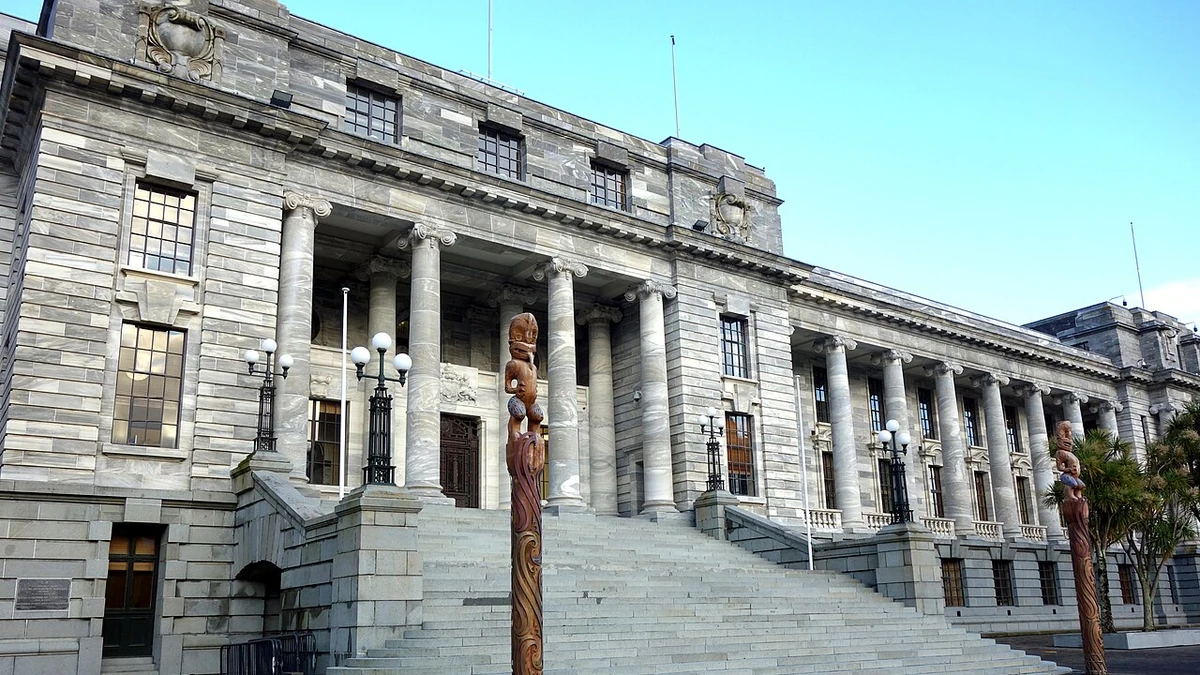
New Zealand’s revised rules for parliamentary funding and work-related expenses took effect on November 8, 2026, changing how members of Parliament and political parties can use public money for staff, offices, travel and other support. The Speaker’s Determination 2026 replaces the Speaker’s Directions 2023 and introduces new spending approvals alongside greater flexibility in some budgets.
The rules began the day after the country’s general election. In its published explanation of the determination, Parliament identifies changes ranging from office security requirements to travel permissions and accommodation payments. The revised framework does not amount to an unrestricted increase in MPs’ expenses: some provisions concern where existing funding can be directed, while others change specific limits or conditions.
Staffing budgets become more flexible, while office requirements grow
One of the main revisions removes the ring-fencing of staff funding, which previously constrained the use of money allocated for staffing. The determination also lifts some limits on transferring funding between years, including restrictions affecting the final year of a parliamentary term. These changes give members more scope to manage their resources across different operating needs, although the funding remains subject to parliamentary rules and oversight.
Electorate and community offices will receive additional area-based funding to reflect differences in rental costs. That distinction is practical for offices spread across New Zealand, where premises in one area may cost substantially more than comparable space elsewhere. The change recognises that a uniform approach to rent may not reflect the costs faced by members serving different constituencies.
Office security becomes an explicit requirement rather than simply an administrative consideration. The new rules call for mandatory security controls in electorate and community offices and security training for staff. The Parliamentary Service supports MPs through local offices as well as on the parliamentary precinct, so those requirements extend to workplaces away from Wellington where constituents regularly meet parliamentary staff.
Technology funding is another concrete change. The maximum funded amount for standard IT services rises from NZ$3,000 to NZ$8,000 for each electorate or community office. This is a higher funding ceiling for the specified services, not a statement that every office will necessarily spend the full amount. It gives the system more room to cover the equipment and technology costs allowed under the determination.
The rules also address connectivity for members whose primary homes cannot obtain fixed-line or wireless broadband. In those circumstances, actual and reasonable satellite broadband costs may be covered. Separately, the threshold used for large constituencies is reduced to 10,000 square kilometres, changing which electorates may qualify for rules tied to geographic size.
Travel and accommodation entitlements are reorganised
The determination brings members’ accommodation provisions into the Speaker’s framework. Those provisions had previously been contained in the Remuneration Authority’s 2023 accommodation and family-travel determination. Parliament says the existing accommodation conditions have largely been carried over, apart from changes to some rates. The shift matters because the new Parliament Act allocates responsibility for different types of parliamentary expenses across the Speaker and the Remuneration Authority.
There is a separate route for unusual accommodation needs. In exceptional circumstances, the Speaker may authorise an additional accommodation expense payment to a member after receiving advice from the chief executive of the Parliamentary Service. The authority is conditional; it is not a general entitlement for members to claim extra accommodation costs whenever they choose.
Independent MPs gain access to international travel and certain non-scheduled travel services using member funding. For staff, however, international travel paid from the relevant funding now requires approval from a party leader or whip. The two provisions work differently: one expands access for independent members, while the other introduces a specified approval step for staff travel.
Other spending thresholds have been made more explicit. Gifts costing more than NZ$250 require the Speaker’s approval. Parliament has also removed the evening meal allowance for the Speaker and the Leader of the Opposition. These measures concern particular categories of expense and should not be read as a blanket prohibition on gifts or meals in all parliamentary circumstances.
The updated arrangements also reduce some differences in funding between Ministers and non-Ministers. Ministerial expenses are not all governed by this one document, however. Other determinations separately address additional or alternative expenses connected with ministerial roles, making it important to distinguish an MP’s parliamentary support from services provided for ministerial duties.
Approval and accountability rules are more specific
Several provisions set clearer limits on how parliamentary support funding may be used. Party leaders and whips cannot use public funding to employ their own spouse, partner or financially dependent person. The determination also allows party and member support funding to be used for an internal party investigation into a member’s conduct only with the approval of the Speaker, the party leader and the Parliamentary Service chief executive.
A party may nominate a leader or whip to monitor financial information relating to the party and its members. The rules also introduce a procedure for resolving questions about authorised funding and services. This gives disputes about the application or interpretation of the determination a defined route rather than leaving every uncertain case to informal practice.
The legal basis for the changes is the Parliament Act 2025. Section 85 places responsibility on the Speaker to determine authorised public funding and services for parliamentary operations, including travel, accommodation, administrative support and communication services. The new determination updates the detailed rules within that statutory framework, while some principles and definitions that once appeared in the Speaker’s Directions are now contained in the Act itself.
The Speaker can also approve funding or services for a parliamentary purpose when the determination does not adequately cover an issue or when an unforeseen situation arises. Parliament says that authority does not extend to a ministerial purpose or a matter already covered by another determination under the Act. The distinction preserves a boundary between discretionary decisions about parliamentary support and expenses governed elsewhere.
The document removes provisions on political exchange programmes because those activities are addressed in a separate determination. It also eliminates the general funding sub-allocation; Parliament says that particular change does not affect the overall funding provided to members.
More News

Latest News
View all news- Sensex, Nifty End Lower in Diwali Muhurat Trading, Breaking Eight-Year Winning Streak
- Bank of Israel Finds 62% of Survey Respondents Faced Financial Fraud Attempts
- Singapore’s Lee Urges Australia to Invest More in Southeast Asia
- U.S. Emergency Power Orders for Puerto Rico Take Effect, Extending Grid Support Into February
- Berkshire Hathaway Reports Lower Q3 Operating Earnings, $9.6 Billion in Share Buybacks