
Santander Completes Webster Acquisition, Expanding Its U.S. Banking Business
Santander has completed its acquisition of Webster Financial, creating a larger U.S. banking franchise with nearly eight million customers and about $327 billion in pro forma assets.
Our editorial standards
MarketReview publishes clear, independently produced financial information using reliable sources and transparent editorial standards.
Read our Editorial Policy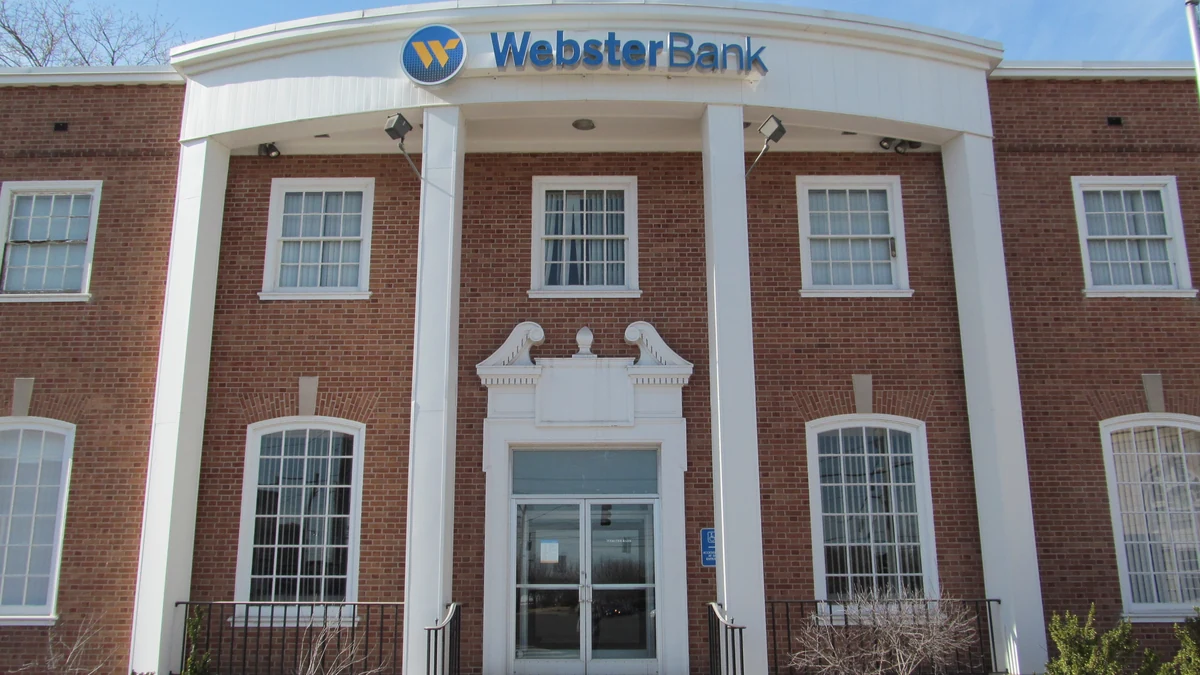
Banco Santander completed its acquisition of Webster Financial Corporation on Thursday, bringing most of Webster’s businesses into Santander Bank and materially expanding the Spanish lender’s U.S. retail and commercial banking operation.
The closing moves Santander and Webster from an announced acquisition to an operating business. Santander said the enlarged U.S. business will serve nearly eight million customers and, based on year-end 2025 figures, has a pro forma balance sheet of about $327 billion in assets, $185 billion in loans and $172 billion in deposits. The company has described the acquisition as creating a leading U.S. retail and commercial bank by assets, with a stronger presence across the Northeast.
For customers, legal ownership changed before most day-to-day banking experiences did. In its August 20 closing announcement, Santander said accounts and products at both banks can continue to be accessed and used in the same way for now. Customers can also use Santander Bank and Webster Bank ATMs in the United States for cash withdrawals without fees, while broader integration work proceeds.
Webster adds deposits and commercial banking scale
The strategic attraction for Santander is not simply a larger branch network. Webster brings a substantial deposit base, a commercial banking franchise and a Healthcare Financial Services business that complement Santander’s existing U.S. strengths in consumer finance, auto lending, digital deposits through Openbank, wealth management and corporate and investment banking.
When the deal was announced, Santander valued Webster at an implied equity value of about $12.2 billion. The agreed consideration for each Webster common share was $48.75 in cash plus 2.0548 Santander shares, generally delivered in the form of American Depositary Shares. Santander said at the time that the mix represented about 65% cash and 35% stock based on the pricing assumptions used for the announcement.
The funding profile was a central part of the rationale. Santander entered the deal with a U.S. business that was strong in lending, particularly consumer and auto finance, but management wanted a larger and more stable deposit base. Webster’s franchise is concentrated in the Northeast and has meaningful commercial and relationship deposits, giving Santander a way to fund more of its U.S. lending from deposits rather than relying as heavily on other funding sources.
Santander estimated in February that the acquisition could bring the U.S. net loan-to-deposit ratio to roughly 100%, compared with 109% for Santander U.S. on a standalone basis at the time of the announcement. It also projected about $800 million of annual pre-tax cost synergies at full run rate by the end of 2028. Those figures are management targets, not completed savings, and the actual outcome will depend on execution through the integration period.
Management has tied the acquisition to a broader profitability goal for the U.S. franchise. Santander continues to target return on tangible equity of around 18% in the United States by 2028. At announcement, it also projected roughly 7% to 8% earnings-per-share accretion for the group and an estimated 15% return on invested capital by 2028. The closing removes the deal-completion condition, but it does not remove the integration and operating risks behind those forecasts.
Most Webster businesses move into Santander Bank
Santander said most of Webster’s businesses became part of Santander Bank at closing. The company is keeping several senior Webster executives in prominent roles during the transition. Christiana Riley remains Santander’s U.S. country head and chief executive of Santander Holdings USA. John Ciulla, previously Webster Bank’s chief executive, is now chief executive of Santander Bank. Luis Massiani, previously Webster’s president and chief operating officer, becomes chief operating officer of both Santander Holdings USA and Santander Bank.
Webster’s former headquarters in Stamford, Connecticut, is also being retained as a Santander corporate hub. Santander already has its U.S. headquarters in Boston and corporate hubs in New York, Miami and Dallas. The Stamford presence matters because Webster’s strongest retail and commercial position is in the Northeast, especially Connecticut and the New York metropolitan area.
The customer-facing integration will take longer than the legal closing. Santander said the vast majority of everyday banking experiences will remain unchanged in the coming months. That means customers should not assume that account numbers, digital banking systems, branches or product terms have changed simply because the acquisition is complete. The bank said any future changes will be communicated in advance and that customers do not need to take action now.
Branch consolidation remains a possible part of the eventual integration, but regulators were told before closing that no final decisions had been made. In its review, the Federal Reserve noted that the two banks have some overlapping branch networks and that Santander could consolidate locations to reduce duplication. The applicants also told the Fed they did not expect branch changes to reduce banking access in the communities currently served by Santander Bank and Webster Bank.
Regulatory approval strengthens Santander’s Northeast position
The acquisition cleared its final major regulatory hurdle earlier this month. The Federal Reserve approved Santander’s application on August 4, following Office of the Comptroller of the Currency approval on June 12 and European Central Bank authorization on July 21. Webster shareholders had approved the acquisition in May.
The Federal Reserve’s approval order shows how much the acquisition changes Santander’s deposit position in several Northeastern states. Using regulatory data available for its review, the Fed said Santander Holdings USA would become the 19th-largest insured depository organization in the United States after the acquisition, with about $253.6 billion in consolidated assets and $150.3 billion in consolidated deposits under that regulatory perimeter. Both figures represented less than 1% of nationwide insured-depository totals.
Those Federal Reserve figures are lower than the $327 billion of pro forma U.S. assets cited by Santander in the closing release because the two disclosures use different measurement dates and scopes. Santander’s $327 billion figure is based on year-end 2025 balances for Webster and Santander’s combined U.S. operations, including its New York branch. The Fed’s ranking analysis used March 31, 2026 consolidated data for Santander Holdings USA and Webster.
The state-level impact is more pronounced. Based on June 2025 deposit data used by the Fed, the resulting Santander Bank would rank first in Connecticut with approximately $42.3 billion of deposits, representing 23.8% of deposits at insured institutions in the state. It would remain fourth in Massachusetts with about $35.2 billion, move to 11th in New York with about $34.8 billion and rank fourth in Rhode Island with about $3.2 billion.
That concentration helps explain why Webster is strategically important even though Santander described the purchase as a bolt-on acquisition for the global group. Webster gives Santander a deeper commercial franchise and a much larger deposit position in markets where it was already present, rather than taking the bank into a completely new geography.
The next phase is operational rather than transactional. Santander and Webster integration teams now have to combine systems, products, staff functions and parts of the branch network while trying to preserve customer service and deliver the savings assumed in the deal economics. Santander has not announced a single date for a full customer conversion. For now, it says existing accounts and products continue to operate as before and that customers will receive advance notice of any changes.
More from Banking

Latest News
View all news- USDA Releases October Crop Supply and Demand Estimates for Global Grain Markets
- U.S. Consumer Sentiment Falls to 46.3 as Inflation Expectations Rise
- Swiss-Ukraine Reconstruction Agreement Takes Effect, Opening Procurement Route for Swiss Firms
- U.S. Commerce Department Finalizes South Korean Hot-Rolled Steel Subsidy Review
- Treasury Names Judy Shelton Counselor on Currency Policy, With China Focus
