U.S. Regular Gasoline Prices Fall 19 Cents to $3.805 a Gallon, EIA Reports
The latest EIA reading extends a five-week slide in pump prices, although the national average remains above its year-earlier level and varies sharply by region.
Our editorial standards
MarketReview publishes clear, independently produced financial information using reliable sources and transparent editorial standards.
Read our Editorial Policy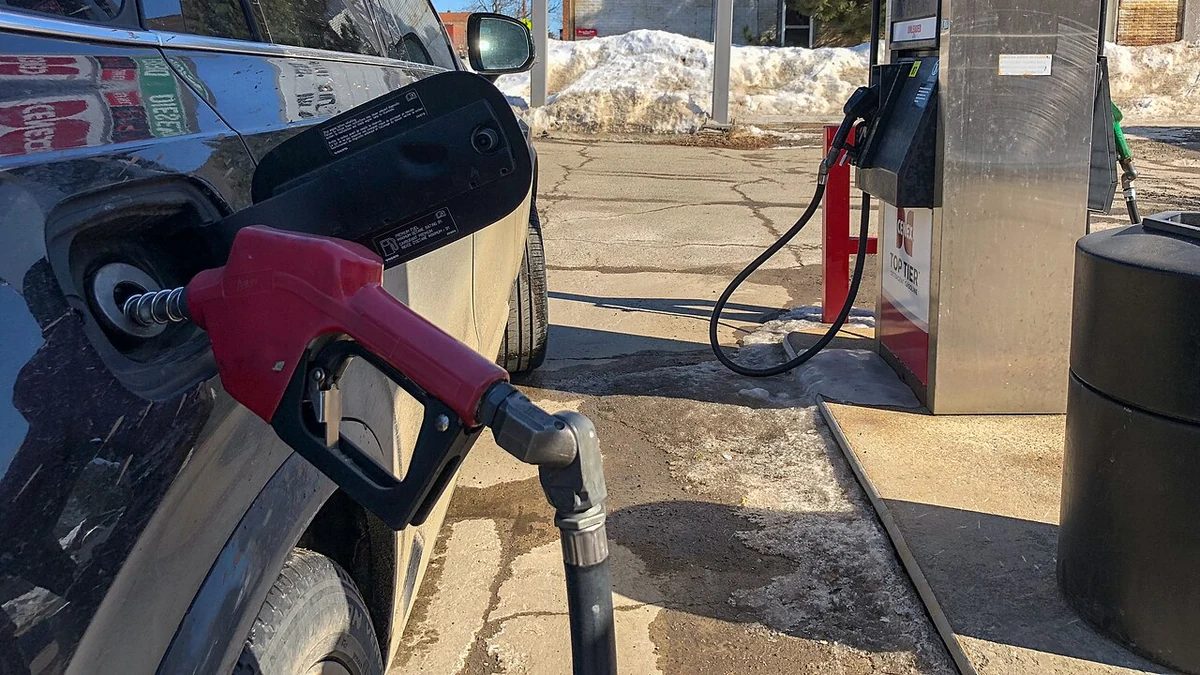
The national average price of regular gasoline fell 19 cents in a week to $3.805 a gallon in the latest U.S. Energy Information Administration survey, extending a run of declines at the pump. The reading for November 16, released on November 17, compares with $3.995 a gallon a week earlier.
Prices have now decreased for five consecutive weeks, with the latest decline larger than any of the four preceding weekly moves. That gives drivers some near-term relief, although the national average remains above its level a year ago. It also masks substantial differences in what motorists pay across the country.
The EIA’s weekly gasoline and diesel fuel update tracks retail fuel prices, including taxes. The $3.805 figure is for regular-grade gasoline and represents a nationwide average, not a price available at every station. Regional figures in the report show that the latest retreat has been widespread but far from uniform.
A five-week slide takes nearly 53 cents off the average
On October 12, EIA’s regular gasoline average stood at $4.331 a gallon. It eased to $4.284 the following week and $4.269 on October 26, before falling more sharply to $4.153 on November 2. A 15.8-cent drop then took the price to $3.995 on November 9, followed by the latest 19-cent decrease.
That adds up to a 52.6-cent reduction across five weekly intervals. The last two weeks accounted for 34.8 cents of the decline, compared with only 17.8 cents over the three weeks before that. The changing pace matters: the national price has not merely edged lower by a similar amount each week. Most of the decline since mid-October has taken place in November.
For a motorist buying 15 gallons, a 19-cent difference amounts to $2.85 less than the same purchase at the prior week’s national average. Compared with the October 12 reading, the difference on 15 gallons is $7.89. Those are illustrations of the change in the average, rather than a promise of savings at an individual station. The actual bill depends on local prices, the amount purchased and the grade of gasoline required.
The longer-term comparison is less favorable. EIA data put the latest regular gasoline average 74.3 cents above the comparable week in 2025 and 75.9 cents above the corresponding level two years earlier. Recent weekly reductions have therefore narrowed the cost of filling a tank without returning the national average to those earlier prices.
Midwest and Rocky Mountain prices fall fastest
Among the five broad regions in EIA’s report, the Midwest recorded the largest weekly decline. Its average dropped 26.4 cents to $3.604 a gallon. The Rocky Mountain region was next, falling 25 cents to $3.696. Both moves exceeded the 19-cent national reduction, illustrating how regional adjustments can differ substantially from the headline average.
The Gulf Coast remained the least expensive of the five main regions at $3.293 a gallon, down 18.8 cents for the week. East Coast prices averaged $3.707, a decline of 14 cents. The West Coast stood at $4.933 despite a 17.7-cent fall. The $1.64 difference between the West Coast and Gulf Coast averages is a reminder that the national figure conceals very different fuel costs.
California remained particularly expensive among the states listed in the report. Its average was $5.387 a gallon, 17.5 cents lower than the previous week. By comparison, EIA’s West Coast average excluding California was $4.405. The figures show that California’s higher pump prices are an important part of the West Coast’s overall reading, rather than every market in the region carrying the same cost.
Several of the selected state series show sizable decreases. Ohio’s average fell 37.2 cents to $3.396 a gallon, while Minnesota declined 24.1 cents to $3.608. Colorado’s reading was $3.513 after a 23.3-cent drop, and Florida averaged $3.525, down 20.1 cents. These are selected states tracked in the weekly EIA table, not an exhaustive state-by-state ranking of all pump prices.
City figures tell a similar story. Houston averaged $3.298 and Los Angeles $5.387 in the November 16 reading, even as both cities recorded price declines. A national figure can help households gauge the broad direction of gasoline costs, but a driver’s actual outlay depends much more on the local market and the station chosen.
What the price drop reveals about fuel costs
Crude oil is the largest underlying component of retail gasoline prices, according to EIA’s explanation of the market. Refining costs and profits, distribution and marketing, and taxes make up the other principal components. Movements in those costs can feed into pump prices, but the weekly retail survey does not assign a precise share of this 19-cent decline to any one cause. The data establish what consumers were paying, not a definitive explanation of why every local price moved.
Regional price gaps reflect several structural factors. Transporting gasoline from refineries and terminals costs money, and some areas require specialized blends to meet air-quality rules. EIA also identifies supply disruptions, competition between nearby stations and local operating expenses as influences on retail prices. California, for example, has distinctive fuel specifications and more limited supply connections with other parts of the country, helping explain why its price level can differ so sharply from the Gulf Coast’s.
The gasoline grade matters as well. In the November 16 data, EIA’s national average for all gasoline grades was $3.945 a gallon, compared with $3.805 for regular. Midgrade gasoline averaged $4.435 and premium was $4.834. Those higher-grade prices are separate measurements; they should not be confused with the regular-gasoline number in the headline or used to infer what every driver pays.
Diesel prices moved lower in the same weekly release. The U.S. average for on-highway diesel fell 19 cents to $5.937 a gallon, matching regular gasoline’s weekly decline in cents but remaining far above the regular-gasoline price. It is a different fuel market, and the equal weekly changes do not mean drivers of gasoline vehicles and diesel users face the same costs.
The latest survey provides a snapshot rather than a forecast. Even after several weeks of falling national averages, local stations may adjust at different speeds as their supply costs and competitive conditions change. EIA’s next scheduled gasoline price update is November 24, when the agency will report whether the decline continued into another week.
More News


Latest News
View all news- Spain’s Sánchez Proposes Bank Tax Extension to Raise €1.4 Billion for Housing
- Canada Announces C$248,063 Investment to Restore Nova Scotia Lighthouse and Support Tourism
- New York’s New CPA Licensing Law Takes Effect, Adding 120-Credit Pathway
- Nasdaq Rule Removing CORE FIX Order-Entry References Becomes Operative
- Monte dei Paschi Calls Intesa Takeover Offer Financially Fair but Says It Undervalues Future Potential