South Korea’s Lee Names Lee Hyoung-il Finance Minister Nominee in Cabinet Reshuffle
The career economic-policy official would move from first vice minister to deputy prime minister and head of the Finance and Economy Ministry if appointed.
Our editorial standards
MarketReview publishes clear, independently produced financial information using reliable sources and transparent editorial standards.
Read our Editorial Policy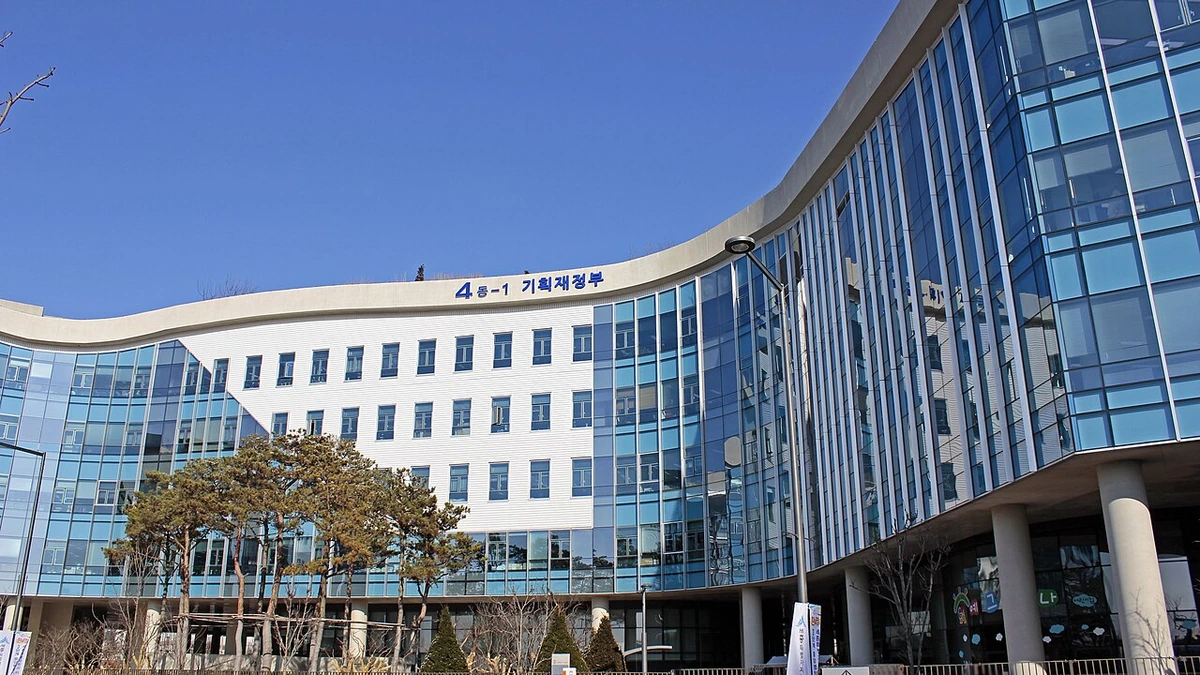
South Korean President Lee Jae Myung nominated Lee Hyoung-il, the country’s first vice minister of finance and economy, to become deputy prime minister and minister of finance and economy on Sunday, elevating a career economic policymaker from inside the ministry. The appointment was one of six ministerial nominations in a cabinet reshuffle announced on August 30.
In its announcement of the reshuffle, the presidential office said Lee had served in a series of key economic-policy posts and highlighted his role in introducing a petroleum price ceiling during the surge in oil prices linked to the Middle East conflict. The administration framed the choice around policy execution and continuity, saying it expects him to translate strong headline economic indicators into improvements in living standards while pursuing stable growth and efforts to reduce economic polarization.
Lee is not yet the finance minister. Koo Yun Cheol remains the incumbent deputy prime minister and minister of finance and economy, according to the ministry’s current leadership page, and Lee must go through South Korea’s personnel-hearing process before appointment. The nomination nevertheless puts a senior official already involved in the government’s macroeconomic, price and market-response work in line to take the top economic-policy post.
A promotion from inside a ministry reorganized this year
Lee’s selection would preserve considerable institutional continuity at a ministry whose structure changed only months ago. He became first vice minister of the former Ministry of Economy and Finance in June 2025 and continued as first vice minister after the government split that ministry on January 2, 2026, creating the Ministry of Finance and Economy and a separate Ministry of Planning and Budget.
That reorganization matters when interpreting the job. The Finance and Economy Ministry is responsible for economic-policy coordination, taxes, treasury operations, government accounting, currency and foreign-exchange policy, international finance, public-institution policy, economic cooperation and state property. Budget formulation, by contrast, now sits with the separate planning and budget ministry. Lee’s portfolio, if he is appointed, would therefore center on macroeconomic management and the financial side of government rather than recreating the full remit of the pre-2026 ministry.
His recent work already overlaps with many of those responsibilities. On July 30, Lee chaired a joint macroeconomic and financial meeting that reviewed global market conditions after the U.S. Federal Reserve held interest rates unchanged and assessed financial and foreign-exchange developments tied to the Middle East conflict. On August 4, he chaired a vice-ministerial meeting on price stability, another example of the operational role he has played in managing inflation pressures and external shocks.
He has also been involved in longer-term investment policy. The ministry said Lee chaired the establishment committee for the Korea-U.S. Strategic Investment Corporation, which officially launched in June to support strategic investments in the United States under a bilateral investment framework. Those assignments show that the nominee would arrive at the top job with direct exposure to both short-term stabilization work and the government’s broader external-economic agenda.
A career built around macroeconomics and financial policy
The ministry’s official biography traces Lee’s career through some of South Korea’s main economic-policy posts. He earned a bachelor’s degree in economics from Seoul National University in 1993 and a doctorate in economics from Texas A&M University in 2008. His senior government roles have included director of the Economic Analysis Division, director of the Economic Policy Division, director general of the Economic Policy Bureau, deputy minister, presidential secretary for economic policy and commissioner of Statistics Korea.
Lee also spent time outside the domestic bureaucracy as a senior economist at the International Bank for Reconstruction and Development, part of the World Bank Group, beginning in 2015. Earlier in his career, he worked in the ministry’s financial-market division and in the presidential office’s economic and financial policy team. The sequence gives him experience spanning macroeconomic analysis, financial markets, cross-government coordination and official statistics rather than a background concentrated in a single tax or regulatory specialty.
His return to the finance ministry as first vice minister in 2025 placed him close to the center of the Lee administration’s economic program from its early stages. When the ministry was divided at the start of 2026, he remained on the finance-and-economy side of the new structure, keeping responsibility near the policy areas that now define the department’s mandate.
The government’s 3·4·5 agenda becomes the central policy test
The nomination comes as the administration is trying to move from economic stabilization toward a more ambitious growth agenda. In July, the Finance and Economy Ministry’s economic growth strategy for the second half of 2026 said growth had strengthened despite the Middle East conflict and set out what the government calls its “3·4·5 Vision”: lifting potential growth to 3 percent, making South Korea the world’s fourth-largest exporter and raising per-capita income to $50,000.
The same strategy projected consumer-price inflation of 2.6% for 2026 and a current-account surplus of $290 billion, while forecasting employment would increase by 150,000. It also said South Korea ranked fifth globally in exports during the January-to-April period, up from seventh, supported by strong external demand and the semiconductor sector. Those figures are government projections and assessments, not guaranteed outcomes, but they establish the policy benchmarks Lee would inherit.
Delivering that program involves more than chasing headline growth. The ministry’s plan calls for managing oil-price, exchange-rate and interest-rate risks, strengthening supply chains and energy resilience, developing new growth engines in areas including semiconductors and artificial intelligence, and addressing structural issues such as labor-market change and inequality. The presidential office’s explanation for Lee’s nomination closely matches that agenda, emphasizing stable growth, household living standards and polarization.
The immediate next step is institutional rather than economic. South Korean law provides for National Assembly personnel hearings for cabinet-member nominees, while the Constitution gives the president authority to appoint State Council members on the prime minister’s recommendation. Unlike the prime minister, an individual cabinet minister does not require an affirmative National Assembly consent vote to take office. Lee’s hearing will therefore be the next formal test of the nomination before President Lee can complete the change at the top of the Finance and Economy Ministry.
More News
Latest News
View all news- Gold Futures Retreat Toward $4,190 as U.S. Dollar Strengthens
- IonQ Agrees to Buy Cybersecurity Firm Elisity for Up to $1.3 Billion
- KKR, TotalEnergies to Add $1.2 Billion Solar Portfolio to U.S. Venture
- U.S. 30-Year Mortgage Rates Hover Near 7.55% as Housing Borrowing Costs Remain Elevated
- Wall Street Volatility Gauge Rises as Traders Assess Inflation and Earnings Risks