Taiwan: Hwa Mei Food Plans NT$600 Million Smart Factory in Tainan Industrial Park
Hwa Mei Food has bought 6,000 ping of land at Tainan’s Qigu industrial park and plans a NT$600 million automated frozen-food plant with cold-chain systems.
Our editorial standards
MarketReview publishes clear, independently produced financial information using reliable sources and transparent editorial standards.
Read our Editorial Policy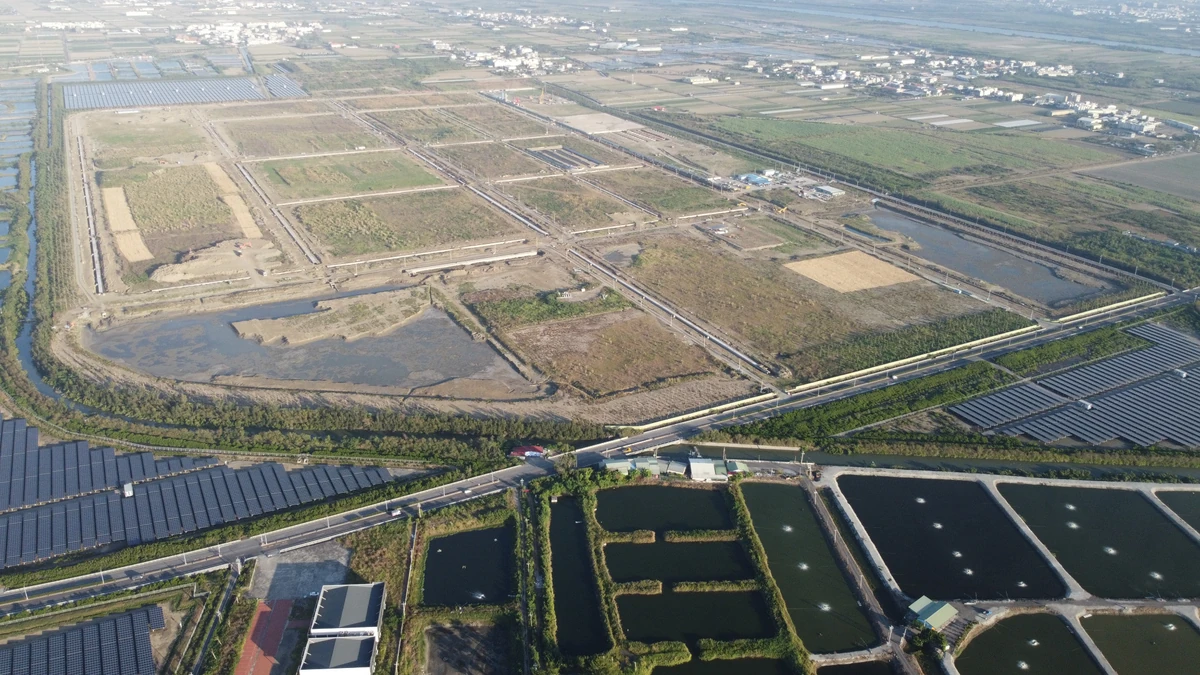
Hwa Mei Food Co. plans to invest NT$600 million in a new smart frozen-food factory at the Qigu Science and Technology Industrial Park in Tainan, adding a major food-manufacturing project to a site that the city is trying to build into a broader industrial cluster.
The company, which operates Taiwan’s Shaomei ice cream brand, has purchased 6,000 ping of industrial land in the park, according to the Tainan City Government. The proposed plant is expected to use automated production processes and high-standard cold-chain systems, with two main production lines focused on frozen flour-based foods and rice products.
Tainan’s Economic Development Bureau disclosed the plan on August 30 as part of an update on companies taking space at Qigu. The city government’s announcement identified Hwa Mei alongside other manufacturers that have bought land in the park and said municipal officials would coordinate utilities and other infrastructure with companies as they move toward construction.
The release did not provide a construction start date, expected completion date, production capacity or job count for Hwa Mei’s project. It also did not disclose how the NT$600 million investment will be financed, leaving the factory’s development timetable and funding mix as important details still to be specified.
New plant would broaden Hwa Mei’s frozen-food manufacturing base
Hwa Mei is best known through the Shaomei ice cream brand, but its registered business activities extend beyond frozen desserts. Taiwan’s Ministry of Economic Affairs lists Hwa Mei Food Co., Ltd. as an approved company with business categories that include dairy manufacturing, edible ice manufacturing, frozen and preserved foods, prepared meals, food wholesale and international trade.
The company’s official registration record shows paid-in capital of NT$370.8 million and a registration date of January 25, 2007. The planned NT$600 million Tainan project is therefore larger than Hwa Mei’s registered paid-in capital, although paid-in capital is not a measure of cash available for investment and the city announcement does not identify the financing structure for the factory.
Hwa Mei’s official website currently lists Shaomei-branded ice cream and frozen-dessert products. The Tainan release says the Qigu plant’s two core lines will instead make frozen flour-based foods and rice products, placing the project in product categories beyond the ice cream lines most closely associated with the brand. General manager Chen Ding-yu, quoted by the city, said changing consumption patterns have increased demand for convenient frozen foods and described the Qigu site as an important base for the group’s next generation of frozen-food production.
Automation and cold-chain capability are central to the plan. For frozen foods, the plant will need to combine manufacturing equipment with temperature-controlled handling and storage, so the city’s reference to a high-standard cold chain is part of the operating model rather than a separate logistics detail. The announcement does not specify equipment suppliers, automation spending, output volumes or export targets.
Qigu is moving from land sales toward factory construction
Hwa Mei is entering Qigu as Tainan tries to convert an industrial-park development project into an operating manufacturing base. The park covers about 141 hectares and sits near Provincial Highway 17, the West Coast Expressway and National Freeway 8. Tainan’s investment agency says the location is also positioned near the Southern Taiwan Science Park and other industrial areas, giving manufacturers access to a wider regional supply chain.
The city’s long-term plan is broader than food processing. Qigu is designed to accommodate industry groups including food and beverages, plastics, metals, machinery, computers and optical products, electronic components, automotive products and other transport equipment. Tainan has said full development could bring in about 130 companies, create 6,000 jobs and generate NT$29 billion in production value.
Progress has accelerated this year. In a February update, the Economic Development Bureau said 38 companies had completed land purchases by the end of January. Eighteen had passed landscape review or obtained building permits, and three were already building factories. The city said the earliest of those projects could begin production in the second half of 2026.
The August announcement places Hwa Mei in the same emerging cluster as several other Taiwanese manufacturers, including Tong Yang Industry, Black Bridge and Tsan Yang. That mix matters for Qigu because the park is not being developed as a single-industry food zone. Its appeal depends on whether infrastructure can support manufacturers with different requirements while keeping the project focused on industries the city considers suitable for the site.
Municipal officials are continuing to market additional land. The August 30 release says the latest sale offering covers 14 plots totaling 6.78 hectares, while another eight plots totaling about 3.02 hectares are being offered for lease. Applications opened on August 11. Hwa Mei’s purchase is therefore part of an active land-allocation phase rather than a completed buildout of the park.
Utilities and execution are the next test for the NT$600 million project
The city says it will coordinate water, electricity and gas infrastructure with the first group of approved companies as their construction schedules advance. Qigu’s design includes a service center integrated with a Taiwan Power Company substation, an arrangement intended to provide stable power while using land more efficiently. Earlier city updates also said wastewater and telecommunications pipelines had been completed while other infrastructure work continued.
For Hwa Mei, those public works will have to line up with its own factory design and commissioning schedule. A frozen-food plant using automated processes and cold-chain systems can require dependable electricity, refrigeration capacity and logistics planning before production begins. The August announcement confirms the planned investment and production categories but does not say whether Hwa Mei has obtained a building permit, selected contractors or placed equipment orders.
The city’s approach is to advance park construction and private factory development at the same time. That can shorten the interval between land acquisition and production if roads, utilities and approvals arrive as expected, but it also means individual projects remain tied to the broader development timetable. Tainan said in February that buyers face an accelerated investment framework aimed at completing factory construction within two years and obtaining factory registration within three years.
Hwa Mei’s plan also fits the city’s effort to attract manufacturers that can use agricultural and fishery inputs from the surrounding coastal region. Tainan Mayor Huang Wei-che said the project could support higher-value food production and local employment, but the August release did not quantify how much Hwa Mei expects to source locally or how many positions the factory would add. Those claims should therefore be treated as the city’s policy objectives rather than confirmed project outcomes.
The next concrete milestones will be Hwa Mei’s construction approvals, factory buildout and equipment installation. For now, the verified commitment is the 6,000-ping land purchase and the company’s stated plan for a NT$600 million smart frozen-food facility at Qigu. No opening date has been announced.
More News
Latest News
View all news- Gold Futures Retreat Toward $4,190 as U.S. Dollar Strengthens
- IonQ Agrees to Buy Cybersecurity Firm Elisity for Up to $1.3 Billion
- KKR, TotalEnergies to Add $1.2 Billion Solar Portfolio to U.S. Venture
- U.S. 30-Year Mortgage Rates Hover Near 7.55% as Housing Borrowing Costs Remain Elevated
- Wall Street Volatility Gauge Rises as Traders Assess Inflation and Earnings Risks