
U.S. Gasoline Averages About $4.36 a Gallon, More Than $1 Above a Year Earlier
AAA says the national average for regular gasoline is about $4.36 a gallon, leaving U.S. drivers paying roughly $1.27 more than a year ago even after a slight recent pullback.
Our editorial standards
MarketReview publishes clear, independently produced financial information using reliable sources and transparent editorial standards.
Read our Editorial Policy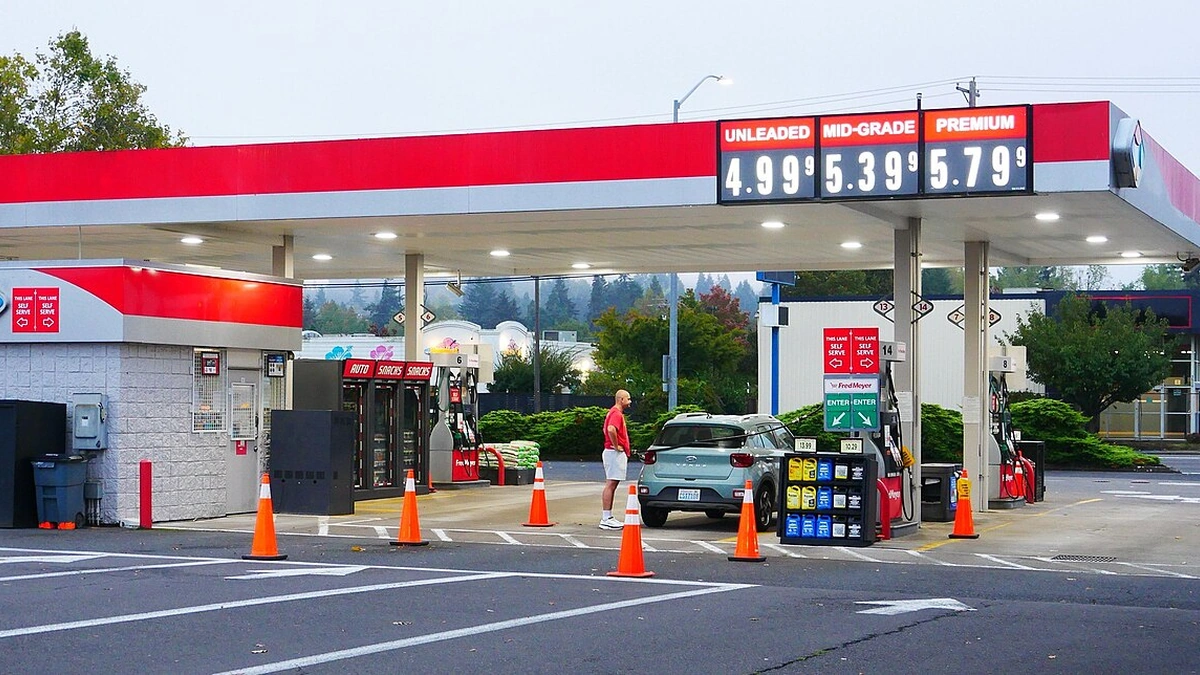
U.S. gasoline prices remain elevated, with the national average for regular fuel standing at about $4.36 a gallon on Monday, more than $1 higher than a year earlier and only slightly below the levels drivers were seeing a week ago. The latest daily reading from AAA put the national average at $4.3556 a gallon, compared with $3.0833 on the same date in 2025, a year-over-year increase of roughly $1.27 a gallon.
The comparison is striking not only because of the size of the increase but also because prices have stayed high into October rather than easing sharply after the summer driving season. Monday’s reading was down by less than a cent from the previous day and about a penny below the week-ago level, but it was still about 4.5 cents above a month earlier and far above last year’s level. For households that drive regularly, that gap translates into materially higher commuting and discretionary travel costs even if prices have stopped rising day to day.
AAA’s daily survey and the Energy Information Administration’s weekly data are not identical series, but they point in the same direction: U.S. motorists are paying much more for gasoline than they were a year ago. That keeps fuel prices in focus not just as a consumer issue, but also as a marker of broader energy-market pressure and a potential input into inflation-sensitive spending decisions.
AAA and EIA data show prices still near recent highs
According to AAA’s national gas-price tracker, the average U.S. price for regular gasoline was $4.3556 a gallon on October 12. That was slightly below Sunday’s $4.3585 and the week-ago average of $4.3653, suggesting that the rapid upward move seen earlier in the fall has cooled somewhat. Even so, the national average remained well above the month-ago figure of $4.3104 and the year-ago average of $3.0833.
The federal government’s weekly series tells a similar story. In its Gasoline and Diesel Fuel Update, the EIA said the U.S. average retail price for regular gasoline was $4.354 a gallon for the week ended October 5, up $1.23 from a year earlier. The EIA’s weekly number is effectively in line with AAA’s daily average now being reported for October 12, which strengthens confidence that the current national level is indeed around $4.36 a gallon rather than being a one-day anomaly.
The EIA’s broader all-grades gasoline series shows how unusual the recent price environment has been. The agency said all-grades gasoline averaged $4.496 a gallon in the week ended October 5, after climbing as high as $4.610 a gallon in the week ended September 21. That means the market has come off late-September highs, but not by enough to return to last autumn’s range.
Daily movement has also been modest in recent sessions. That matters because it suggests the story is no longer one of prices suddenly spiking every day, but of consumers absorbing a sustained period of high fuel costs. In practical terms, even small day-to-day declines offer limited relief when the national benchmark is still more than a dollar above the prior year’s level.
Higher crude prices and refining margins helped lift prices
The EIA offered a straightforward explanation for the recent increase in gasoline prices in its October Short-Term Energy Outlook. The agency said U.S. retail gasoline prices averaged $4.35 a gallon in September and that the increase in retail prices was driven by higher crude oil prices along with rising crack spreads, a refining-margin measure that captures the difference between the price of crude and the value of the products made from it.
That combination helps explain why pump prices stayed elevated even as the summer travel season ended. Crude oil prices affect the underlying feedstock cost for refiners, while higher crack spreads can indicate tighter product balances or stronger pricing power in refined fuels. When both move higher together, retail gasoline can remain expensive even if demand is not surging at peak-summer levels.
The EIA also said it expects retail gasoline and diesel prices to come down gradually as crude prices ease and inventories recover somewhat, which should help lower crack spreads. That forecast offers some reason to think the worst of the autumn jump may be over, but it is a forecast rather than a current condition. As of now, consumers are still paying prices that are historically elevated for October.
The backdrop may also remain sensitive to supply disruptions. The EIA noted last week that Hurricane Isaias was approaching the Gulf Coast and had the potential to disrupt energy infrastructure. The agency did not tie Monday’s gasoline average directly to the storm, but Gulf Coast weather risk is one of several factors traders and motorists watch closely because refinery outages or shipping problems can quickly tighten product markets.
Regional gaps show why the national average only tells part of the story
National averages can obscure how uneven gasoline prices remain across the country. AAA’s state data on Monday showed Hawaii with one of the highest averages at about $5.62 a gallon, while several eastern states sat closer to the low-$4 range. The EIA’s regional data similarly showed large differences in the latest weekly readings, with the West Coast at $5.727 a gallon for regular gasoline in the week ended October 5 and the Gulf Coast at $3.911.
Those regional gaps matter because the consumer impact of a $4.36 national average is not uniform. Drivers in the Gulf Coast still face high prices by historical standards, but they are paying far less than motorists on the West Coast. Differences in state fuel specifications, taxes, logistics, local competition and regional refinery conditions can all widen those gaps, especially during periods of market stress.
The persistence of high prices also has a behavioral angle. When prices rise sharply and stay high, drivers may cut discretionary trips, consolidate errands or delay longer drives. Businesses with vehicle fleets face a more direct cost issue, especially if they cannot quickly pass higher fuel costs on to customers. While this story is about gasoline rather than diesel, the diesel market has also been expensive, reinforcing broader transport-cost pressure across the economy.
For now, the most concrete takeaway is simple: the U.S. average remains around $4.36 a gallon, and the year-over-year increase is still comfortably above $1. AAA’s daily data and EIA’s weekly data both support that conclusion. The next EIA gasoline update is scheduled for October 14, which will give a fresher read on whether the recent slight easing is continuing or whether October prices are settling into a new, higher plateau.
More News


Latest News
View all news- Gold Futures Retreat Toward $4,190 as U.S. Dollar Strengthens
- IonQ Agrees to Buy Cybersecurity Firm Elisity for Up to $1.3 Billion
- KKR, TotalEnergies to Add $1.2 Billion Solar Portfolio to U.S. Venture
- U.S. 30-Year Mortgage Rates Hover Near 7.55% as Housing Borrowing Costs Remain Elevated
- Wall Street Volatility Gauge Rises as Traders Assess Inflation and Earnings Risks
