UK Unveils Pilot Flood Certificates for Homes in England
The UK government and Flood Re plan to pilot Flood Performance Certificates for homes in England, giving owners, insurers and mortgage lenders a standardized view of flood risk and property resilience.
Our editorial standards
MarketReview publishes clear, independently produced financial information using reliable sources and transparent editorial standards.
Read our Editorial Policy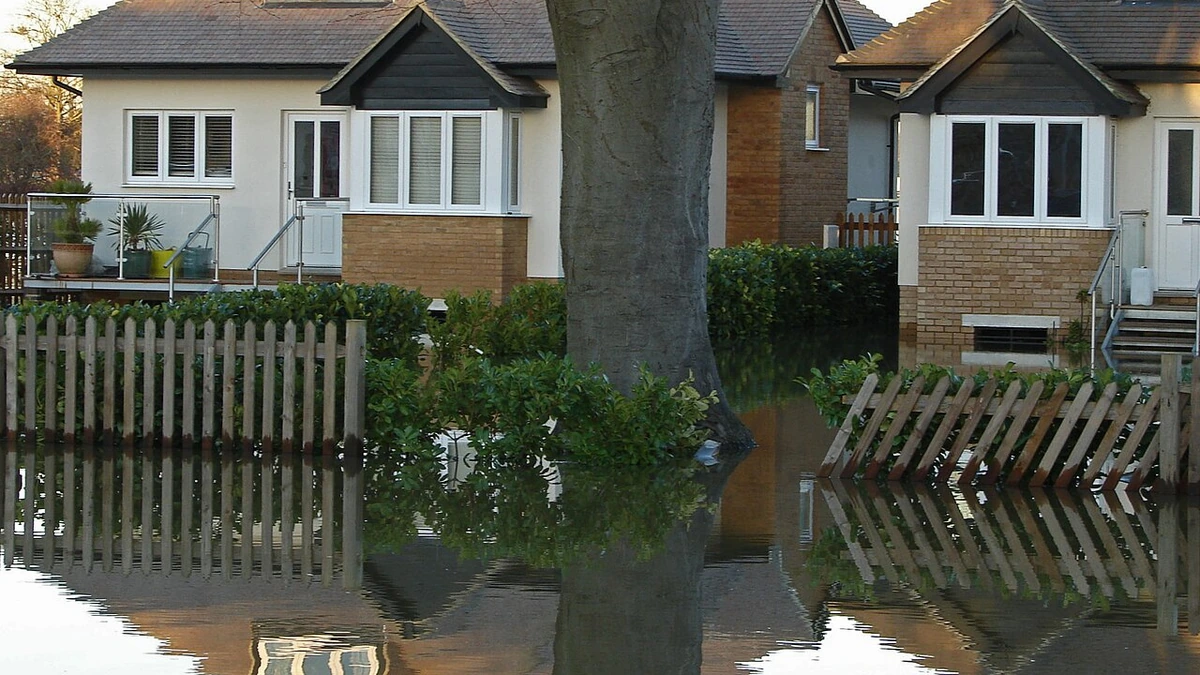
The UK government and Flood Re said Tuesday that they will pilot Flood Performance Certificates for homes in England, a proposed new document designed to show a property’s flood risk and the measures already in place to limit damage. Ministers want the certificates to become a trusted source of standardized information for homeowners, insurers and mortgage lenders, bringing a part of the housing market that has long relied on fragmented data into a more consistent framework.
The proposal matters because flood exposure affects much more than the immediate cost of repairs after a severe weather event. It can shape whether households can get affordable insurance, how lenders think about collateral risk, how buyers judge a property before purchase, and whether owners have a clear financial reason to invest in resilience measures such as flood doors, raised electrics or water-resistant materials. For years, those improvements have often been hard to record in a way that travels with the property and is recognized across the insurance and lending chain.
Under the plan announced by the Department for Environment, Food and Rural Affairs and Flood Re, the certificates, known as FPCs, will be piloted rather than rolled out immediately as a universal requirement. The government described the idea as broadly similar to an Energy Performance Certificate, but focused on flood resilience. That means the announcement is an early-stage market reform effort, not a new legal obligation for every homeowner or a fully operational national register.
According to the government’s announcement, the pilot will test a standard format that shows both flood risk and resilience, including a proposed Flood Performance Rating that breaks a property’s profile into categories such as exposure, characteristics and resistance. The aim is to help owners understand where their homes are vulnerable, what improvements have already been made and what additional steps could reduce damage in future flooding.
What the new certificates are meant to show
The concept builds on a longer-running policy push around property flood resilience, a term used in the UK for physical measures that either keep water out, reduce the damage if water does get in, or speed up recovery afterward. In the 2025 FloodReady action plan, the Environment Agency and Defra said a Flood Performance Certificate could give homeowners a clearer picture of a home’s current flood resilience, the likely effect of different flood depths, the resilience features already installed, and the improvements that could still be made.
That framework is important because flood risk is not simply a yes-or-no question. Two properties on the same street can face very different outcomes depending on floor levels, construction type, entry points for water, past works and the type of flooding involved. A standardized certificate is meant to turn that complexity into something usable for households and institutions without pretending that risk can be reduced to a single simple label.
The pilot also tries to solve a practical documentation problem. Homeowners may spend money on resilience measures after a flood or as a precaution, yet the evidence for those upgrades often sits in invoices, survey reports or insurer files that are not easily visible to a buyer, a valuer or a lender later on. A certificate could give those measures a consistent place in the housing process, which in turn may make it easier for the market to recognize them.
At this stage, ministers have not said that every home sale or mortgage process will require an FPC. The immediate policy step is the pilot itself. That matters because the success of the idea depends less on the label alone than on whether insurers, lenders, surveyors and conveyancers end up treating the information as credible and useful in real decisions.
Why insurers and lenders are interested
The certificates are being developed with a wider transition in mind. Flood Re, which officially describes itself as a joint industry and government initiative, was set up to support the affordability and availability of flood insurance for UK households at high risk and to manage a transition toward risk-reflective pricing. The scheme is due to end in 2039, which creates pressure to improve how flood risk and resilience are measured before households move into a more fully risk-based market.
That helps explain why lenders and insurers are central to the pilot. In the FloodReady review published last year, Defra backed continued work on FPCs and said insurers and mortgage lenders should be involved so the format meets their needs as well as homeowners’ needs. The review also said FPCs could support decision-making by making flood risk and resilience more visible, and it laid out an action to complete a prototype that could be piloted with insurers, lenders and relevant risk management authorities.
Flood Re’s own work points in the same direction. In a July research update on Flood Performance Certificates, the organization said a standardized data template is intended to combine property characteristics, flood hazard and existing resilience measures. It also said pilots were expected by the end of 2026, with a longer-term ambition for wider market use and, potentially, links to discounted premium structures later on.
For insurers, the attraction is straightforward. Better property-level information could make it easier to distinguish between a home that is simply in a flood-prone area and a home in that area that has already invested in defenses and recovery measures. For lenders, the value lies less in day-to-day underwriting detail and more in a clearer understanding of collateral quality, future insurability and the resilience of the housing stock they finance. A property that can recover faster after flooding and remain insurable is economically different from one that cannot, even if both share the same postcode.
There is still a meaningful gap between building a promising pilot and changing market behavior. Lenders will need confidence that certificate data is consistent and robust. Insurers will need evidence that resilience measures materially change claims outcomes. Households will need to see enough benefit, whether through easier insurance access, better pricing or stronger resale confidence, to justify the time and cost involved in assessment and upgrades.
Why the proposal matters now
The timing reflects a broader increase in official concern about flood exposure. The Environment Agency’s latest flood and coastal erosion risk management report says around 6.3 million homes and businesses in England are in areas at risk of flooding. It also says one in five homes are currently in areas at risk from rivers, the sea and surface water, a figure that could rise to one in four by mid-century because of climate change. Against that backdrop, better documentation of resilience starts to look less like a niche insurance issue and more like a mainstream housing and infrastructure question.
The government is also pushing a wider resilience agenda. Earlier work under the FloodReady action plan argued that information gaps have slowed the uptake of property flood resilience measures, even when those measures can reduce damage and shorten recovery times. A certificate model is an attempt to turn resilience from something that is technically valuable but poorly recorded into something legible to the market.
That said, a pilot does not guarantee smooth adoption. Any system that tries to summarize physical flood exposure for millions of properties will face questions over cost, comparability and liability. A too-simple rating could be misleading. A too-complex framework could be ignored. Another practical challenge is making sure certificates remain current as buildings are altered, local risk changes or new defenses are installed. Those details matter if the certificates are eventually expected to influence insurance premiums, mortgage decisions or home values.
Even with those caveats, Tuesday’s announcement marks a meaningful policy step. The UK has spent years discussing how to reward resilience rather than merely pay for damage after the fact. By moving toward a standardized certificate, ministers and Flood Re are trying to create a tool that could connect household adaptation spending with insurance, lending and housing-market decisions in a more systematic way. The next real test will come as the pilot begins and participants decide whether the information is strong enough to use in actual underwriting, lending and property transactions.
More News


Latest News
View all news- Union Pacific Third-Quarter Profit Rises 16% to $2.1 Billion as Freight Volumes Grow
- Nasdaq Q3 Revenue Jumps 13% as Annual Recurring Revenue Reaches $3.4 Billion
- Census Bureau Releases New Business Conditions Data Covering U.S. Employers
- Blackstone Reports Third-Quarter Earnings With Assets Under Management Near $1.4 Trillion
- BEA Expands State-Level R&D Economic Statistics With New 2024 Estimates