DOJ Reports $849 Million in Approved Claims Under Expanded Radiation Compensation Program
Nearly 50,000 applications remain pending under the expanded federal program, which covers eligible downwind residents, nuclear test participants and other affected groups.
Our editorial standards
MarketReview publishes clear, independently produced financial information using reliable sources and transparent editorial standards.
Read our Editorial Policy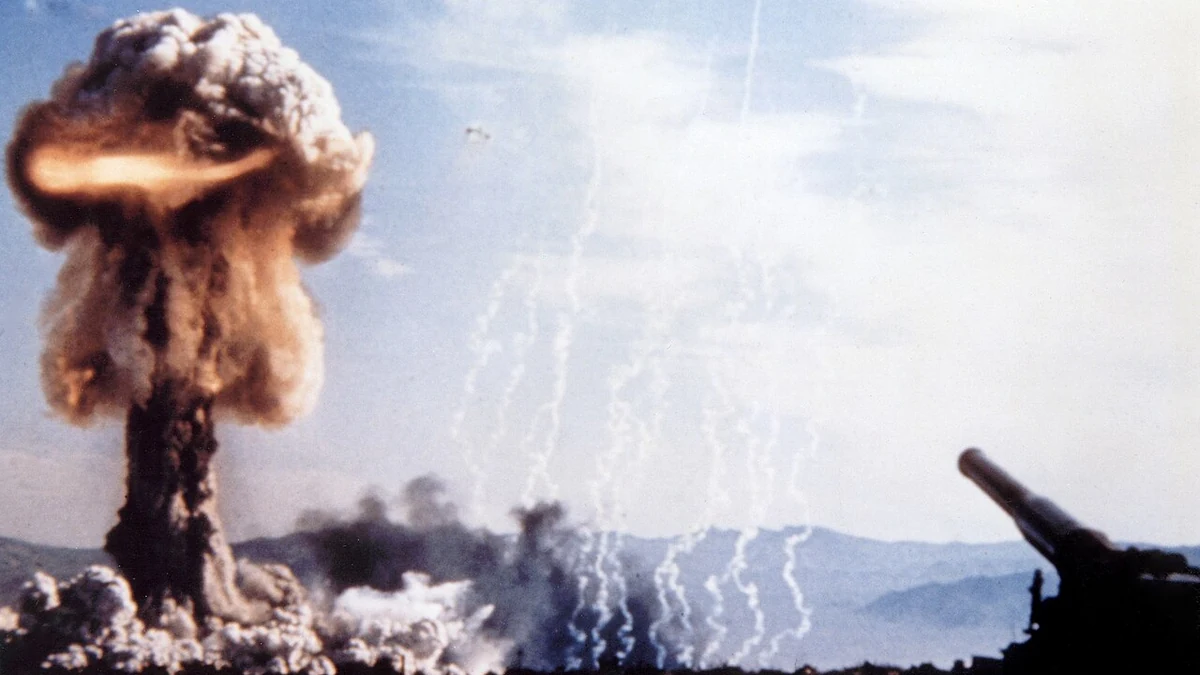
The Justice Department has approved more than $849 million in compensation under the expanded Radiation Exposure Compensation Act, although nearly 50,000 applications are still awaiting decisions. Figures updated Monday, October 19, show $849,039,184 in approved awards across 12,157 claims received under the program’s 2025 reauthorization.
The department has recorded 61,787 claims in this group, including 49,456 pending cases and 174 denials. Its dollar figure measures approved awards, not the amount of cash confirmed as already disbursed. The large unresolved caseload also puts the headline total in perspective: many applicants have yet to receive an eligibility decision.
According to the DOJ’s October 19 claims report, 98.6% of applications that have reached a decision were approved. That percentage applies only to disposed claims, rather than all applications filed. About four out of every five claims in the expanded program are still pending, so the high approval rate among completed cases cannot be used to predict the outcomes of the remaining applications.
Downwinders account for most approved compensation
Downwinder claims represent the largest share of approved dollars. The department lists 5,114 approvals worth $511.4 million for people covered by provisions addressing exposure associated with atmospheric nuclear testing. Another 28,081 downwinder claims remain pending out of 33,246 received in this category. The approved amount accounts for roughly 60% of the $849 million total.
The law covers eligible residents of designated areas who later developed specified cancers. Its geographic provisions include Idaho, New Mexico and Utah, along with specified counties or townships in Arizona and Nevada. Applicants must also document presence during the applicable historical period, which differs for some areas. A diagnosis by itself, or residence somewhere in the broader region outside the statutory boundaries and dates, does not establish eligibility.
Claims involving Manhattan Project waste form the second-largest award category. DOJ has approved 6,609 of these claims for $294.35 million, with 19,676 more still awaiting decisions. The provision addresses certain people who lived, worked or attended school in specifically designated areas affected by waste from the wartime nuclear weapons program. The eligible ZIP codes are in parts of Missouri, Tennessee, Kentucky and Alaska, rather than entire states.
Uranium workers account for 357 approved claims and $35.7 million in awards, while 1,566 applications remain pending. This coverage extends to qualifying work involving uranium mining, milling, core drilling, ore transport and certain remediation activities, subject to employment, geographic and medical conditions. Separately, DOJ reports 77 approved claims worth $7,589,184 for onsite participants in atmospheric nuclear tests, with 133 such claims pending. The four categories reflect different routes of exposure and different eligibility rules, rather than a single undifferentiated class of claimants.
What the 2025 expansion changed
Congress reauthorized and expanded RECA through Public Law 119-21, enacted July 4, 2025. The law provides limited federal compensation for specified illnesses associated with the U.S. nuclear weapons program and expanded access for additional communities and groups of workers. Its structure is intended to resolve eligible claims through an administrative process instead of requiring people to pursue individual lawsuits over historical exposure.
Applicants do not have to demonstrate that a particular dose of radiation directly caused their illness. The Justice Department says claimants instead must document an eligible diagnosis and qualifying residence, work or onsite participation during the periods set out in the law. That approach reduces the need to reconstruct an individual’s precise exposure decades after the events, but it does not eliminate the program’s geographic, occupational and medical restrictions.
Compensation also varies substantially by category. Qualifying downwinders and uranium workers may receive a one-time $100,000 award. The same standard amount applies to eligible onsite participants, although certain veterans’ benefits received for the same illness may reduce their payment. The Manhattan Project waste provision is different: a living claimant may receive the greater of $50,000 or documented qualifying medical expenses not covered by insurance or other benefit programs. When the affected person died before filing, the specified survivor payment is $25,000.
Those differences help explain why the Manhattan Project waste category has more approved claims than the downwinder category but fewer approved dollars. The figures should not be read as a ranking of medical severity or the consequences of any specific nuclear test. They reflect the number of decisions made under each category and the monetary rules established by Congress.
Pending claims rise even as more awards are approved
The new totals show continuing progress in decisions alongside an expanding queue. On October 9, DOJ listed 11,915 approved claims and $834,464,184 in approved compensation under the expanded law. By October 19, the number of approvals had risen by 242 and the value of approved awards by $14,575,000. Over the same period, total applications rose by 1,652, and pending cases increased by 1,370 to 49,456.
The share of approved cases among decisions made also requires care when interpreting the backlog. So far, 12,157 claims have been approved and 174 denied, giving the published 98.6% approval rate among resolved cases. It is not an approval rate for the full 61,787 filings, and the unresolved group may differ in documentation or complexity from claims already processed. DOJ has warned applicants that the volume of applications can delay acknowledgment letters and says it is working on revised implementing regulations during 2026.
The agency separately reports older claims received before July 3, 2025. That historical group includes 42,599 approved claims worth approximately $2.74 billion. Those awards are outside the newer $849 million subtotal and should not be confused with approvals made under the expanded law. Keeping the two reporting groups distinct is important for understanding how much of the current claims activity follows the 2025 reauthorization.
Applicants can file electronically through the DOJ’s RECA claim portal or submit a paper application with supporting evidence. Medical records and proof of residence, employment or participation are central to the process, and the department may request original or certified records even when an application begins online. Under the current program rules, claims must be filed by December 31, 2027, leaving the agency to address a substantial pending caseload as that deadline approaches.
More News

Latest News
View all news- Fifth Third Reports $1.13 Adjusted Third-Quarter EPS Following Comerica Conversion
- Cleveland-Cliffs Returns to Profit With $165 Million in Third-Quarter Net Income
- U.S. Sets Final Antidumping and Subsidy Rates on Canadian Softwood Lumber
- Commerce Sets Final Subsidy Rates for Chinese Truck Bed Cover Imports
- CFTC Rule Excluding Traditional Sportsbook Wagers From ‘Swaps’ Takes Effect