IRS Finalizes Framework for Direct Credit- and Debit-Card Tax Payments
The IRS and Treasury finalized regulations allowing the agency to directly accept tax payments by credit or debit card and recover eligible processing fees from card-paying taxpayers, although the rule does not by itself launch a new IRS card-payment portal.
Our editorial standards
MarketReview publishes clear, independently produced financial information using reliable sources and transparent editorial standards.
Read our Editorial Policy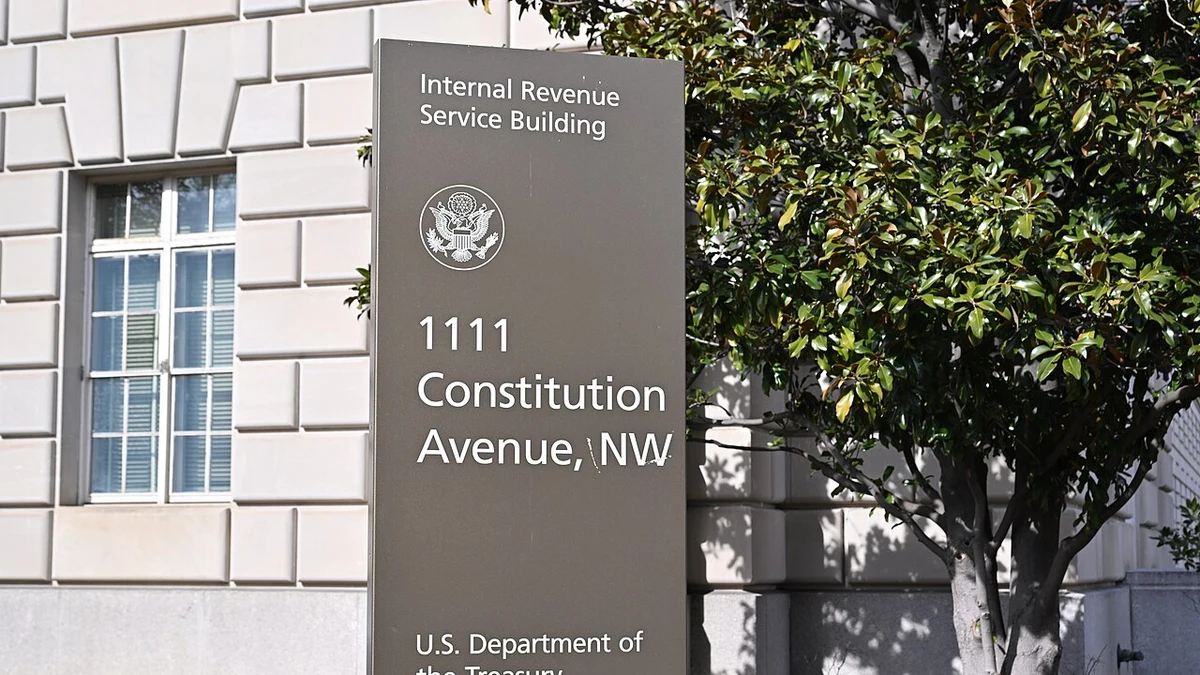
The Internal Revenue Service and the Treasury Department finalized rules on Monday that create the regulatory framework for the IRS to directly accept tax payments by credit or debit card, a change that could eventually let taxpayers pay the agency without first being routed through outside processors.
The rule takes effect Oct. 19 and implements changes Congress made in the Taxpayer First Act of 2019. In practical terms, it removes older regulatory restrictions that had barred the IRS from paying contract fees tied to card acceptance and from imposing its own reimbursement fee on taxpayers who choose to pay by card.
In the final rule published in the Federal Register, Treasury and the IRS said the updated regulations are meant to align the tax-payment framework with the statute and give the agency more flexibility if it decides to move toward direct acceptance. The agencies also made clear that the rule itself does not establish a specific new payment program or contract. Instead, it supplies the legal structure the IRS would need if it wants to build one.
What the final rule changes
Before these amendments, the IRS already had authority to accept tax payments made by credit or debit card under procedures prescribed by the Commissioner of Internal Revenue. What the earlier rules did not permit was a structure in which the IRS itself could pay a fee under a card-processing contract and then recover that amount from the taxpayer using the card. That limitation mattered because it effectively preserved a model centered on third-party processors rather than direct acceptance by the agency.
The final regulations change that. They allow the Commissioner to enter into contracts related to credit- and debit-card tax payments if the contracts are cost beneficial to the government. Where a contract provides that the IRS pays a fee, charge or other monetary consideration, the agency must recoup the full amount from the taxpayers who use that payment method. The rule also says the IRS must seek to minimize any fee it is required to pay under those contracts.
Just as importantly, the regulations do not force the IRS into only one model. They also preserve the ability to use contracts under which the IRS does not pay a fee. In those arrangements, card issuers, financial institutions or other participants in the payment chain may still impose their own charges, but the IRS may not receive any part of those charges. That distinction helps explain why the rule is better understood as a framework than as a headline-grabbing launch of an entirely new consumer product.
The final text also revises the error-resolution language. It specifies that payments of tax by credit or debit card, along with any reimbursement fees connected to those payments, remain subject to the applicable error-resolution rules under the Truth in Lending Act, the Electronic Fund Transfer Act, or similar state or local laws for card-account errors. At the same time, those procedures do not apply to disputes about the underlying tax liability itself. In other words, a card-processing issue and a tax dispute remain separate matters.
Current IRS card payments still run through outside processors
For taxpayers looking at the immediate practical effect, the most important point is that the IRS has not announced that it is replacing its existing payment page with a fully direct in-house card portal today. On its current card-payment guidance page, the agency still directs taxpayers to IRS-approved third-party processors for most debit- and credit-card payments, and it also notes that digital wallets such as PayPal and Venmo can be used through those approved services.
As of Monday, the IRS page lists Pay1040 and ACI Payments as approved processors. The posted fees illustrate the status quo: Pay1040 lists a $2.15 fee for debit cards and a 1.75% fee for credit cards, subject to a $2.50 minimum, while ACI Payments lists a $2.10 debit-card fee and a 1.85% credit-card fee, also with a $2.50 minimum. The page says online and phone payments are accepted, frequency limits apply, and federal tax deposits cannot be paid by card.
The same IRS guidance also says no part of the fee under the current processor-based setup goes to the IRS. That is a useful reminder for readers interpreting the final rule. Treasury and the IRS are not saying that today’s convenience fees suddenly become government revenue. Rather, the rule opens the door to a future direct-acceptance arrangement in which the IRS could pay a contractual processing fee and recover it from the taxpayer as a reimbursement fee, so long as the full amount is recouped and the contract is cost beneficial.
That means the consumer experience may not change immediately even though the legal architecture has changed meaningfully. Until the IRS announces an implementation step such as a contract award, a direct-payment rollout or revised operational guidance, taxpayers should assume the current processor model remains the live system.
Why the framework matters
The agencies gave several reasons for finalizing the rule now. In the Federal Register notice, Treasury and the IRS said the statutory change can give the government benefits similar to those available to other entities that accept cards, including guaranteed receipt of funds and lower paper-check processing costs. They also pointed to the possibility of making it easier for taxpayers to pay the IRS directly by card, including over the telephone, without having to wait for a handoff to a third-party processor.
The rulemaking record suggests there was little dispute over the general direction of travel. Treasury and the IRS said they received eight comments on the July 2024 proposal and adopted the proposed regulations without change. Most comments were supportive. Some commenters argued that the rule could simplify tax payments, lower taxpayer costs and encourage more timely payments. Other comments raised issues such as the structure of fee reimbursement or whether broader cost-comparison work should be done, but the agencies said those points were either outside the scope of the regulations or already addressed through other requirements.
For taxpayers, the real-world significance is straightforward. Paying by card is often a convenience decision rather than the cheapest way to pay. The final rule does not eliminate that tradeoff. If the IRS eventually builds a direct card-acceptance channel, the law and the final regulations still require any fee the IRS pays under such a contract to be fully recouped from the taxpayers who choose to use the service. In other words, direct acceptance could streamline the process, but it would not automatically make card payments free.
Even so, Monday’s action is meaningful because it settles the regulatory side of the question. After years of operating within a model shaped by older restrictions, the IRS now has a finalized rule that supports direct card acceptance if it decides the operational and contractual case makes sense. What taxpayers do not yet have is a formal IRS announcement saying that such a system has gone live. For now, the direct-payment framework is final, while the day-to-day card-payment experience remains largely the same.
More News


Latest News
View all news- Fifth Third Reports $1.13 Adjusted Third-Quarter EPS Following Comerica Conversion
- Cleveland-Cliffs Returns to Profit With $165 Million in Third-Quarter Net Income
- U.S. Sets Final Antidumping and Subsidy Rates on Canadian Softwood Lumber
- Commerce Sets Final Subsidy Rates for Chinese Truck Bed Cover Imports
- CFTC Rule Excluding Traditional Sportsbook Wagers From ‘Swaps’ Takes Effect