
U.S. Emergency Power Orders for Puerto Rico Take Effect, Extending Grid Support Into February
Federal directives allow specified generators to operate as needed and require at least 400 more miles of transmission-line clearing by February 5, 2027.
Our editorial standards
MarketReview publishes clear, independently produced financial information using reliable sources and transparent editorial standards.
Read our Editorial Policy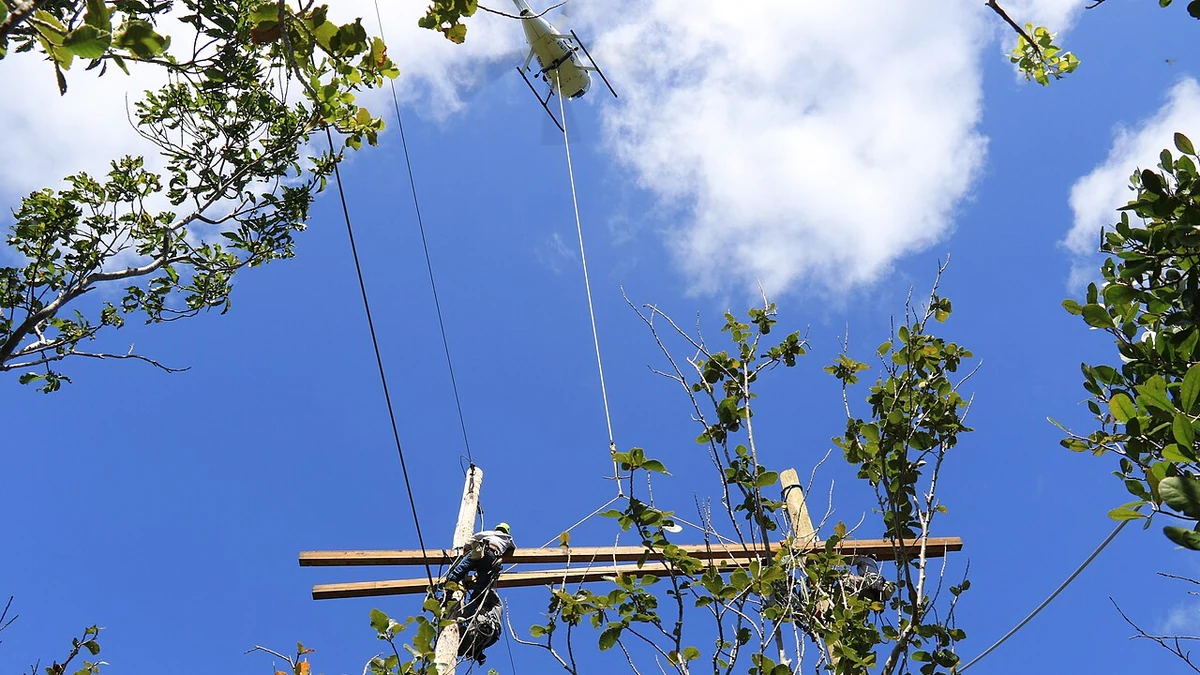
Two renewed U.S. emergency orders for Puerto Rico’s power system took effect on November 8, extending federal authority for selected generating units and grid maintenance through February 5, 2027. The directives allow specified power resources to operate when needed for reliability and require additional work to clear vegetation from transmission corridors.
Energy Secretary Chris Wright signed the orders on November 6, before the previous 90-day authorizations expired. They address two connected problems: keeping enough electricity available when generators fail or demand rises, and maintaining the lines needed to carry that power across the island.
The Department of Energy announced the renewals on November 7, citing continuing reliability risks. The measures apply to the Puerto Rico Electric Power Authority, or PREPA, and its agents. They continue an emergency program first established in May 2025 rather than launching a separate grid reconstruction initiative.
Generation order keeps critical units available when needed
Under Order 202-25-1F, PREPA and its agents must operate listed generation resources when they are needed to prevent reliability problems. The order does not direct every covered plant to run continuously. It limits operation to the periods and operating parameters determined necessary for grid reliability, with an explicit instruction to minimize adverse environmental effects.
The attachment identifies units at Aguirre, Costa Sur, Central San Juan, Palo Seco, Cambalache and Mayagüez, alongside temporary generation resources deployed at San Juan and Palo Seco. Their inclusion gives grid operators access to specified capacity under emergency conditions, but being listed does not establish that each unit is currently available or generating electricity.
That distinction matters on a system with little room for unexpected equipment failures. In the signed order, DOE describes unstable reserve capacity and repeated blackouts. The department says several recent load-shedding events each affected at least 50,000 customers, underscoring how an interruption at a plant can quickly translate into lost service.
A September 25 letter from Puerto Rico’s energy czar, Josué A. Colón Ortiz, cited a LUMA Energy assessment estimating an underlying generation shortfall of roughly 700 to 850 megawatts. That is a resource-adequacy estimate, not a measurement of electricity lost on November 8. The letter also described deferred repairs on aging generating equipment, a constraint that emergency dispatch alone cannot resolve.
There is a maintenance obligation attached to the renewed authority. By December 8, PREPA and its agents must submit manufacturers’ recommended maintenance schedules for the covered units, disclose the running time since their last maintenance and provide plans for carrying out that work. They must also report dates of operation to DOE every two weeks on Wednesdays. These requirements are intended to give federal officials information about how emergency flexibility is being used and whether essential equipment can be maintained.
Transmission crews have another 400 miles to clear
The companion order, 202-25-2F, addresses vegetation and the condition of transmission and distribution infrastructure. It instructs PREPA and its agents to continue clearing rights-of-way and performing asset management, including component refurbishment or replacement, to preserve the operational availability of covered lines and equipment.
DOE set a measurable new deadline: at least an additional 400 miles of vegetation management on 38-kilovolt, 115-kilovolt and 230-kilovolt transmission rights-of-way by February 5. The work includes the lines, towers and supporting facilities in those corridors. Clearing these routes reduces the chance that tree growth or falling limbs will interfere with the electric network, although the order does not promise that outages will stop.
The transmission order says 2,186 miles of transmission and distribution lines had been cleared as of October 22. That figure is a progress total reported in the federal order, whereas the new 400-mile directive is an additional requirement for specified high-voltage transmission corridors. The two numbers should not be treated as identical measures of the same work.
Previous renewals reveal why the department continues to set deadlines. Its account of earlier work says only 38 miles were cleared between May 16 and July 28, 2025, followed by 82 miles from late July to October of that year. DOE also cites delays involving funding authorizations, contract disputes, weather, environmental reviews and mapping. The present order says the risk from inadequate vegetation control remains high despite more recent clearing.
If the additional 400 miles cannot be completed by February 5, PREPA must tell DOE what actions it has taken and what it plans to do to finish as soon as possible. The utilities must report the dates of vegetation work every two weeks on Wednesdays. The directive also calls for minimizing environmental impacts to the extent practicable, while stating that requirements that would prevent necessary emergency work from proceeding may conflict with the order’s purpose.
Emergency authority remains a bridge, not a permanent fix
Both renewals rely on Section 202(c) of the Federal Power Act, which authorizes the energy secretary to order specified electricity operations during an emergency. DOE determined that Puerto Rico continues to face the conditions needed for that authority: insufficient dependable generation, vulnerable power-delivery facilities and demand pressures. This is another 90-day extension of orders issued and repeatedly renewed since 2025.
The department attributes the grid’s fragility to years of deferred maintenance, financial problems affecting the power authority and severe damage from hurricanes and earthquakes. Puerto Rico’s energy czar described the federal orders as temporary support while generating units are repaired and broader transmission improvements move forward. The September letter pointed to 15 manual load-shedding events during July and August 2026 and a peak demand of about 3,234 megawatts in August, figures it attributed to LUMA.
Generation shortages and transmission weaknesses can reinforce each other. Keeping a generating unit online is of limited use if a damaged or constrained line cannot deliver its output. Conversely, a cleared and repaired transmission route cannot make up for a major generator that is unavailable during peak demand. The paired orders address those separate operating risks without resolving the longer-term shortage of dependable capacity.
Neither renewal announces a new funding award or says that Puerto Rico’s reconstruction is finished. The immediate effect is to keep defined emergency operating and maintenance requirements in place for PREPA and its agents. Progress can be assessed against the required biweekly reports, the December 8 generation-maintenance submissions and the February 5 vegetation-clearing deadline. DOE has said it will continue evaluating the need for emergency orders as conditions change.
More News


Latest News
View all news- Sensex, Nifty End Lower in Diwali Muhurat Trading, Breaking Eight-Year Winning Streak
- Bank of Israel Finds 62% of Survey Respondents Faced Financial Fraud Attempts
- Singapore’s Lee Urges Australia to Invest More in Southeast Asia
- New Zealand’s Revised Parliamentary Funding and Expense Rules Take Effect
- Berkshire Hathaway Reports Lower Q3 Operating Earnings, $9.6 Billion in Share Buybacks
