
Australian Dwelling Starts Rise 7% as Private House Starts Jump 11.6%
Australia recorded 52,201 dwelling commencements in the June quarter, with private house starts driving the increase while other residential starts were almost flat.
Our editorial standards
MarketReview publishes clear, independently produced financial information using reliable sources and transparent editorial standards.
Read our Editorial Policy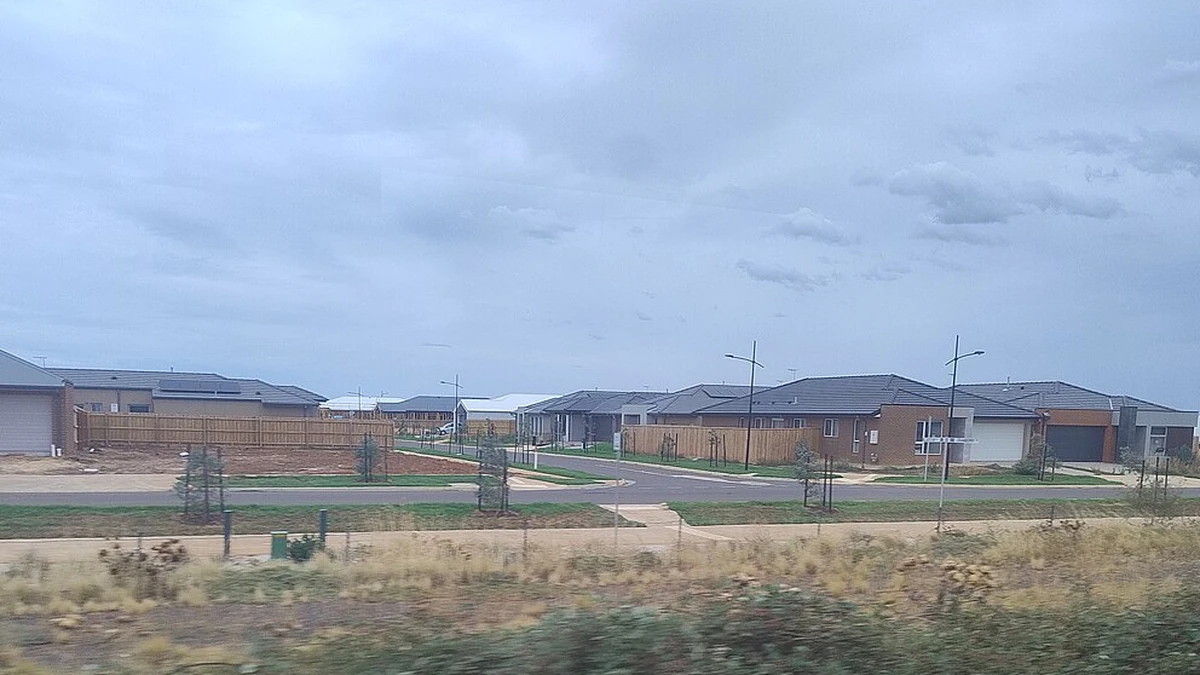
Australian home building strengthened in the June quarter, with the number of dwellings commenced rising 7.0% from the previous quarter to 52,201 on a seasonally adjusted basis. The increase was led by detached houses, where new private-sector commencements climbed 11.6% to 31,707.
The result marked a sharp rebound for private house starts after a 1.3% fall in the March quarter. Compared with the June quarter of 2025, total dwelling commencements were 14.4% higher and private house starts were up 20.7%, indicating that the lift was not only a quarter-to-quarter move.
The Australian Bureau of Statistics said private-sector other residential commencements, which cover dwellings other than detached houses, slipped 0.1% to 19,126. That left the quarter’s overall increase heavily dependent on house building rather than a broad rise across every residential category.
House building drives the quarterly increase
The seasonally adjusted data show a clear split between houses and other residential construction. Private house commencements rose from 28,403 in the March quarter to 31,707 in June, while private other residential starts were little changed at 19,126 after 19,141 in the previous quarter. The latter category had already dropped 20.6% in March, so its failure to rebound materially in June limited the breadth of the recovery.
State figures also point to an uneven pattern. Among the five large states for which the ABS presents a seasonally adjusted comparison on the release page, Victoria recorded 16,239 total dwelling commencements in the June quarter, up from 14,128 in March. Western Australia increased to 7,240 from 5,930, while Queensland edged up to 11,671 from 11,342 and South Australia rose to 3,913 from 3,657. New South Wales moved the other way, with commencements falling to 11,252 from 11,907.
The headline seasonally adjusted increase is stronger than the underlying trend estimate, which is worth keeping in view because quarterly construction data can be volatile. On a trend basis, total dwelling commencements were 51,421 in the June quarter, down 0.2% from March. Trend private house starts still rose 3.5% to 30,605, but trend other residential commencements fell 5.4% to 19,518. The two measures therefore tell a consistent story about improving house construction, but a less decisive one about the residential sector as a whole.
A separate ABS approvals release gives some forward-looking context. Total dwelling approvals rose 7.2% in June to 18,328 on a seasonally adjusted monthly basis. Private house approvals increased only 0.4% to 10,631, while approvals for private dwellings excluding houses jumped 17.8% to 7,138. Approvals do not translate directly or immediately into starts, but they indicate that the pipeline entering the second half of 2026 was not moving in exactly the same pattern as June-quarter commencements.
Completions and building work also rise
The June-quarter data were not limited to stronger starts. Total dwelling completions increased 5.8% from the March quarter to 47,168 on a seasonally adjusted basis. Private house completions rose 1.4% to 27,039, while private other residential completions climbed 13.9% to 19,018. Compared with a year earlier, total completions were 15.9% higher.
Even with the improvement in completions, a large amount of housing remained in the construction pipeline. The ABS counted 248,733 dwellings under construction in original terms during the June quarter, including 95,447 new houses. That stock of work matters because commencements measure projects entering construction, while completions determine when finished homes actually add to the available housing stock.
Construction spending also advanced. The value of total building work done rose 1.1% in the June quarter to A$45.8 billion in seasonally adjusted terms. New residential building work increased 1.4% to A$23.6 billion. Within that total, work on new houses rose 1.5% to A$13.8 billion and work on new other residential buildings increased 1.2% to A$9.9 billion.
Taken together, the starts, completions and work-done figures show more activity moving through several stages of the housing construction process. The strongest new momentum was in private houses, while completions were helped more by the other residential segment. That distinction is important because a rise in one stage or building type does not necessarily mean housing supply is accelerating uniformly across the country.
Housing target keeps supply numbers in focus
The data arrive against Australia’s national effort to lift housing supply. Under the National Housing Accord, the Commonwealth, states and territories agreed to an aspirational target of 1.2 million new, well-located homes over five years from July 1, 2024. The target has made commencements and completions closely watched indicators of whether construction capacity is rising enough to support a sustained increase in housing supply.
The June-quarter rise in starts is therefore encouraging, but the composition of the increase matters. Detached private houses produced most of the quarterly gain, while other residential starts barely moved. For densely populated cities, supply outcomes also depend heavily on apartments, townhouses and other forms of multi-unit housing, so the flat reading in the broader non-house category tempers the strength of the headline number.
There is also a timing gap between approvals, commencements and completions. A project can be approved well before physical work begins, and a commencement can take many months or longer to become a completed dwelling. The ABS data show that completions improved in June, but they remained below the number of commencements for the quarter. That does not by itself signal a problem, because the two measures cover different project cohorts, yet it underscores why a single quarter of starts cannot establish the pace of finished supply on its own.
The June-quarter estimates are also subject to revision. The ABS said final data for the June 2026 quarter will be released with the next Building Activity publication on January 13, 2027. That release will provide another test of whether the house-led rise in commencements was sustained as the year progressed.
More News

Latest News
View all news- Gold Futures Retreat Toward $4,190 as U.S. Dollar Strengthens
- IonQ Agrees to Buy Cybersecurity Firm Elisity for Up to $1.3 Billion
- KKR, TotalEnergies to Add $1.2 Billion Solar Portfolio to U.S. Venture
- U.S. 30-Year Mortgage Rates Hover Near 7.55% as Housing Borrowing Costs Remain Elevated
- Wall Street Volatility Gauge Rises as Traders Assess Inflation and Earnings Risks
