
EU Extension of Sudan Sanctions Takes Legal Effect October 10
The EU has renewed its Sudan sanctions decision through October 10, 2027, and updated three existing individual listings without adding new designees.
Our editorial standards
MarketReview publishes clear, independently produced financial information using reliable sources and transparent editorial standards.
Read our Editorial Policy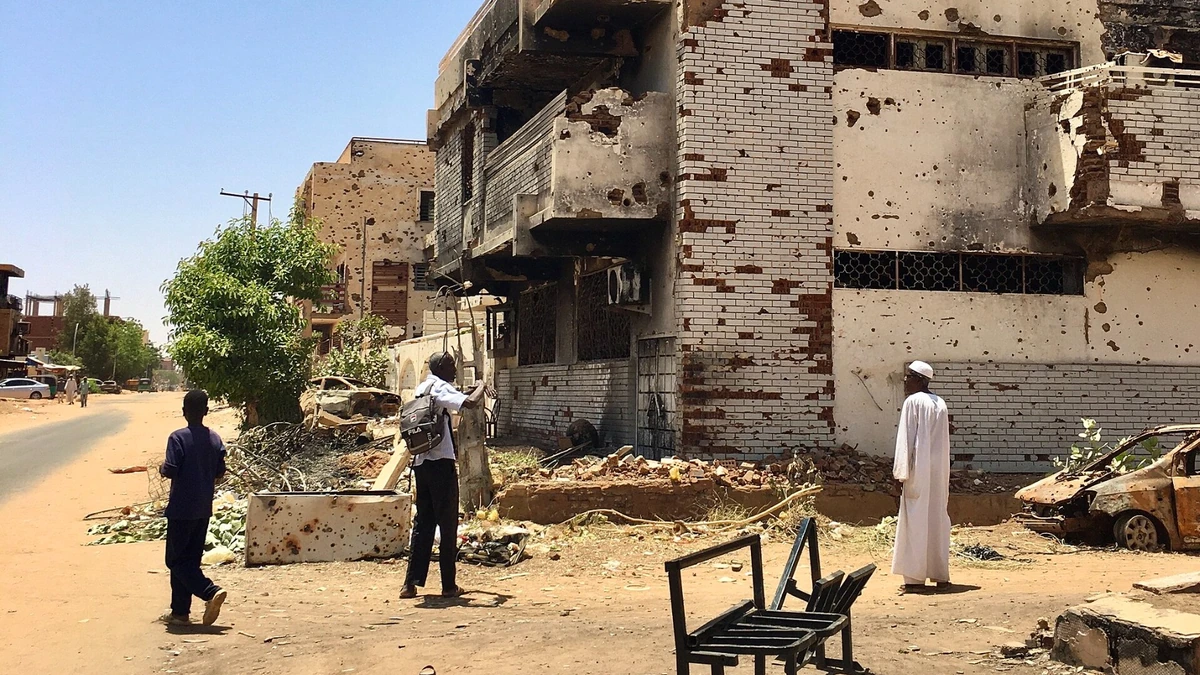
The European Union’s one-year extension of its Sudan sanctions framework took legal effect on Saturday, October 10, 2026, keeping the bloc’s targeted restrictions in place under the relevant foreign-policy decision until October 10, 2027. The renewal comes as fighting between the Sudanese Armed Forces (SAF) and the Rapid Support Forces (RSF) continues to disrupt civilian life and humanitarian operations.
EU ministers adopted the renewal on October 9, just before the existing decision reached its scheduled end date. Alongside the extension, the Council revised the official records of three individuals who were already sanctioned, updating information about their roles and links to the conflict. The October legal acts do not designate three new people.
The distinction is important for anyone reading the measures as a new escalation. Brussels has continued an existing framework and revised specific listings; it has not used this October decision to introduce a blanket ban on trade with Sudan. Separate restrictions on Sudanese gold and certain mining-related chemicals were adopted earlier in the year.
How the October renewal works
Under Council Decision (CFSP) 2026/2261, the expiry date in the EU’s 2023 Sudan decision changes from October 10, 2026, to October 10, 2027. The Council adopted and published the amendment on October 9. Its final article specifies that it takes effect the day after publication, which makes October 10 the operative date.
A companion measure, Council Implementing Regulation (EU) 2026/2262, took effect the same day. It updates the three personal listings in the annex to Regulation (EU) 2023/2147. That regulation is directly applicable across EU member states. The two October instruments therefore serve related but different purposes: one extends the underlying foreign-policy decision, while the other keeps the EU’s legally operative sanctions records aligned with the revised entries.
The framework was established in October 2023 after war broke out between the SAF and RSF that April. Its listing criteria cover people and organizations accused of supporting activities that threaten Sudan’s peace or security, obstructing a political transition or humanitarian assistance, or engaging in serious abuses. Both armed camps and associated businesses have appeared on the list. The Council’s July 2026 Sudan overview counted 13 sanctioned individuals and eight entities under this framework; neither of the two October acts adds another designation.
For banks, companies and other operators subject to EU rules, the practical obligations are established by the underlying regulation. Funds and economic resources belonging to, held or controlled by listed parties must be frozen, and funds or economic resources cannot be made available to them, directly or indirectly. Listed individuals are also subject to travel restrictions under the corresponding Council decision. A person’s presence in Sudan alone does not place them on this particular asset-freeze list, although other restrictions may apply to a proposed activity.
The 2023 regulation also contains humanitarian provisions. Certain qualifying organizations, including specified United Nations bodies and humanitarian partners, are covered by exemptions for activities needed to deliver assistance, while national authorities may authorize particular releases of frozen funds under defined conditions. Those existing safeguards are not removed by the October extension.
Three previously sanctioned individuals have updated records
One revised entry concerns Mirghani Idriss Suleiman, whom the Council identifies as a lieutenant general in the SAF and director-general of Sudan’s Defense Industries System. His updated description includes a military-industries appointment in 2026 and details of the company’s role in supplying the armed forces. The EU originally listed him on June 24, 2024. The updated record explains why the Council continues to regard his activities as falling within the sanctions criteria.
The second is Mustafa Ibrahim Abdel Nabi Mohamed, described in the EU listing as a financial director of the RSF, a director of al-Khaleej Bank and a majority shareholder in Shield Protective Solutions. The revised explanation sets out the Council’s assessment of his business connections and includes assertions about property holdings in Dubai. These are the Council’s stated grounds and assessments, not findings made by a court as part of the October renewal. His existing listing also dates from June 24, 2024.
Abu Aqla Mohamed Ahmed Kaikal is the third person whose entry was changed. The EU now describes him as leader of the Sudan Shield Forces, a militia fighting alongside the SAF, after his reported departure from the RSF in October 2024. Its amended grounds refer to attacks on civilians and interference with humanitarian access. The official listing date remains July 18, 2025. The revised account reflects the Council’s description of his changing armed-group affiliation rather than a new designation made this weekend.
Such revisions have practical significance even without an additional name on the list. Financial institutions and businesses checking counterparties must work from current identifying details, positions and affiliations, particularly because the rules also prohibit making resources indirectly available to sanctioned people. The October instruments do not disclose a new total of frozen assets or estimate how many payments may be affected by these record changes.
Gold-trade curbs and humanitarian pressures form the wider context
The extension follows a different sanctions step taken in July. In its July 13 announcement, the Council introduced restrictions on purchasing, importing or transferring gold originating in Sudan, as well as on selling or supplying mercury and cyanide to Sudan for gold mining and exploitation. Related technical, brokering and financial services are also covered. The EU said it wanted to constrain revenues that help sustain the war, while providing targeted exceptions for humanitarian, public-health and disaster-response purposes in the rules governing those chemicals.
Those commodity restrictions should not be mistaken for measures first taking effect on October 10. They were adopted months before the latest renewal and address specified trade and services, whereas the October update extends the duration of the targeted sanctions decision and amends three individual records. A prohibition linked to a named person and a prohibition linked to particular goods can raise different questions for businesses assessing a payment, shipment or customer relationship.
Sudan’s civilian emergency remains the backdrop. In April 2026, the United Nations’ resident and humanitarian coordinator said nearly 34 million people across Sudan needed humanitarian assistance and described widespread destruction of homes, markets, hospitals and schools. The EU’s stated grounds for the targeted sanctions include threats to peace and obstruction of relief, but the October legal documents make no claim that renewing the framework will, by itself, end the fighting or restore humanitarian access.
Sudan is also subject to a separate, much older EU arms embargo, which the Council traces to 1994. The October 2026 decision deals with the targeted regime established in 2023; it does not replace the arms embargo or recreate the July gold restrictions. Keeping those instruments distinct is essential to understanding what changed legally on October 10.
The renewed foreign-policy decision now runs until October 10, 2027. The Council can alter individual listings before that date, and the underlying EU regulation calls for a review of its sanctions list at least every 12 months. Further listing changes therefore need not await the next annual renewal.
More News


Latest News
View all news- UK Defence Ministry and QinetiQ Launch Project Safari to Expand Smaller Firms’ Access to Military Testing
- Phoenix Education Names Michael Cochran Interim CFO as Finance Leadership Change Takes Effect
- India Outlines Over ₹13,000 Crore in Projects for October 11
- EU Urges U.S. to Reverse Sanctions on International Criminal Court, Signals Readiness to Protect Its Operations
- USDA Releases October Crop Supply and Demand Estimates for Global Grain Markets
