
India Outlines Over ₹13,000 Crore in Projects for October 11
Prime Minister Narendra Modi is scheduled to open a ₹4,900 crore Chennai Metro stretch and launch or dedicate highway, rail, port, refinery and research projects during an October 11 visit.
Our editorial standards
MarketReview publishes clear, independently produced financial information using reliable sources and transparent editorial standards.
Read our Editorial Policy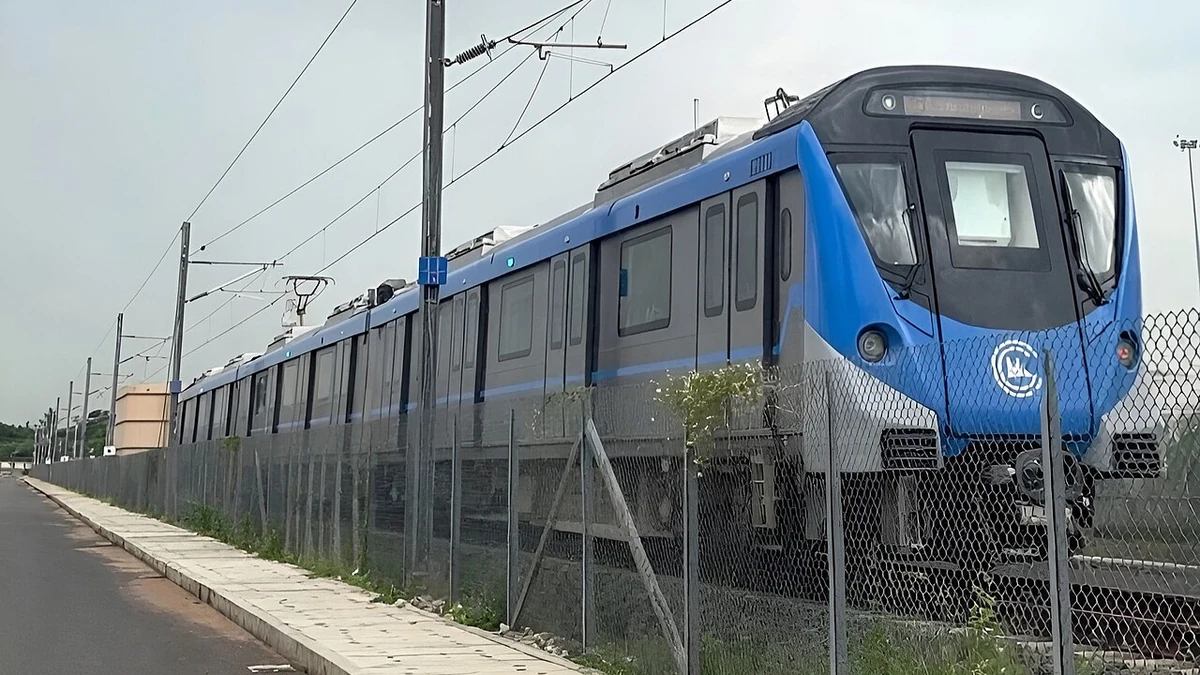
India has outlined more than ₹13,000 crore worth of development projects for a ceremony in Chennai on Sunday, October 11, when Prime Minister Narendra Modi is scheduled to inaugurate completed infrastructure, dedicate facilities and lay foundation stones for new work. A section of Chennai Metro Phase 2, valued at around ₹4,900 crore, is the largest individually priced project in the announcement.
The programme extends beyond Chennai to national highways, regional railway connections and ports across Tamil Nadu, alongside an industrial project at a refinery and a research centre at IIT Madras. The principal ceremony is scheduled for about 1:30 p.m. India time, following a planned metro ride earlier in the day.
The Prime Minister’s Office announcement issued October 10 covers two different stages of infrastructure development. Some assets are due to be opened or dedicated after construction, while others are at the foundation-stone stage. Its more-than-₹13,000-crore figure is the stated value of projects in the programme, not an announcement that the entire amount will be newly disbursed on October 11.
Chennai Metro opening leads the project list
The planned inauguration of the Poonamallee–Vadapalani stretch of Chennai Metro Phase 2 is the most expensive individual item identified in the release. At an estimated ₹4,900 crore, the stretch includes a 3.7-kilometre double-decker structure and signalling equipment designed to support driverless operations, according to the official schedule.
The opening is intended to strengthen the connection between Chennai’s growing western suburbs and the city centre. Shorter journeys are an expected benefit cited by the government, rather than a measured outcome from the new service. The announcement does not provide a passenger forecast or a quantified estimate of time savings.
The stretch is part of a much bigger network that remains under development. In a February 2026 project update, Chennai Metro Rail Limited described Phase 2 as a 118.9-kilometre programme across three corridors and 128 stations. It also reported tunnelling progress on Corridor 4, the Light House–Poonamallee Bypass route. The ₹4,900 crore amount in the October announcement applies to the stretch being inaugurated, not to the full Phase 2 network.
The Prime Minister is scheduled to ride from Porur Bypass Station to Poonamallee Bypass Station and back at around 11:30 a.m., before the principal ceremony. The itinerary makes the metro the first substantial infrastructure stop of the visit, although a ceremonial ride should not be confused with confirmation of individual station opening hours or a complete public-service timetable.
Highway and railway works reach beyond Chennai
National highway projects account for around ₹3,700 crore of the announced programme. Two four-lane sections are due to be inaugurated: the 36-kilometre Vadugapatti–Therkuvenganallur stretch of NH-744 and the 30-kilometre Madurai Ring Road section of NH-744A. Officials expect the first to improve access to industrial and commercial centres and the second to ease travel around Madurai.
A third road project is at an earlier stage. Modi is scheduled to lay the foundation stone for the four-lane Thiruvarur Bypass on the Nagapattinam–Thanjavur portion of NH-83. Its purpose is to provide a route around the town, potentially reducing the amount of through-traffic using local streets. The official release gives the combined highway value but does not allocate a separate rupee figure to each of these three projects.
The distinction between an opening and a foundation ceremony matters for residents and businesses assessing when they might see a practical benefit. Completed road sections may become available for traffic in connection with their inauguration, subject to operating arrangements. A bypass that is only receiving its foundation stone still requires construction before it can carry vehicles. Neither the expected congestion reduction nor a completion schedule for the bypass was quantified in the October 10 release.
Railway infrastructure adds more than ₹750 crore to the project list. Modi is also scheduled to dedicate the Karaikal–Peralam railway line and three rail flyovers in and around Coimbatore, with the latter intended to reduce delays at busy level crossings. Five redeveloped Amrit Bharat stations at Palani, Vellore Cantonment, Ambasamudram, Paramakkudi and Namakkal are also scheduled for inauguration.
These railway works serve different functions. A line affects the rail network’s reach, flyovers separate road movement from rail crossings, and station redevelopment changes passenger facilities. The announcement groups them under railway investment rather than publishing a stand-alone cost and commissioning schedule for every component. It also makes clear that the day’s projects are not confined to the city hosting the ceremony.
Ports, refinery capacity and research complete the agenda
Maritime infrastructure forms another part of the planned event. At Chennai Port, four sets of facilities are due to open: a paved storage yard, four export-import godowns, an upgraded cruise terminal and a Seafarers Club. They are intended to improve storage and cargo handling, add warehouse space and upgrade passenger and seafarer facilities, according to the release.
At V.O. Chidambaranar Port, the Prime Minister is scheduled to inaugurate or lay foundation stones for eight projects. The stated aims include additional cargo and container capacity, cleaner maritime-energy infrastructure and more efficient movement of freight within the port. Kamarajar Port has two separate milestones on the agenda: inauguration of Coal Berth-3 and a foundation stone for capital dredging related to Container Terminal Phase I, Stage II.
Those descriptions point to potential changes in freight capacity and handling efficiency, but the release provides no common estimate of additional annual cargo volumes across all three ports. It does not give a project-by-project financial breakdown for the port work, so the port portion cannot be reliably inferred by subtracting the headline figures assigned to other sectors.
In Chennai’s industrial sector, a new lube-oil base-stocks project is planned at Chennai Petroleum Corporation Limited’s existing Manali refinery. The proposed Group II/III facility carries an estimated cost of around ₹1,620 crore and a stated capacity of 270,000 metric tonnes a year. These base stocks are used to make lubricants; the capacity refers to the planned facility, not current production from a plant being inaugurated on October 11. The scheduled event is a foundation-stone ceremony.
The same visit includes the planned dedication of the Sudha Gopalakrishnan Brain Centre at IIT Madras. The centre’s announced scientific mission aims to map more than 100 human brains as three-dimensional atlases at cellular resolution. Modi is also expected to release C-STROKE, an atlas containing more than 1,000 annotated microscopic sections from a stroke-affected brain. These are research initiatives, distinct from the transport and industrial construction projects on the programme.
The October 10 announcement did not specify when construction of the Thiruvarur Bypass or the new Manali refinery facility would be finished. Both are at the foundation-stone stage, unlike the metro and port facilities scheduled for inauguration. Their construction progress, and the operating performance of the assets being opened, will have to be assessed separately from the October 11 ceremony.
More News

Latest News
View all news- Spain Publishes €3.6 Million Export Grant Call for Small and Medium-Sized Businesses
- UK Defence Ministry and QinetiQ Launch Project Safari to Expand Smaller Firms’ Access to Military Testing
- Phoenix Education Names Michael Cochran Interim CFO as Finance Leadership Change Takes Effect
- EU Urges U.S. to Reverse Sanctions on International Criminal Court, Signals Readiness to Protect Its Operations
- USDA Releases October Crop Supply and Demand Estimates for Global Grain Markets
