
Spain Publishes €3.6 Million Export Grant Call for Small and Medium-Sized Businesses
ICEX Next offers export consulting and financial support for eligible Spanish SMEs, with a possible €1.8 million funding increase and an October 30 application deadline.
Our editorial standards
MarketReview publishes clear, independently produced financial information using reliable sources and transparent editorial standards.
Read our Editorial Policy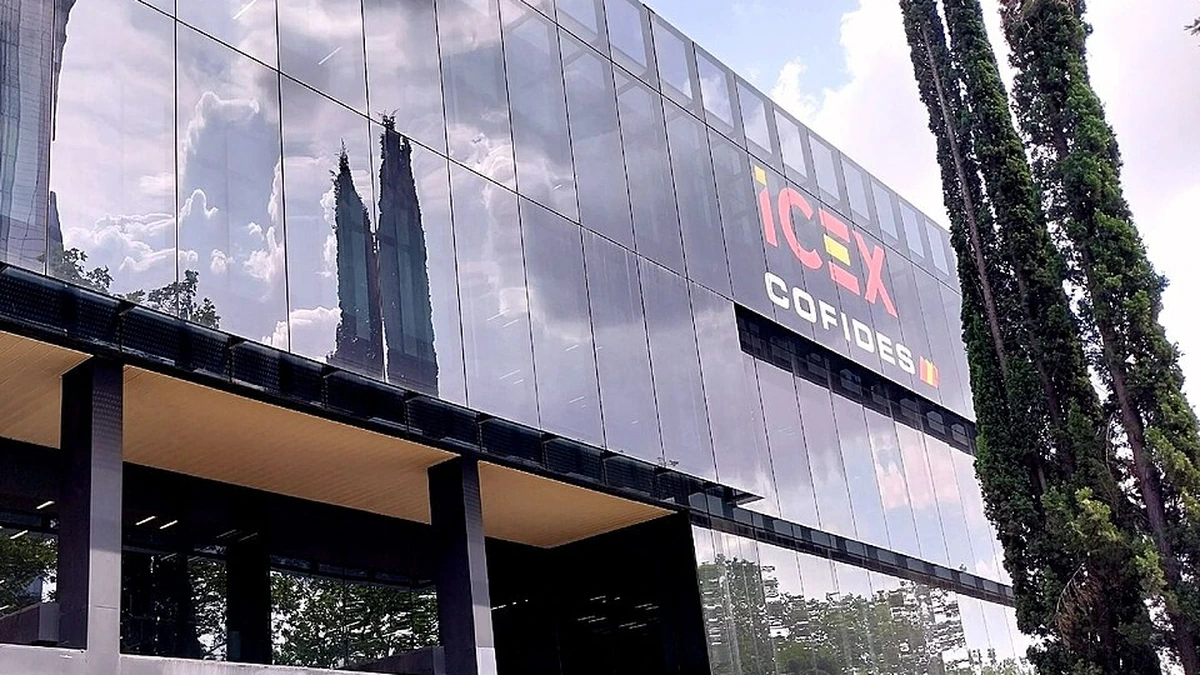
Spain has published a call for up to €3.6 million in grants to help small and medium-sized businesses expand internationally through the ICEX Next program. The notice appeared in the country’s Official State Gazette on October 10, 2026, and sets an application period ending October 30.
ICEX España Exportación e Inversiones, the public agency running the program, can seek approval to add as much as €1.8 million if its budget permits. That would bring the potential funding ceiling to €5.4 million, but the additional allocation has not been approved in the published notice. The €3.6 million figure is itself a maximum available for the call, not a sum already paid to businesses.
The official grant notice describes ICEX Next as a program combining specialist export advice with financial support for specified costs of developing business overseas. It is open to companies that want to strengthen an existing international presence as well as those preparing to grow beyond Spain, provided they meet the eligibility requirements.
What the export funding can cover
Under ICEX’s published program terms, an eligible business can receive up to €24,000 toward its international expansion plan. The agency covers 60% of qualifying expenditure, leaving the applicant responsible for the other 40%. A business claiming the full grant would therefore need €40,000 in approved costs, of which it would finance €16,000 itself.
ICEX breaks that maximum into two parts. Specialized export-strategy advice has an eligible spending allowance of €2,700, with the public contribution capped at €1,620. The remaining €37,300 of potentially covered expenditure relates to other international development activities, for which ICEX’s maximum contribution is €22,380. Those two contributions together produce the €24,000 upper limit.
The assistance is not an unrestricted cash payment. Eligible activities include research into target markets, overseas promotional campaigns, and practical work needed to establish sales channels abroad. The program also lists expenditure such as product registration or certification in destination markets and certain costs connected with personnel specializing in international business. Whether a particular bill qualifies depends on the program’s conditions and the documentation submitted by the recipient.
Financial support is accompanied by 30 hours of personalized advice from ICEX-approved specialists. Companies can use that guidance to develop or revise an international business plan, including an export strategy involving physical distribution, digital channels or both. The program describes a 24-month support period, allowing businesses to work through market-entry planning and eligible expenses over time rather than as a single promotional event.
The division between the overall budget and individual grants is important. The October 2026 notice does not state a fixed number of businesses that will receive funding, and the €24,000 figure is a per-company maximum rather than the value of every award. Actual allocations will depend on successful applications, qualifying costs and the funds ICEX ultimately makes available.
Which Spanish SMEs are eligible
Applicants must qualify as small or medium-sized enterprises under the European Union definition cited in the grant notice. They must be Spanish companies with a product or service of their own that can be marketed internationally, together with their own brand. For service businesses, the services must be delivered abroad. Associations and foundations are excluded, as are commercial or production subsidiaries of foreign companies.
Most applicants must have annual revenue exceeding €300,000. For this call, the normal reference point is turnover in 2025. Recently established technology-based companies can qualify without meeting that sales threshold, reflecting the different commercial development cycle of businesses built around new technology. The notice generally defines a recent technology company as one registered within the past five years, extending the period to seven years for specified sectors or businesses developing proprietary technology.
There is also a limited route for applicants that fell short of €300,000 in 2025 but reached the threshold by the time they apply. They can provide evidence of sales, such as VAT declarations or invoices, for ICEX to assess. The notice explicitly leaves that judgment to the agency: presenting updated figures does not automatically establish eligibility.
The call does not impose a minimum share of foreign sales as a condition of applying. That makes it possible for both companies already selling abroad and businesses whose model needs to operate internationally from an early stage to seek support. ICEX says the selection has a particular focus on firms looking to consolidate or improve their position in overseas markets.
Applicants must have a company website and sufficient people and resources to carry out the proposed expansion. At least one employee must be responsible for the international project. Businesses with unpaid debts to ICEX are ineligible, and applicants must also satisfy the legal requirements that apply to recipients of Spanish public grants.
Previous participation in ICEX export-initiation programs generally rules a company out. The October notice contains a narrow exception for some businesses that participated between 1997 and 2012, provided revenue in their latest financial year exceeds €1.5 million. Companies considering that exception need to check the specific wording rather than assume any former participant can apply again.
October 30 deadline and a single selection round
Applications are scheduled to open on October 11, the day after publication of the notice, and close at 2 p.m. local time in Spain on October 30, 2026. The call provides for one selection procedure. Businesses therefore have a defined application window rather than a series of separate intake periods under this announcement.
ICEX’s application guidance directs applicants to register through its private online area and submit company information, financial statements and details of the proposed expansion. Supporting declarations are also required. The grant notice says eligibility evidence must be completed and digitally signed by the company’s legal representative, making the accuracy and completeness of the application part of the process.
The competition is not decided solely by whether a business meets the entry requirements. According to ICEX’s guidance, its assessment considers the international competitiveness of the product or service, the team’s preparedness, financial capacity and business track record. Evaluators also look at the international potential of the applicant’s model. Firms can meet the basic tests without necessarily ranking high enough to receive an award.
The no-reserve-list rule makes that distinction especially consequential. The October notice says applications reaching the minimum required score will still be rejected in the final decision if the available budget cannot cover them. There will be no waiting list from which those businesses can later receive grants under the same call.
The grants operate under rules first established in 2019 and amended in 2024, within Spain’s general public-subsidy system. The published announcement does not specify the eventual number of recipients or a date for the final award decision. For applicants, the immediate milestone is the October 30 submission deadline; an eligible proposal still has to clear the competitive assessment and fit within the available funding.
More News



Latest News
View all news- UK Defence Ministry and QinetiQ Launch Project Safari to Expand Smaller Firms’ Access to Military Testing
- Phoenix Education Names Michael Cochran Interim CFO as Finance Leadership Change Takes Effect
- India Outlines Over ₹13,000 Crore in Projects for October 11
- EU Urges U.S. to Reverse Sanctions on International Criminal Court, Signals Readiness to Protect Its Operations
- USDA Releases October Crop Supply and Demand Estimates for Global Grain Markets
