
Federal Reserve’s New Bank Stress-Test Transparency Rules Take Effect November 2
The Fed's new disclosure and public-comment framework is in force, but key model-review and capital-buffer changes have separate implementation dates.
Our editorial standards
MarketReview publishes clear, independently produced financial information using reliable sources and transparent editorial standards.
Read our Editorial Policy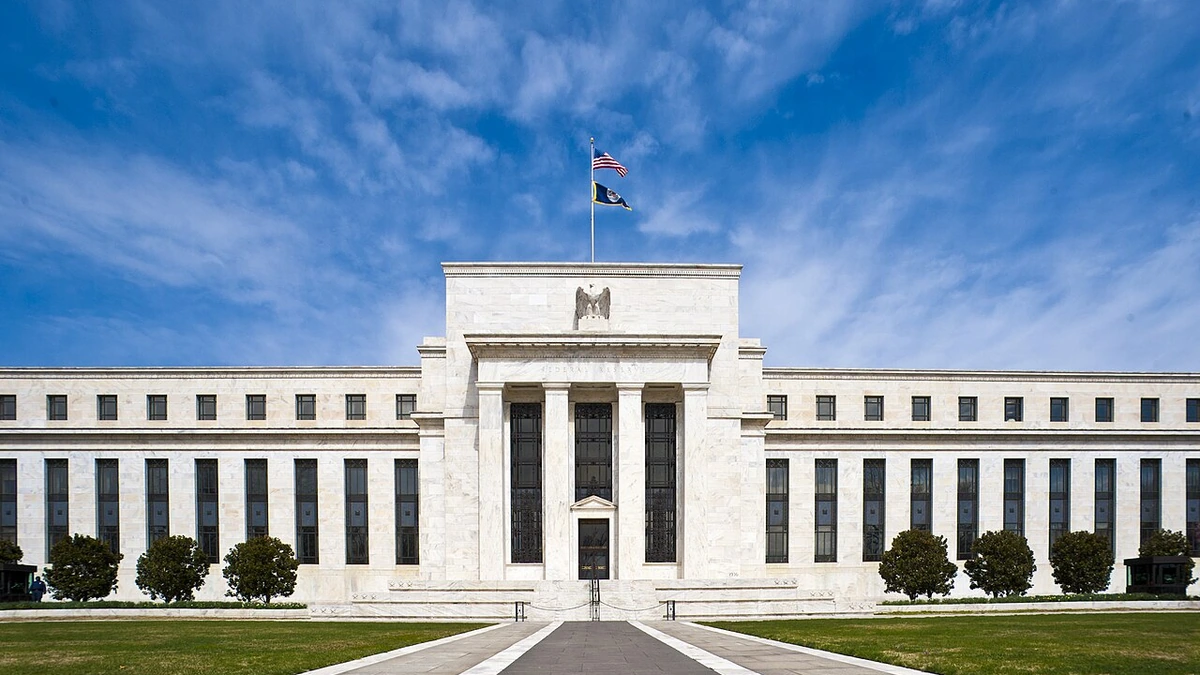
The Federal Reserve’s new rules for making its annual bank stress tests more transparent took effect Monday, November 2, 2026. The changes establish a formal process for publishing supervisory models, gathering public feedback on significant model revisions and allowing comment on the hypothetical economic scenarios used to test large banks.
The effective date does not trigger a new test or an immediate change to banks’ capital requirements. Instead, it puts a revised disclosure framework in place for an exercise that estimates whether major banking organizations could absorb severe losses and keep lending during a hypothetical downturn. The results are also used to help determine how much capital some firms must hold.
The Board approved the changes on September 30, and the final rule published in the Federal Register on October 2 confirms the November 2 start date. It amends Regulations Y, LL and YY, as well as the Fed’s policy statements on stress-test models and scenario design. Several practical requirements will be phased into subsequent annual testing cycles.
More disclosure and a defined public-comment process
Under the framework, the Fed will publish comprehensive descriptions of the models behind its supervisory stress-test projections. Those materials cover the equations, assumptions and parameters that help translate a bank’s exposures into projected losses, revenue and capital levels. Final model documentation is scheduled for release by May 15 of a testing year, ahead of the publication of results by June 30.
Disclosure is extensive but not absolute. The Board has said certain firm-specific effects and third-party vendor information will remain unpublished. It can also make limited technical corrections after May 15 when necessary to fix errors or ensure the models calculate losses accurately, with those updates documented no later than the release of test results. Routine updates using newer data are not automatically treated as conceptual model changes requiring a formal public-comment process.
The requirement to seek advance comment on material model changes has defined thresholds. A revision qualifies if the Fed estimates it would move the projected common equity tier 1 capital ratio of an eligible firm by at least 20 basis points, or if the average absolute change across relevant firms reaches 10 basis points. Those thresholds are equivalent to 0.20 and 0.10 percentage points, respectively. The assessment considers certain firms with at least $100 billion in assets, including some that are not scheduled to participate in that particular year’s test.
For a qualifying model change, the Fed must provide at least 30 days for public input before implementation and respond to substantive feedback. The regular annual process begins with the 2028 stress-test cycle, meaning proposed material changes for that cycle are to be released by August 31, 2027. The models adopted for the 2027 test were developed through an earlier consultation process, so the November effective date should not be confused with the first deadline under the new recurring model-review calendar.
The scenarios are subject to their own disclosure schedule. The Fed will propose the economic conditions for a given year’s stress test by January 10, allow at least 30 days for comment and publish final scenarios by February 28. It kept December 31 as the reference date for banks’ balance-sheet information rather than moving it to September 30, a change it had considered before receiving objections about reporting burdens and data quality.
The 2027 stress test has a revised timetable
The first testing calendar under the new rule starts with the December 31, 2026 balance-sheet reference date. For the 2027 exercise, proposed scenarios are due by January 10 and final scenarios by February 28. Banks’ capital plans and most company-run stress-test submissions move to an April 30 deadline, while final model documents are due by May 15. The Fed plans to disclose supervisory results and preliminary stress capital buffer requirements by June 30.
Final buffer notifications are scheduled by September 30, 2027, and the resulting requirements take effect January 1, 2028. That sequence separates the publication of stress-test findings from the date when the corresponding capital buffers apply. It also gives banks time to incorporate their individual requirements into capital planning, rather than making the November 2 rule effective date itself a new capital deadline.
One substantive change concerns the global market shock, the portion of the test that applies sudden market-price movements to firms with substantial trading activity. The Fed’s revised framework calls for two global market shock scenarios, using the scenario that produces the greater losses for each affected firm when calculating its results. The Board expects to include both shocks in its proposed 2027 scenarios. This measure is intended to test exposures that might be less visible under a single market shock.
The Fed has also finalized a set of models for 2027 after considering comments on earlier proposals. A separate proposal remains open concerning the treatment of noninterest income, including fees earned by banks with differing business models. That potential revision is not an adopted requirement. The Federal Register notice on the proposal sets December 1, 2026 as the public-comment deadline, leaving the Board to decide whether to incorporate further changes into the upcoming test.
Capital-buffer averaging follows on a different schedule
A second rule finalized alongside the transparency overhaul deals with volatility in banks’ stress capital buffers. Its legal effective date is December 1, 2026, not November 2. Under that separate measure, the Fed will generally use the average projected capital decline from the two most recent annual supervisory stress tests for firms tested in both years. It is the stress-related capital decline component that is averaged, not every element of the buffer calculation.
The dividend component continues to be updated annually, and firms without two consecutive annual tests generally use their most recent test result. The Fed said it would begin the averaging calculation with the 2028 stress test, after the models had been subject to the enhanced disclosure process. The first stress capital buffer requirements reflecting that averaging are scheduled to take effect on January 1, 2029. This timing is distinct from the 2027 test’s buffer requirements, which take effect a year earlier.
The Federal Reserve’s September announcement estimated that its package of stress-testing changes could reduce year-to-year volatility in capital requirements by roughly 50%. It also said the revisions were not expected to materially change aggregate capital requirements. Those are the central bank’s estimates, not an observed result, and they do not mean individual banks’ future buffers will remain unchanged.
The policy addresses a practical problem for large banks: a sharp year-to-year swing in a projected stress loss can alter their required capital even when the underlying business changes more gradually. Averaging is designed to smooth those swings for qualifying firms, while the separate transparency rule sets out how the models and scenarios informing the calculations are disclosed and reviewed.
The debate over predictability and resilience
Vice Chair for Supervision Michelle Bowman supported the revised approach, arguing when it was finalized that greater model transparency would improve accountability and help show that a bank’s risks were being reflected in stress-test losses. The Board has also said that collecting feedback can expose weaknesses in assumptions before they shape required capital levels.
Governor Michael Barr opposed the final transparency rule. In his published statement, he warned that broader model disclosures and the annual comment process could make stress tests slower to respond to emerging risks. Banks might also adjust their portfolios to perform better under a known model without reducing the economic risk they actually carry, he argued. Barr supported the use of multiple global market shocks but said that change did not overcome his broader concerns about the framework.
The Board’s chosen timing reflects that tension. It will release proposed scenarios after the year-end balance-sheet reference date and use more than one market shock for trading exposures. Those safeguards are intended to limit the scope for tailoring positions to a known test, though Barr disputed that the broader framework would adequately protect against such risks.
The next immediate regulatory milestone is December 1, the deadline for comments on the proposed noninterest income model and the effective date of the separate capital-buffer rule. For the transparency framework itself, the next scheduled public scenario proposal is due by January 10, 2027, followed by final scenarios by February 28.
More from Banking



Latest News
View all news- U.S. Trade Commission Opens Five-Year Review of Tariffs on Chinese Mobile Access Equipment
- U.S. Manufacturing Activity Strengthens in October as ISM Index Rises to 55.5
- U.S. Construction Spending Falls 1.9% in September as Residential Building Outlays Slide
- UK Launches £700 Million Investment Programme to Unlock Up to 10 Strategic Industrial Sites
- SEC Opens Consultation on $100 Billion Alternative Compliance Cap for Security-Based Swap Dealers
