
Irish Central Bank Publishes Tokenisation Priorities and Announces New Financial Innovation Initiatives
The regulator will establish a dedicated tokenisation access point and policy discussions, while applications for its AI consumer sandbox will open in January 2027.
Our editorial standards
MarketReview publishes clear, independently produced financial information using reliable sources and transparent editorial standards.
Read our Editorial Policy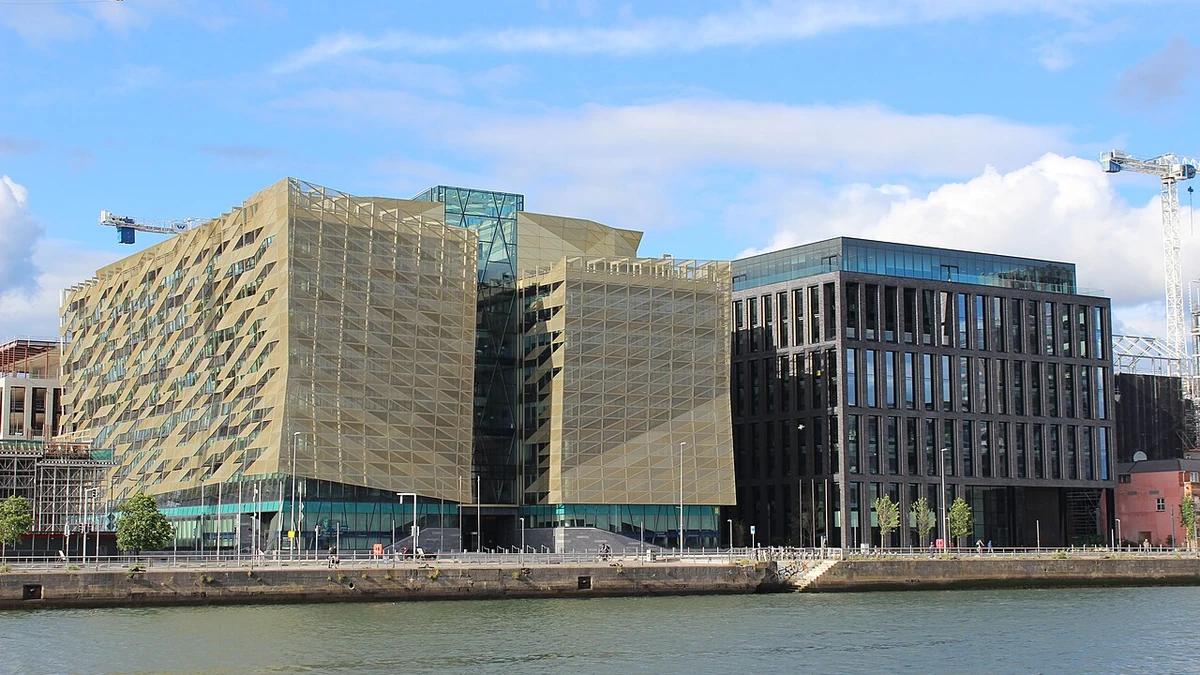
The Central Bank of Ireland has set out five priorities for the development of tokenised finance and announced new ways for financial firms to engage with its regulators. The measures cover settlement in central bank money, legal and regulatory clarity, and a dedicated contact point for tokenisation projects. A separate innovation sandbox will focus on the use of artificial intelligence for consumers.
Governor Gabriel Makhlouf outlined the plans at the bank’s Financial System Conference in Dublin on November 2, as the regulator published its response to an industry consultation on distributed ledger technology (DLT). The announcements give firms a clearer picture of where the Irish central bank intends to direct its work, without amounting to a new licensing regime or an endorsement of particular tokenised products.
Consultation shapes five tokenisation priorities
Tokenisation allows financial assets to be issued or represented as digital tokens, often on a distributed ledger. For established financial markets, the potential uses extend beyond trading digital assets. Securities could be issued, transferred and serviced through systems that automate parts of the process, although their reliability also depends on the legal rights attached to the tokens and the arrangements for settling payments.
In its November 2 announcement, the Central Bank said its new priorities followed a discussion paper released in March. The consultation, which closed for submissions on June 5, examined tokenisation in markets, investment funds, money and payments. Respondents included banks, asset managers, digital-native businesses and operators of financial-market and payment infrastructure.
Makhlouf said the responses raised questions about the practical conditions needed for wider adoption. Those included legal certainty, how different networks would communicate, governance, accountability and the treatment of risks that might arise as traditional and tokenised financial systems operate alongside one another. The regulator is using that feedback to decide where further work is needed rather than claiming that the obstacles have been resolved.
Its first priority is to work through the Eurosystem on central bank money settlement and changes to the collateral framework. That includes examining whether and how tokenised assets could qualify as collateral. A second strand concerns legal and regulatory clarity in Ireland and across the European Union, with the Central Bank working with the Department of Finance on actions associated with the Ireland for Finance Strategy, Vision 2030.
The remaining priorities look at how the regulator itself engages and prepares. It plans to expand its Innovation Hub, deepen its analysis of on-chain financial activity and the wider economic implications, and support common industry standards that could prevent fragmented networks from developing. The bank also wants to hear from companies earlier in the design of new services, when regulatory questions may still influence the technology being built.
Those commitments come with an important qualification. Makhlouf acknowledged that the scale of benefits for consumers and investors remains uncertain, as do the commercial viability of emerging business models and their resilience under stressed market conditions. Faster processes or new ways to hold assets would not by themselves establish that a financial service is safer or better for its users.
Settlement plans connect Ireland to Pontes and Appia
A central part of the agenda involves the money used to settle tokenised securities. A digital record of ownership may move quickly between participants, but the payment leg still has to be completed with an asset that market users can trust. The Central Bank wants central bank money to remain available as that infrastructure changes, rather than leaving wholesale markets dependent solely on new private settlement arrangements.
This work is already taking shape at the European level. The European Central Bank launched Pontes in September to allow wholesale tokenised-asset trades to settle in central bank money. The system links distributed-ledger market platforms with existing Eurosystem TARGET services. Initial participants have completed onboarding, and the ECB plans to add capabilities gradually, with full implementation expected by 2028.
The related Appia initiative takes a longer view. It is intended to help the Eurosystem and market participants develop a common approach to tokenised financial infrastructure, covering the standards and arrangements needed for systems to work together. The ECB expects a blueprint by 2028. For Ireland, participation in Pontes and Appia means that national policy work sits within a broader European effort rather than requiring a separate Irish settlement network.
Collateral is another unresolved element. Tokenised securities may be technologically transferable, but that does not automatically make them acceptable for central bank credit operations. Eligibility still depends on the Eurosystem’s requirements, which is why the Irish regulator identified work on the collateral framework as a priority rather than announcing that such assets are already eligible.
A new entry point for firms developing tokenised services
The Central Bank plans to add a Tokenisation Access Point, or TAP, to its existing Innovation Hub. It is intended as a dedicated route for firms to discuss tokenisation-related issues with the regulator. No opening date, application rules or separate authorisation powers for TAP were specified in the announcement, and engagement through the Hub should not be confused with regulatory approval.
A second initiative, described as an innovation insights model, will use focused policy discussions or “sprints” to examine emerging questions with financial-sector participants. Tokenisation will be a particular area of attention over the coming months. This gives the bank a way to gather practical information from businesses and infrastructure operators as designs develop, while helping identify questions that may require further supervisory or policy work.
The distinction matters for businesses considering tokenised funds, securities or payment services. Access to a regulator can help clarify which existing requirements apply and where uncertainty remains. It does not eliminate obligations concerning investor protection, operational resilience or the integrity of financial markets. The bank’s wider programme also calls for continued analysis of the effects that more on-chain activity could have on the financial system as a whole.
AI sandbox will examine consumer protection
Alongside the tokenisation measures, Makhlouf announced that the third Central Bank Innovation Sandbox Programme will be called “Advancing AI for Consumer Good.” Applications are scheduled to open in January 2027. Successful participants will receive structured regulatory advice and support from specialists at the Central Bank, although the regulator has not announced the firms that will take part.
The programme will explore how AI can support consumers in vulnerable circumstances, make automated financial decisions easier to explain and strengthen protection against fraud and scams. Accountability will also be a central issue as AI tools move beyond providing information toward taking actions on behalf of customers. The bank’s position is that firms and people remain responsible for the systems they deploy, even when decisions are increasingly automated.
The focus reflects a change in the type of questions arriving at the Innovation Hub. Makhlouf said roughly half of current Hub engagements concern AI, compared with about one in five a few years ago. He also described AI as already widely used among the firms the bank regulates, including applications that range from established machine learning to generative and agentic systems.
His remarks placed that activity within a wider risk picture. The regulator is monitoring operational and cyber resilience, the possibility of financial crime involving AI, and the financial stability implications of investment and borrowing associated with the technology. Those concerns are distinct from the tokenisation consultation, but both initiatives reflect the bank’s effort to engage with emerging financial systems before their use becomes more widespread.
The next dated step is the opening of applications for the AI sandbox in January 2027. For tokenisation, the bank has committed to further engagement through TAP and policy sprints, while its work on settlement and common standards will proceed alongside the Eurosystem’s continuing Pontes rollout and Appia programme.
More from Banking

Latest News
View all news- U.S. Trade Commission Opens Five-Year Review of Tariffs on Chinese Mobile Access Equipment
- U.S. Manufacturing Activity Strengthens in October as ISM Index Rises to 55.5
- U.S. Construction Spending Falls 1.9% in September as Residential Building Outlays Slide
- UK Launches £700 Million Investment Programme to Unlock Up to 10 Strategic Industrial Sites
- SEC Opens Consultation on $100 Billion Alternative Compliance Cap for Security-Based Swap Dealers
