
Fiserv Takes Clover Sport Live Across Hard Rock Stadium’s Point-of-Sale Network
Hard Rock Stadium has deployed 1,020 Clover Station Duo terminals and 50 Clover Flex handhelds as Fiserv becomes its official point-of-sale technology partner.
Our editorial standards
MarketReview publishes clear, independently produced financial information using reliable sources and transparent editorial standards.
Read our Editorial Policy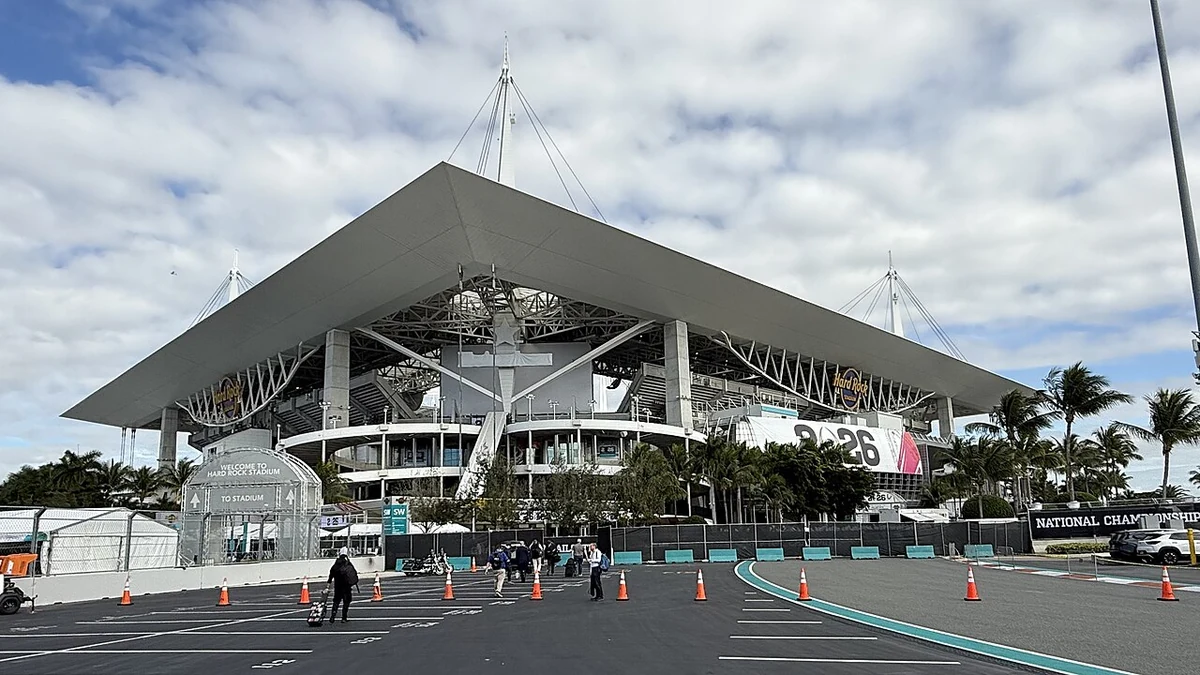
Fiserv has taken Clover Sport live across Hard Rock Stadium, making the payments platform the venue’s official point-of-sale technology system for a calendar that spans NFL games, college football, tennis, motorsports, concerts and other large events.
The rollout puts 1,020 Clover Station Duo terminals with integrated scanners around the Miami Gardens venue, alongside 50 Clover Flex handheld devices. Fiserv said the system brings payment processing, hardware and connections to ticketing software into one operating environment, giving stadium staff centralized controls and real-time reporting during high-volume events.
In its October 7 announcement, Fiserv said Clover Sport is now supporting commerce across Hard Rock Stadium’s full event schedule. The company did not disclose the contract’s value, duration, expected payment volume or any specific revenue contribution from the stadium deployment.
A 1,070-device rollout built for peak-event traffic
The hardware count gives the project a scale that goes beyond replacing a few concession registers. The 1,020 Station Duo units are fixed point-of-sale terminals intended for staffed selling locations, while the 50 Flex devices add a mobile option that can be deployed where venue operators need more flexibility. Fiserv also said scanners are integrated with the Station Duo setup, allowing the system to connect payments with other event-day workflows.
For the stadium, the operating pitch is as important as checkout speed. Fiserv says the platform gives venue managers a central view of activity and real-time reporting, while the back-end system is designed to keep performing when demand rises sharply before an event, during breaks and at other rush periods. Those are the moments when a slow or fragmented payment setup can translate directly into longer lines and lost selling time.
Sameer Istafa, vice president and chief technology officer at the Miami Dolphins and Hard Rock Stadium, framed the change around reducing time spent in line and giving concessions teams better tools to operate efficiently. Fiserv Chief Revenue Officer Robert Clarkson likewise emphasized reliability and operational intelligence at scale rather than presenting the installation simply as a new way to accept cards.
That distinction matters for modern stadium commerce. The point-of-sale layer now has to coordinate payment acceptance with device management, reporting, menus, ticket-linked features and other software used by venue operators. A large deployment also creates a single data environment across many selling locations, which can make it easier to identify demand patterns or operational bottlenecks during an event. Fiserv is making those capabilities part of the value proposition for Clover Sport at Hard Rock Stadium.
Hard Rock Stadium gives Clover a demanding multi-event showcase
Hard Rock Stadium is not a single-purpose football venue. The broader Ross Sports & Entertainment operation includes the Miami Dolphins, the Miami Open and the Formula 1 Hard Rock Miami Grand Prix, while the stadium also stages University of Miami football and major special events. An official Miami Dolphins profile of owner Stephen Ross notes that the property has hosted the Super Bowl, College Football Playoff national championships, international soccer and major concert tours, and was selected for 2026 FIFA World Cup matches.
That varied calendar makes the venue a useful test of whether one commerce platform can handle very different event formats without forcing operators to manage separate payment systems. A Dolphins home game, a tennis tournament, a race weekend and a concert can produce different traffic patterns, points of sale and staffing needs. Fiserv’s announcement says Clover Sport is intended to sit underneath that full calendar rather than serve only one team or event series.
The Hard Rock Stadium deployment also expands a sports-and-entertainment footprint that Fiserv says already covers more than 60 major venues across professional and college sports. That figure positions the Miami installation as part of a broader enterprise push for Clover, not an isolated stadium contract. The company has been using Clover to pair payment acceptance with software services, moving beyond the traditional role of a card terminal provider.
For venue operators, the commercial logic is straightforward even though Fiserv has not published performance targets for this installation. Faster checkout can raise the number of purchases a location can process during a short rush, while centralized reporting can help managers reallocate staff or inventory when demand shifts. Those benefits remain company and venue claims until operating results are disclosed, but they explain why Fiserv is emphasizing system-wide deployment rather than individual device features.
Clover remains important to Fiserv’s merchant strategy
The stadium win arrives at a time when Clover remains one of Fiserv’s most closely watched merchant platforms. In its second-quarter 2026 materials, Fiserv reported $5.29 billion of company revenue, down 4% from a year earlier, while Merchant Solutions revenue fell 1%. The same quarter’s supplemental data showed Clover revenue up 13% after excluding the effects of data, hardware and Argentina anticipation, with annualized Clover gross payment volume of $367 billion.
Those figures make deployments such as Hard Rock Stadium relevant beyond sports technology. They give Fiserv another enterprise venue where it can place Clover hardware, process payments and attach software capabilities to a large stream of in-person commerce. The company has been trying to strengthen execution across the business in 2026, so evidence that Clover can win and operate complex merchant environments is strategically useful even when the economics of an individual contract are not disclosed.
There are still limits to what can be concluded from Wednesday’s announcement. Fiserv did not provide expected annual payment volume at the stadium, pricing, processing fees, implementation costs or any forecast for the deal’s contribution to Merchant Solutions. It also did not publish before-and-after data on checkout times or concession sales. The measurable facts for now are the scope of the deployment, its live status and the operating functions Fiserv says the platform provides.
Fiserv is scheduled to report third-quarter 2026 results on November 3. That report will provide the next company-wide update on Merchant Solutions and Clover performance, although the Hard Rock Stadium rollout is unlikely to be broken out separately unless management chooses to discuss it.
More News



Latest News
View all news- Gold Futures Retreat Toward $4,190 as U.S. Dollar Strengthens
- IonQ Agrees to Buy Cybersecurity Firm Elisity for Up to $1.3 Billion
- KKR, TotalEnergies to Add $1.2 Billion Solar Portfolio to U.S. Venture
- U.S. 30-Year Mortgage Rates Hover Near 7.55% as Housing Borrowing Costs Remain Elevated
- Wall Street Volatility Gauge Rises as Traders Assess Inflation and Earnings Risks
