Lyntris Completes Maryland Manufacturing Investment for Advanced Thermal Systems
Lyntris has finished a multi-year investment in phase change material manufacturing at its Jessup, Maryland operation, with production capacity for seeker, sensor and mission-electronics thermal hardware available in Q3 2026.
Our editorial standards
MarketReview publishes clear, independently produced financial information using reliable sources and transparent editorial standards.
Read our Editorial Policy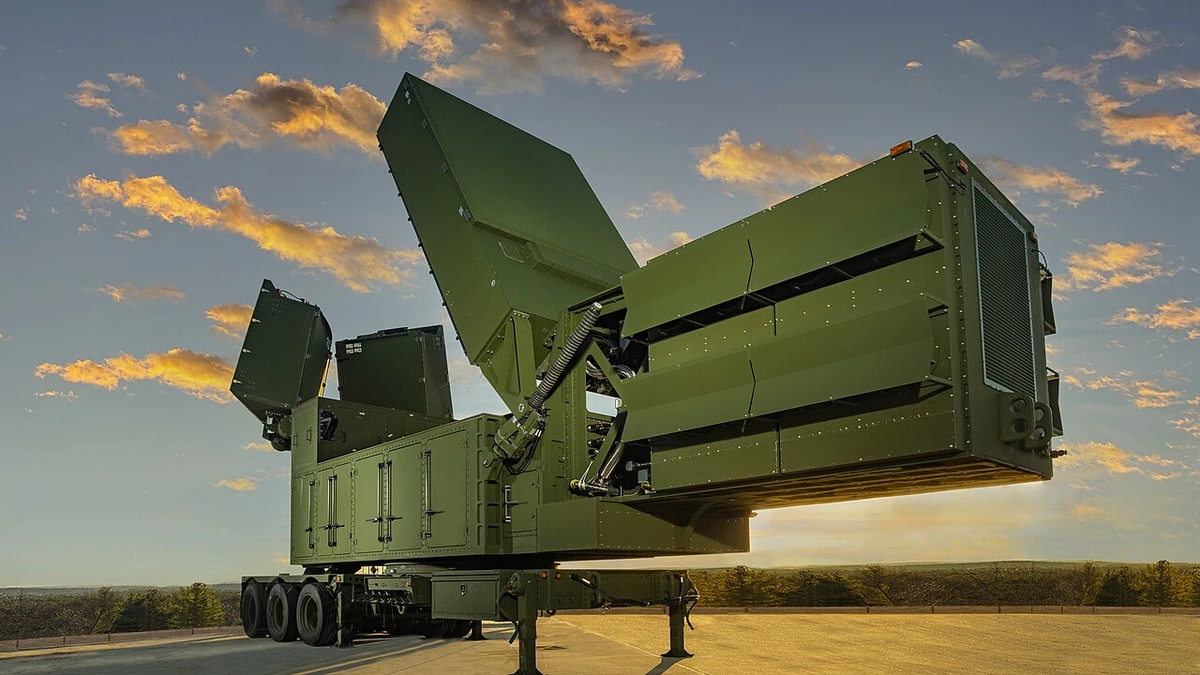
Lyntris has completed a multi-year investment to add phase change material manufacturing capability at its Jessup, Maryland operation, giving the newly public defense technology company a U.S. production line for passive thermal systems used in seekers, sensors and other mission electronics. The company said production capacity will be available in the third quarter of 2026.
The August 28 announcement did not disclose the dollar value of the investment. Its significance lies instead in the manufacturing scope Lyntris says it has brought together in Maryland. The new line is designed for rate production rather than prototype work and is intended to handle the full sequence from machining the heat-sink structure through final assembly.
That setup addresses a practical problem in modern defense electronics. Higher-powered radars, seekers and processing systems generate more heat even as platforms become smaller and weight budgets tighten. Lyntris is betting that passive phase change material, or PCM, cooling can remove some of the pumps, tubing and reservoirs required by active liquid-cooling systems while still keeping electronics within operating limits during short, demanding missions.
Jessup line brings the full PCM process under one roof
Lyntris said the Maryland line combines precision machining, vacuum brazing, controlled PCM filling, thermal performance testing and final assembly in one vertically integrated facility. Those steps are often split among several suppliers, according to the company, creating additional handoffs that can complicate qualification and schedules as defense programs move from development into higher-rate production.
The manufacturing decision fits with Lyntris’s broader emphasis on owning more of the design-to-production chain. In its recent SEC prospectus, the company said its engineering and manufacturing capabilities include RF subsystem production, antenna fabrication, thermal management, additive manufacturing, rapid prototyping and full-scale production. The filing also lists two Jessup-area facilities, one of about 16,686 square feet and another of about 35,360 square feet. Lyntris did not specify in Friday’s announcement which listed property houses the new PCM line.
Scale is central to the investment case. The company said some missile and sensor platforms entering higher-rate production can require thousands of units, making repeatable manufacturing as important as whether a cooling concept works on a laboratory bench. Lyntris expects to apply the new capability first to seeker and sensor programs and said it is in discussions with defense prime contractors and program offices about additional applications. Those discussions are not the same as awarded business, and the company cautioned that the investment may not result in orders, program awards or revenue on any particular timetable.
Lyntris enters that expansion with a broader defense business already in place. Its prospectus says the company supported more than 200 U.S. and allied defense programs in 2025, with no single program accounting for more than 7% of revenue. Revenue for the first six months of 2026 rose 34.6% from a year earlier to $241.0 million, which the company attributed primarily to organic growth across its three core mission areas.
Passive cooling is aimed at compact seekers and mission electronics
PCM heat sinks work differently from conventional active cooling loops. An engineered material inside the heat sink absorbs heat as it changes phase, effectively storing thermal energy during the period when the electronics are operating hardest. Lyntris describes the approach as a thermal battery: the material melts as it takes on heat, helping keep the electronics within their operating limits without pumps or plumbing.
That can matter when a mission lasts minutes rather than hours and there is little room for a larger cooling system. Removing mechanical components can save space and weight and may also reduce potential failure points. The trade-off is that a passive solution has to be engineered around the expected heat load and mission duration, so qualification and repeatability become important as a design moves into production.
Lyntris already markets PCM heat sinks as thermal capacitors for critical multi-mode seekers and missile sensor and data-processing systems. Its precision-strike portfolio also includes antenna systems, liquid and air cooling, power distribution and materials expertise for high-speed flight environments. Friday’s announcement takes one piece of that portfolio and adds a dedicated manufacturing process intended to support larger quantities.
The company did not identify a specific missile, sensor customer or program that will use the new Jessup production capacity. That distinction is important because Lyntris’s defense portfolio spans many platforms, and the announcement discusses seeker and sensor applications in general terms. The first customer programs and the pace at which the line moves into volume production therefore remain open questions.
LTAMDS illustrates Lyntris’s existing link to advanced thermal hardware
The featured image for this story shows the U.S. Army’s Lower Tier Air and Missile Defense Sensor, or LTAMDS, at White Sands Missile Range. The connection is specific but should not be overstated. On its ground-systems page, Lyntris says it delivers integrated antenna and thermal solutions for Raytheon’s LTAMDS, a 360-degree ground-based air-defense radar designed to strengthen Patriot air-defense capability.
That makes LTAMDS a relevant example of the type of advanced defense system in which Lyntris already supplies thermal hardware, rather than a generic military illustration. It is not evidence that the newly completed Jessup PCM line is dedicated to LTAMDS. Lyntris did not make that claim in the August 28 announcement, and the story does not infer one.
The distinction also shows why the Maryland investment matters strategically. Lyntris is trying to pair established positions on defense programs with more in-house manufacturing capability, particularly where thermal performance can limit sensor density and mission effectiveness. Bringing machining, brazing, PCM filling, testing and assembly into one production flow could reduce reliance on supplier handoffs if the line qualifies for the programs the company is targeting.
For investors, the next evidence will come from customer qualification and orders rather than the existence of the line alone. Lyntris has said capacity is available in the third quarter and that it is talking with defense primes and program offices about additional uses. Until those discussions turn into named awards or measurable production, the Maryland investment is best viewed as added manufacturing capability positioned for demand the company expects, not as a disclosed backlog increase.
More from Investing


Latest News
View all news- Brent Crude Climbs Above $106 as Middle East Supply Concerns Intensify
- U.S. 30-Year Mortgage Rates Hover Near 7.55% as Housing Borrowing Costs Remain Elevated
- U.S. Gasoline Averages About $4.36 a Gallon, More Than $1 Above a Year Earlier
- Wall Street Trades Mixed as Oil Prices Rise Ahead of Major Bank Earnings
- Wall Street Volatility Gauge Rises as Traders Assess Inflation and Earnings Risks