
West Marine Emerges From Chapter 11 After Completing Financial Restructuring
The marine retailer cut debt by more than $265 million, secured $10 million of exit financing and now expects to operate about 100 stores alongside its online and West Marine Pro businesses.
Our editorial standards
MarketReview publishes clear, independently produced financial information using reliable sources and transparent editorial standards.
Read our Editorial Policy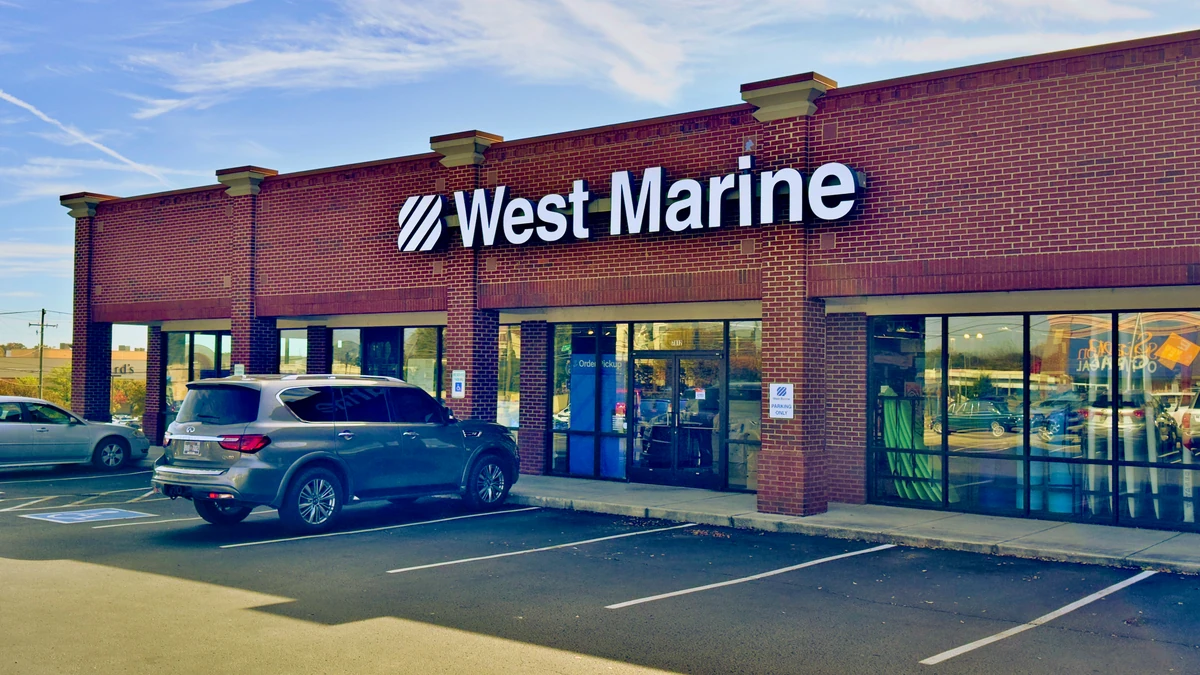
West Marine has emerged from Chapter 11 after completing a court-supervised financial restructuring that cut more than $265 million of debt and provided $10 million of new exit financing. The marine-parts retailer said Monday that it will continue operating through about 100 stores, its e-commerce platform and West Marine Pro, its business serving professional customers.
The emergence closes the main restructuring phase just over three months after West Marine and several affiliates filed for Chapter 11 protection in Delaware on May 17. The company entered bankruptcy with about $549.2 million of outstanding debt, trade obligations and lease liabilities, according to its first-day court filing, while a large leased-store network and limited liquidity had narrowed its options outside a court process.
The bankruptcy court confirmed West Marine’s reorganization plan on Aug. 11, and a notice on the company’s court case site shows that the plan became effective on Aug. 21. West Marine announced the completed restructuring on Aug. 24, saying the smaller debt load gives it more flexibility to invest in inventory, service and the customer experience.
Debt reduction shifts West Marine’s capital structure
The final announcement puts the debt reduction at more than $265 million. West Marine also said it obtained $10 million in exit financing, giving the reorganized business additional liquidity as it moves out of bankruptcy. The company did not disclose a new total-debt figure in Monday’s announcement, so subtracting the stated reduction from the petition-date obligations would not necessarily produce an accurate post-emergence balance sheet.
Court materials show how the restructuring was designed to change who bore the financial risk. West Marine had about $118.9 million outstanding under an asset-based lending facility, $59.2 million under a first-in, last-out, or FILO, facility and $251.2 million of term-loan debt when it filed. It also reported roughly $119.9 million of unpaid trade and lease obligations, bringing total outstanding obligations to about $549.2 million.
The reorganization plan centered on converting term-loan claims into 100% of the new equity in reorganized West Marine, subject to any dilution from a management incentive plan. The ABL claims could be paid in cash or rolled into an exit ABL facility, while FILO claims could likewise be paid or converted into exit term loans. Existing interests in West Marine were assigned a projected recovery of zero under the plan.
That debt-for-equity structure followed a dual-track process that initially left open the possibility of a sale. West Marine entered Chapter 11 with support from holders of 96.2% of its term-loan claims, all of its FILO claims and 93.9% of its equity interests. The plan materials contemplated recapitalization unless a better sale alternative emerged, but the company ultimately proceeded with the standalone reorganization.
Lease costs and weak liquidity drove the Chapter 11 filing
The court record shows that West Marine’s financial problems extended beyond its funded debt. At the petition date, the company had roughly 200 stores, all leased, with annual lease payments of about $55 million. It also reported approximately $166.7 million of future payments due under unexpired leases, a burden management said could not be efficiently addressed outside Chapter 11.
West Marine’s first-day declaration described a mix of inflation, macroeconomic volatility, underperforming locations and operating challenges. Management also pointed to extreme weather during the summer selling seasons of 2024 and 2025, which hurt both store and online sales during periods when the business normally relies on stronger boating-related demand. Liquidity had fallen to about $21.5 million by the filing date.
The company had already tried to repair its balance sheet before seeking court protection. Two recapitalizations in 2023 equitized roughly $660 million of then-existing debt and provided about $275 million of new capital, according to the Chapter 11 filing. West Marine later arranged a $150 million credit facility with Eclipse Business Capital in 2024, but the combination of lease commitments, weak discretionary spending and operating pressure continued to strain the business.
Chapter 11 gave West Marine a mechanism to reject or renegotiate leases and reduce a physical footprint that management considered too large for current demand. It also allowed the retailer to keep trading while the plan moved through court. Vendors were to be paid for goods and services provided after the filing, and the company said throughout the case that stores and its online platform would continue operating.
About 100 stores remain as West Marine moves forward
The most visible operational change is the size of the store network. West Marine entered bankruptcy with about 200 locations and now says it will serve customers through approximately 100. The company’s store-closure information page lists affected locations across multiple states and says customers can continue ordering online, while warranties and product support remain in place.
That smaller footprint changes the role of the remaining stores. In its bankruptcy filing, West Marine said physical retail was still its largest revenue source in 2025, while West Marine Pro supplied a large wholesale business serving boatyards, charter fleets, dealers and other marine-industry customers. The company also operates consumer and professional e-commerce sites, giving it channels that are not tied to every individual retail lease.
Chief Executive Officer Paulee Day said the company remained focused during Chapter 11 on serving customers and preserving West Marine’s place in the boating community. The emergence announcement was restrained on financial forecasts, offering no revenue target, profitability guidance or store-opening plan. Its concrete commitments are a lower debt burden, $10 million of exit financing and continued operations across the reduced store base, digital platform and West Marine Pro.
West Marine was founded in 1968 and grew from a California rope business into a national marine-supplies retailer. Its next operating phase begins with roughly half the store footprint it reported when Chapter 11 started, after a restructuring that moved ownership toward lenders and used bankruptcy tools to address debt and lease obligations that management had said were constraining the business.
More News

Latest News
View all news- Gold Futures Retreat Toward $4,190 as U.S. Dollar Strengthens
- IonQ Agrees to Buy Cybersecurity Firm Elisity for Up to $1.3 Billion
- KKR, TotalEnergies to Add $1.2 Billion Solar Portfolio to U.S. Venture
- U.S. 30-Year Mortgage Rates Hover Near 7.55% as Housing Borrowing Costs Remain Elevated
- Wall Street Volatility Gauge Rises as Traders Assess Inflation and Earnings Risks
