
Westpac Reports A$6.8 Billion Annual Profit, Declares 77-Cent Final Dividend
Westpac’s underlying profit was broadly flat as lending growth met narrower margins and higher credit costs, while its final dividend remained fully franked.
Our editorial standards
MarketReview publishes clear, independently produced financial information using reliable sources and transparent editorial standards.
Read our Editorial Policy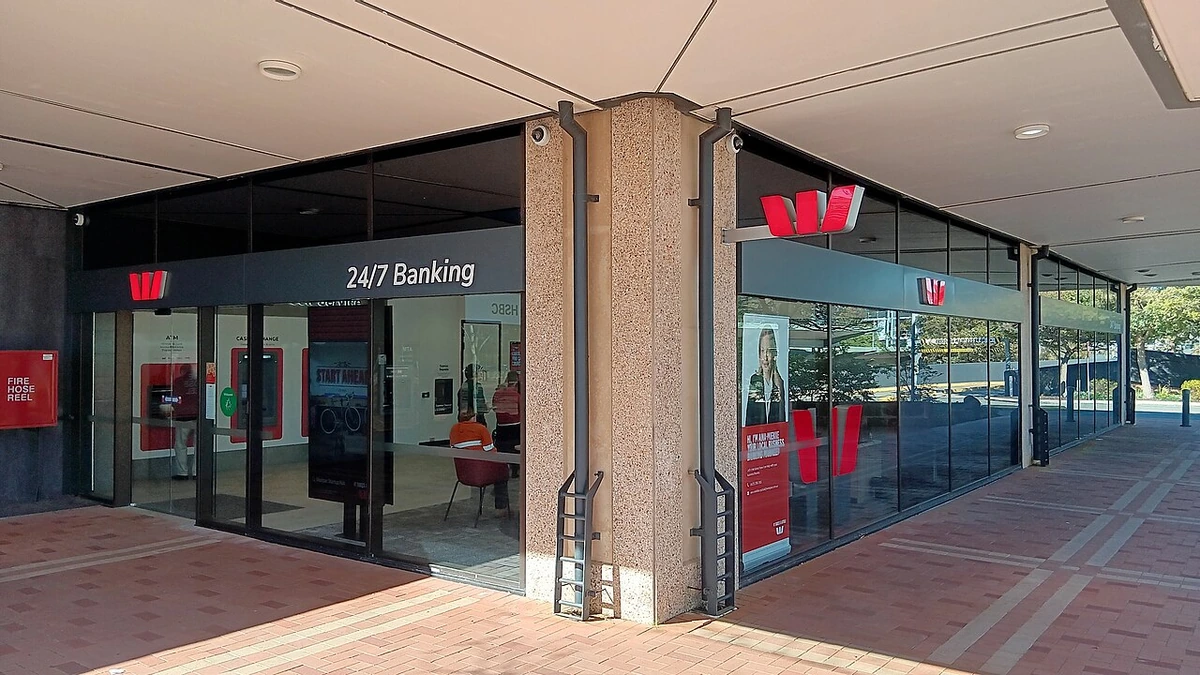
Westpac Banking Corporation reported a statutory net profit of A$6.8 billion for the financial year ended September 30, 2026, down 1% from the previous year, and declared a fully franked final dividend of 77 Australian cents per ordinary share.
Profit excluding items the bank classifies as notable was A$7.0 billion, broadly unchanged from FY25. The difference between the statutory and adjusted figures is important: the former is the reported accounting result, while the latter removes specified items to give management’s view of underlying performance. Neither measure showed much annual profit growth, despite an expanding loan book.
The dividend announced on November 2 matches the 77-cent interim payment and brings ordinary dividends for FY26 to 154 cents per share. In its full-year results announcement, Westpac also reported a Common Equity Tier 1 (CET1) capital ratio of 12.5%, comfortably above its normal operating target of 11.25%.
Loan and deposit growth helped offset thinner lending margins
Westpac expanded its customer balance sheet during the year. Deposits increased 6% to about A$766 billion, while gross loans reached roughly A$901 billion. The bank reported 5% lending growth on its comparable operating measure, with demand particularly strong among business and institutional borrowers.
Business lending grew 12% and Institutional lending rose 18%, according to the company. Revenue from the Consumer business increased 2%. Westpac also said it had improved its share of mortgages written directly through its own bankers, an area management has identified as a priority.
Higher volumes did not translate into an equivalent increase in interest earnings. Group net interest income rose about 1% to A$19.7 billion, while the net interest margin narrowed to 1.87% from 1.94% in FY25. The margin measures how much interest income the bank retains relative to its interest-earning assets after funding costs. More lending can support income even when the amount earned on each dollar of those assets is lower.
The pressure on margins helps explain why balance-sheet growth and largely unchanged profit can appear in the same set of results. Competition for loans and deposits, funding costs and the mix of business all affect lending profitability. For Westpac, growth in the size of its banking operations was a support, but it did not remove the squeeze on returns.
Annual operating income rose about 1% to A$22.6 billion. Pre-provision profit, which is measured before credit impairment charges, increased 4% to approximately A$10.9 billion. Expenses were around A$11.8 billion, down about 1% on a reported basis; the comparison benefited from a restructuring charge included in FY25. Excluding that earlier charge, costs rose around 1%, a distinction that matters when assessing the underlying expense trend.
Higher credit charges weighed on earnings, with capital still strong
Credit impairment charges were a more substantial headwind. They increased to approximately A$864 million from A$424 million a year earlier, equivalent to about 10 basis points of average loans compared with 5 basis points in FY25. The bank cited a revised economic outlook, additional provisions against parts of its loan portfolio and an increase in newly assessed individual exposures.
Those charges are costs recognized for expected or identified loan losses, rather than a statement that the same amount of loans defaulted during the year. The increase reduced the benefit of higher income and a better pre-provision result. It also highlights the distinction between lending growth, which adds earning assets, and credit risk, which can make those assets more expensive to hold.
The broader indicators were not uniformly negative. Stressed exposures declined to 1.17% of total committed exposures from 1.28% a year earlier. Westpac maintained credit impairment provisions of about A$5.2 billion, including a buffer it said was roughly A$2 billion above its base-case economic scenario.
The bank ended September with a CET1 capital ratio of 12.5%. That compares with Westpac’s stated target of 11.25% under normal operating conditions, not a claim that the target is the regulatory minimum. Management put capital above its target at about A$2.9 billion after allowing for the final dividend. That cushion gives the board room to manage uncertainty while continuing shareholder distributions and investment in the business.
Chief Executive Anthony Miller described Australia’s economy as holding up relatively well, supported by business investment, but warned that inflation remained above the Reserve Bank of Australia’s target range. His view that interest rates were likely to stay elevated into 2027 was Westpac management’s assessment of the outlook, rather than a policy commitment by the central bank.
Dividend dates and Westpac’s investment priorities
Westpac’s final dividend is scheduled to trade ex-dividend on November 5, with the record date on November 6 and payment due on December 21, 2026. It will be fully franked with Australian franking credits at the 30% company tax rate. The bank also says New Zealand imputation credits of 6 New Zealand cents per share will attach to the payment.
For shareholders using the dividend reinvestment plan, Westpac intends to have a third party buy ordinary shares on the market to meet reinvestment entitlements. The plan’s market price will be determined over 15 trading days beginning November 11, without a discount. The cash dividend and the reinvestment arrangements are separate choices for eligible investors.
Alongside the financial result, Westpac is continuing its multiyear UNITE program to simplify technology and banking systems. During FY26, around 60,000 BT customers were moved from Asgard to the Panorama wealth platform, and migrations of commercial banking customers to Westpac began. These projects are part of a broader effort to simplify the bank’s operations rather than an immediate source of guaranteed earnings growth.
Westpac said more than 100,000 home-loan appointments had been made through its online Book a Banker tool since February, and that 95% of its employees were using AI tools. It opened three regional service centres and expanded its Community Banking Service to 14 locations. The initiatives show where the bank is spending on service and technology even as it seeks to restrain operating costs.
Housing remains another area of focus. Westpac said it helped more than 190,000 Australians purchase a home during FY26 and announced a target to facilitate A$100 billion in housing-related lending by 2030. That is a forward-looking target covering housing supply and access, not A$100 billion of lending already completed or contractually committed.
Westpac’s next shareholder milestones are its annual general meeting on December 16 and the final dividend payment on December 21. The bank’s financial calendar lists May 3, 2027, for its next interim results and dividend announcement, when investors will be able to assess how lending margins and credit costs have developed in the new financial year.
More from Banking


Latest News
View all news- U.S. Trade Commission Opens Five-Year Review of Tariffs on Chinese Mobile Access Equipment
- U.S. Manufacturing Activity Strengthens in October as ISM Index Rises to 55.5
- U.S. Construction Spending Falls 1.9% in September as Residential Building Outlays Slide
- UK Launches £700 Million Investment Programme to Unlock Up to 10 Strategic Industrial Sites
- SEC Opens Consultation on $100 Billion Alternative Compliance Cap for Security-Based Swap Dealers
